

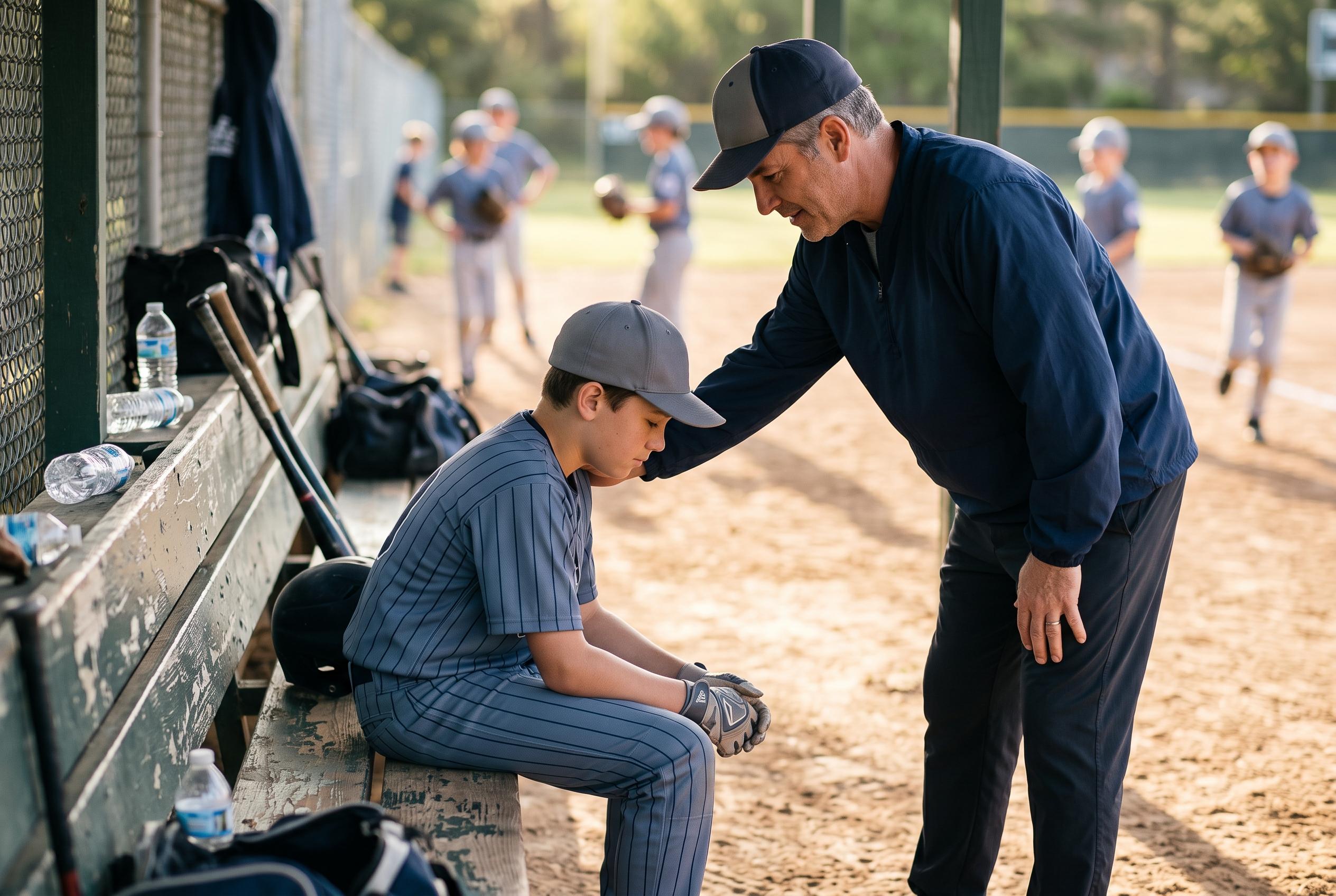

As youth baseball and sports culture evolve, experts warn that developmental pressures, social media scrutiny, and adult reactions can impact children’s mental well-being, turning sports from a growth tool into a source of stress unless balanced with supportive care.
A mother watching from behind the backstop may see more than a box score. In a reflective piece published by Sanford Behavioral Health, the company’s chief executive argues that youth baseball can teach discipline and resilience, but can also place children under pressure they are not yet developmentally equipped to manage. Johns Hopkins Medicine has likewise warned that student athletes can struggle with anxiety, burnout and unhealthy perfectionism when sport begins to feel like a test of personal worth.
That tension, the article suggests, is what parents often miss. Children are still learning how to handle frustration, recover from mistakes and separate a bad day from their sense of self. In that setting, a strikeout can feel less like part of the game and more like a judgement on who they are. Johns Hopkins says parents and coaches can help by encouraging balance, healthy coping skills and support after setbacks, rather than tying attention to results alone.
The pressures are not only on the field. Recent research in Frontiers in Psychology suggests social media can intensify comparison, stress and sleep disruption for young athletes, particularly older teenagers who feel more exposed to online scrutiny. Another Frontiers study found that heavy training loads, fatigue and poor sleep can contribute to burnout and emotional strain, adding to the physical and mental burden already placed on developing players. Those findings reinforce the article’s warning that performance culture can seep into daily life long before a child fully understands what is happening.
The Sanford article also turns the spotlight back on adults. Parents may intend to encourage excellence, but their reactions after games can shape how children interpret failure. A quiet ride home, a focus on effort rather than outcome, and a willingness to let disappointment stand without immediately fixing it can help children build resilience. Johns Hopkins has said youth sport can still be highly beneficial, improving confidence, activity and social development, provided adults keep the experience in proportion.
The piece ends on a familiar parental worry: that the season, the age group or the team will pass before anyone notices. Yet its central message is less about baseball than about identity. If children learn that they can fall short, recover and remain loved, sport can become a training ground for emotional strength rather than a measure of self-worth. The scoreboard will fade. The voice a child carries forward may last much longer.
Disclaimer: This content is for informational purposes only and is not intended to be a substitute for professional medical judgment, advice, diagnosis, or treatment.



