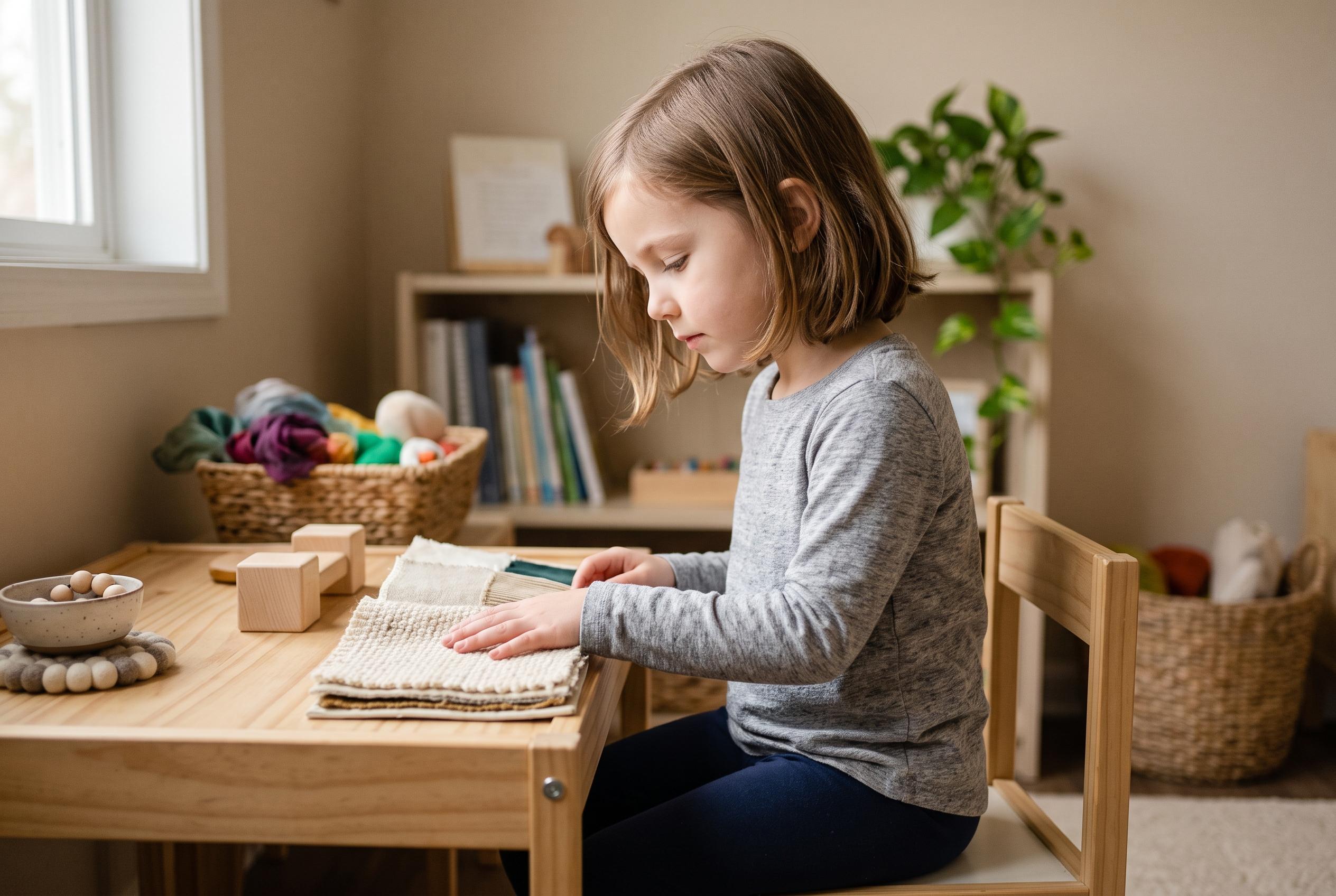

A large US study uncovers unique brain connectivity patterns in children with sensory sensitivities, highlighting links to anxiety and autistic traits, and challenging traditional assumptions about behaviour and ADHD.
Children who recoil from school bells, clothing tags or the hum of a vacuum cleaner may be showing a pattern more closely tied to anxiety and autistic traits than to ADHD, according to a large US study that combined behavioural data and brain scans from more than 15,000 young people. Published on 13 August in the Journal of the American Academy of Child & Adolescent Psychiatry, the paper argues that sensory over-responsivity has its own recognisable clinical and neural profile. (source.washu.edu)
Led by Rebecca Schwarzlose at Washington University School of Medicine in St. Louis and first-authored by Hexin Luo, the research pooled five cohorts of children aged 6 to 17.9 years, including three community samples such as the Adolescent Brain Cognitive Development study and Healthy Brain Network, alongside two cohorts enriched for autism. WashU said ordinary experiences such as shirt tags, unfamiliar smells and household noise can provoke these reactions, which earlier work suggests affect about 15% to 20% of children, not only those with autism. (source.washu.edu)
What set the study apart was its attempt to separate sensory distress from other overlapping problems. Using parent or carer questionnaires covering anxiety, depression, ADHD, conduct disorder, oppositional defiant disorder and autistic traits, the researchers found a stable link with anxiety and autistic traits after adjusting for the overlap between symptoms. The apparent associations with ADHD, depression and oppositional defiant disorder were not reliable once that broader picture was taken into account. In community samples, sensory over-responsivity was associated with lower conduct disorder symptoms, which cuts against the assumption that a highly distressed child is simply acting out. (source.washu.edu)
Schwarzlose said the findings should change how adults interpret those reactions. “These sensory challenges are not kids just ‘being difficult,'” she said in comments carried by WashU Medicine. She added that children without autism can still struggle badly with overwhelming sensory environments, and that services such as occupational therapy can help when sensory over-responsivity is correctly identified. Technology Networks said that, in practice, the findings may help clinicians spot anxiety in children who are not autistic but repeatedly become overwhelmed by noise, textures or other everyday sensations. (source.washu.edu)
The imaging arm was unusually large for this kind of work. Resting-state functional MRI scans were available for 9,197 participants, and the team used one ABCD subgroup of 4,195 children to identify candidate patterns before testing them in a separate ABCD subgroup of 4,190. The strongest and most reproducible signal was reduced connectivity between the cingulo-parietal network and the bilateral caudate nucleus. According to the abstract and HealthDay’s summary, that pattern replicated across the large ABCD subsamples and extended to children with more severe sensory symptoms in the same dataset, but did not reach significance in smaller imaging samples. (pubmed.ncbi.nlm.nih.gov)
WashU’s own explanation of that circuitry offers a more practical way to understand the result. Christina Luo, who conducted the work as a master’s student in Schwarzlose’s lab, said a weak link between a network involved in memory and context and a deep-brain structure that helps turn sensation into action may mean an ordinary sound is processed as a “raw defensive response” instead of being filtered through a sense that it is safe. That interpretation helps explain why seemingly minor sensations can feel immediate and unmanageable to some children. (source.washu.edu)
The study does not answer every question. Technology Networks noted that sensory overload often persists into adulthood in people with autism or anxiety, but this analysis covered only children and adolescents. The next step, WashU said, is to look earlier in development: the team is now investigating infancy and early childhood to trace when these brain differences first emerge, and the secondary report said researchers also want to test whether visual and taste sensitivities follow the same pathway. (source.washu.edu)
The paper also arrives after a longer research build-up than the brief news reports might suggest. The journal record shows versions of the work were presented at the Society of Biological Psychiatry meeting in Toronto in April 2025, the Society for Neuroscience meeting in San Diego in November 2025 and the International Society for Autism Research meeting in Prague in April 2026 before the article appeared online this August. ScienceDirect also says the data used in the study came through the National Brain Gene Registry, a collaboration involving Intellectual and Developmental Disabilities Research Centers and NIH-backed translational science funding. (sciencedirect.com)
For parents, teachers and therapists, the main takeaway is narrower than some older assumptions, but arguably more useful. A child who cannot tolerate the sound of a cafeteria, the feel of a seam or the shock of a sudden smell is not automatically showing ADHD or defiance. Taken together, the strongest evidence in this study points instead towards anxiety, autism-related traits and a measurable difference in how the brain links context to action, a profile that could help adults direct support more precisely and with less blame. (source.washu.edu)
Disclaimer: This content is for informational purposes only and is not intended to be a substitute for professional medical judgment, advice, diagnosis, or treatment.