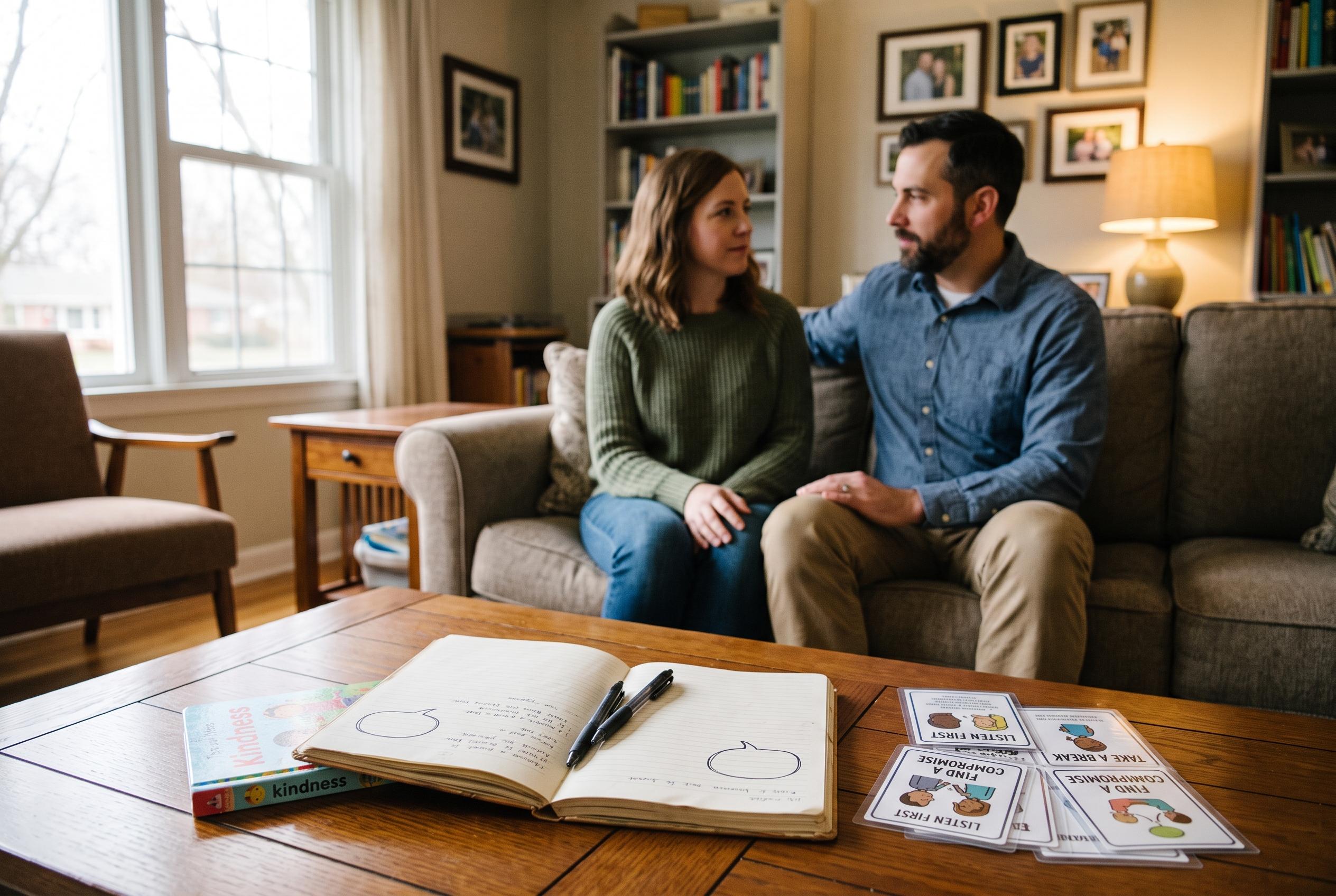

Experts highlight that resolving parental conflicts respectfully and strategically can protect children’s well-being and strengthen couple relationships, even amidst routine disagreements about discipline and limits.
When parents keep clashing over discipline, routines or limits, the real damage is often not the argument itself but what it does to the relationship. According to the source article, repeated unresolved tension can turn a marriage into little more than a logistics operation, with two adults managing a household but no longer behaving like partners. Utah State University Extension makes a similar point, saying persistent disagreement can leave couples acting more like co-managers than a team.
Children notice that shift quickly. The source article argues that what unsettles them most is not the fact that parents sometimes disagree, but the tone: contempt, eye-rolling and public undermining. Psychology Today has also warned that criticism, defensiveness, contempt and stonewalling can make parenting conflicts far worse. By contrast, respectful disagreement can show children that adults can handle conflict without turning on each other.
The practical advice begins with restraint in the moment. When a child is melting down or a rule has just been broken, the article says parents should not have the bigger argument in front of the child. Figs O’Sullivan Couples Therapy recommends a similar approach, suggesting couples agree on a parenting-disagreement protocol in calmer moments so they know when to pause, when to revisit the issue and how to avoid reversing one another in front of the child.
Later, the real conversation should be about the relationship, not the verdict. The source article recommends a structured exchange that starts with facts, moves to interpretation, then feeling and finally a request. That approach fits with Psychology Today’s advice to focus on feelings and needs rather than winning the debate. The idea is to lower the temperature and make space for the fear or history that may be driving the behaviour. One parent may be worried about seeming harsh, another about seeming weak, and those old anxieties can fuel present-day standoffs.
The article also argues that couples need to name what each partner is already bringing to the table. One may be steadier on structure, another more responsive on tenderness, and both roles matter. WebMD says clashes often arise when one parent compensates for the other by becoming more permissive or more controlling, which can deepen the divide. The final step is to protect time that has nothing to do with the children. If every conversation becomes about school runs, curfews and homework, couples can lose sight of why they chose one another in the first place.
Disclaimer: This content is for informational purposes only and is not intended to be a substitute for professional medical judgment, advice, diagnosis, or treatment.