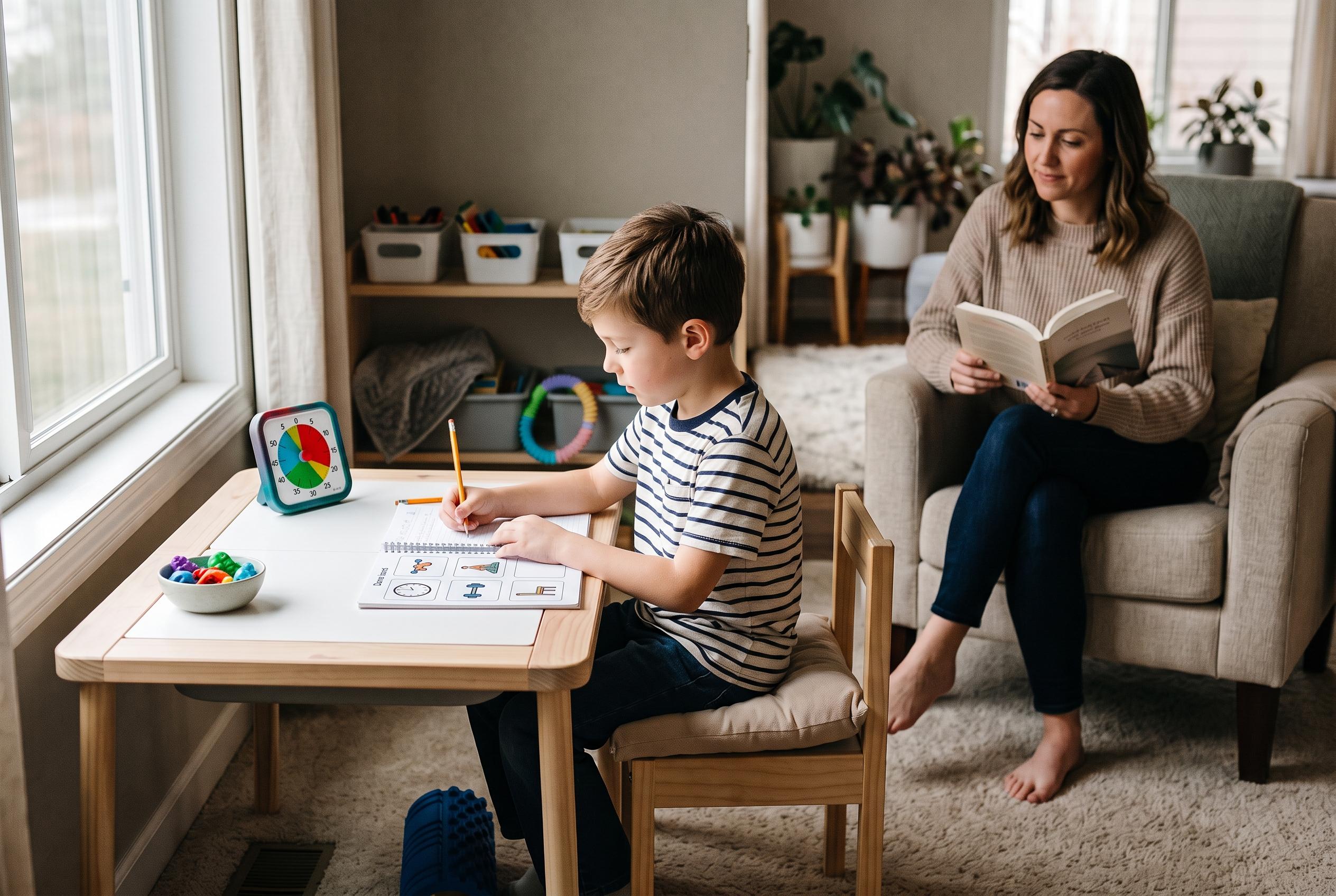

Innovative approaches like task variation, flexible environments, and body doubling are transforming homework success for children with ADHD, emphasising manageable chunks and strategic breaks over rigid routines.
For children and teenagers with ADHD, homework often goes better when it feels less like a grind and more like a series of small resets. The reason is simple: novelty can help the ADHD brain stay engaged. That is why changing locations, shifting tasks, or breaking work into fresh segments can sometimes work better than trying to force a rigid routine.
The practical answer is usually to make study time smaller and more manageable. A child might only cope with a five-minute burst on one day and a longer stretch on another, depending on age, energy and the assignment itself. The point is not to chase perfection but to lower the barrier to starting and to stop a task from feeling like a mountain.
Breaks matter too. Short rewards such as a snack, a walk or a quick movement break can help restore focus, while screens are often best kept out of reach because they are hard to leave behind. The idea is not to squeeze out more work at any cost, but to give the brain enough variety to keep going.
Flexibility in the study environment can also help. Some children concentrate better at a kitchen table, others in a bedroom, and others by moving from room to room. A portable study kit with pens, paper, chargers and other essentials can make that easier. Some children also do better with background sound, especially familiar music or a well-known audiobook, while others need complete quiet.
Another useful strategy is body doubling, which means working near another person. The Cleveland Clinic says this can improve concentration and motivation for people with ADHD, whether the other person is sitting beside them, joining virtually or simply sharing the same space. For some children, the presence of a parent or sibling is enough to help them stay on task even if they do not need direct help.
There is also value in letting curiosity interrupt the routine now and then. Looking up an unfamiliar word or jumping ahead in a chapter can add interest to a repetitive assignment. Sleep, however, remains the one non-negotiable. Research published in Brain Sciences and the Journal of Attention Disorders links ADHD with disrupted sleep patterns and delayed sleep timing, and the broader message is clear: if homework is still unfinished at bedtime, it is usually better to stop and rest than to push on into exhaustion.
Disclaimer: This content is for informational purposes only and is not intended to be a substitute for professional medical judgment, advice, diagnosis, or treatment.