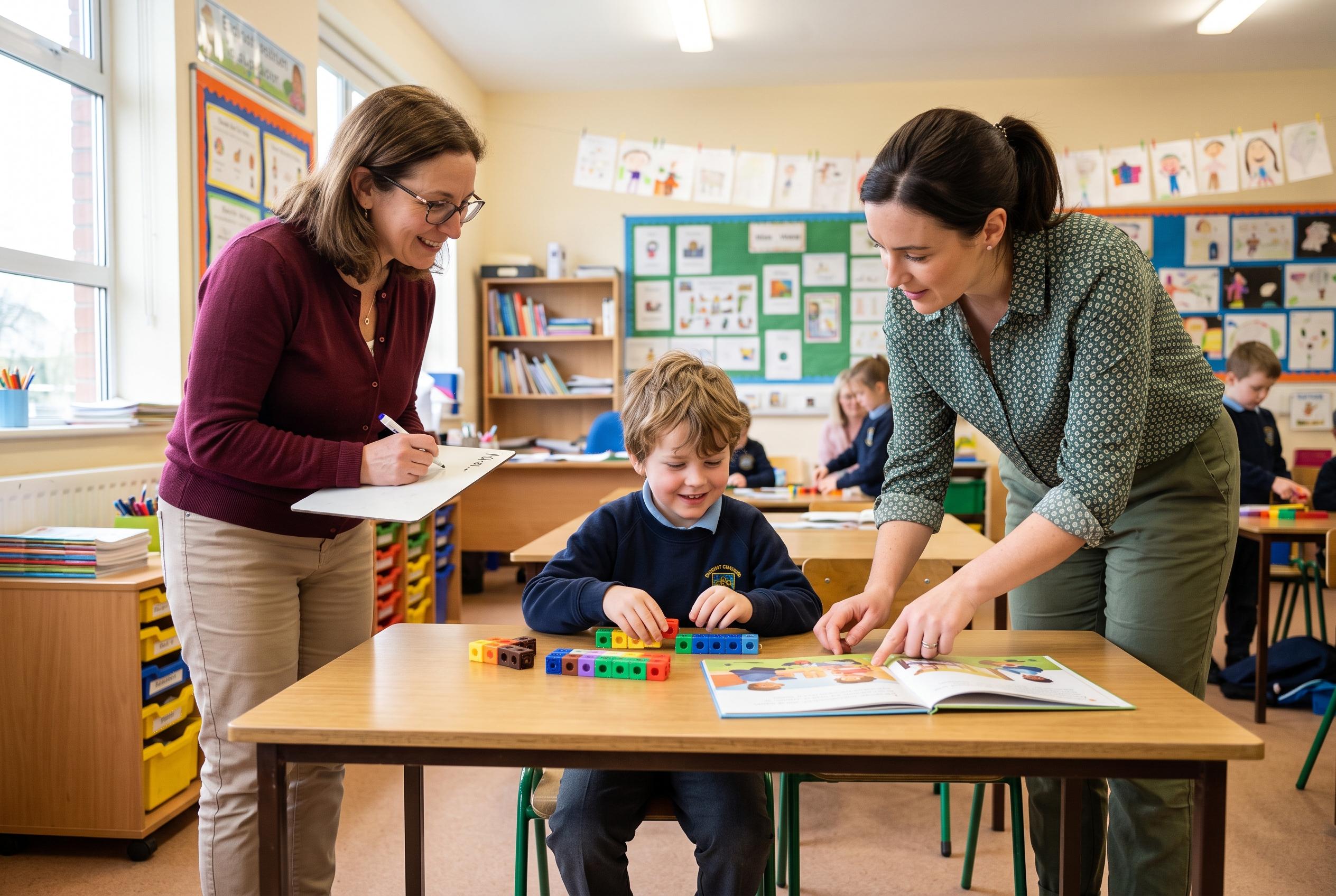

A newly published school guide highlights the importance of early, collaborative strategies among parents, teachers, and therapists to support children with selective mutism, addressing misconceptions and promoting safe classroom environments.
Selective mutism in nursery and primary school is often misunderstood as shyness, stubbornness or defiance, but it is better understood as an anxiety disorder that can stop a child from speaking in some settings even when they talk comfortably at home. Shropshire Community Health NHS Trust says children may avoid eye contact or appear blank or fixed in expression, while the Child Mind Institute notes that the silence usually appears in specific places, such as the classroom, rather than across every part of daily life.
That distinction matters because the response at school can either reduce anxiety or deepen it. The Selective Mutism Information and Research Association says nurseries and pre-schools should first establish the child’s language level and whether they speak outside the home. It suggests early, low-pressure contact between the child and a familiar member of staff, including a possible home visit before nursery starts, so that school becomes less unfamiliar before expectations for speech are introduced.
The practical message from teachers’ and parents’ guides is consistent: do not force speech. The Good Schools Guide warns that pressuring a child to talk can make anxiety worse, while the Selective Mutism Association recommends starting with non-verbal communication, avoiding direct questions at first and using gentle, structured choices instead. Child Mind Institute says teachers should share concerns early with parents and work with them on a plan that helps the child participate without feeling trapped.
That is the idea behind the new Selective Mutism School Guide for Nursery and Primary School, which its author describes as a shared starting point for home, school and therapy. The aim is not only to help adults recognise what they are seeing, but to make sure everyone is moving in the same direction. For children with selective mutism, that joined-up approach can make the difference between a classroom that feels overwhelming and one that gradually becomes safe enough for speech to emerge.
Disclaimer: This content is for informational purposes only and is not intended to be a substitute for professional medical judgment, advice, diagnosis, or treatment.