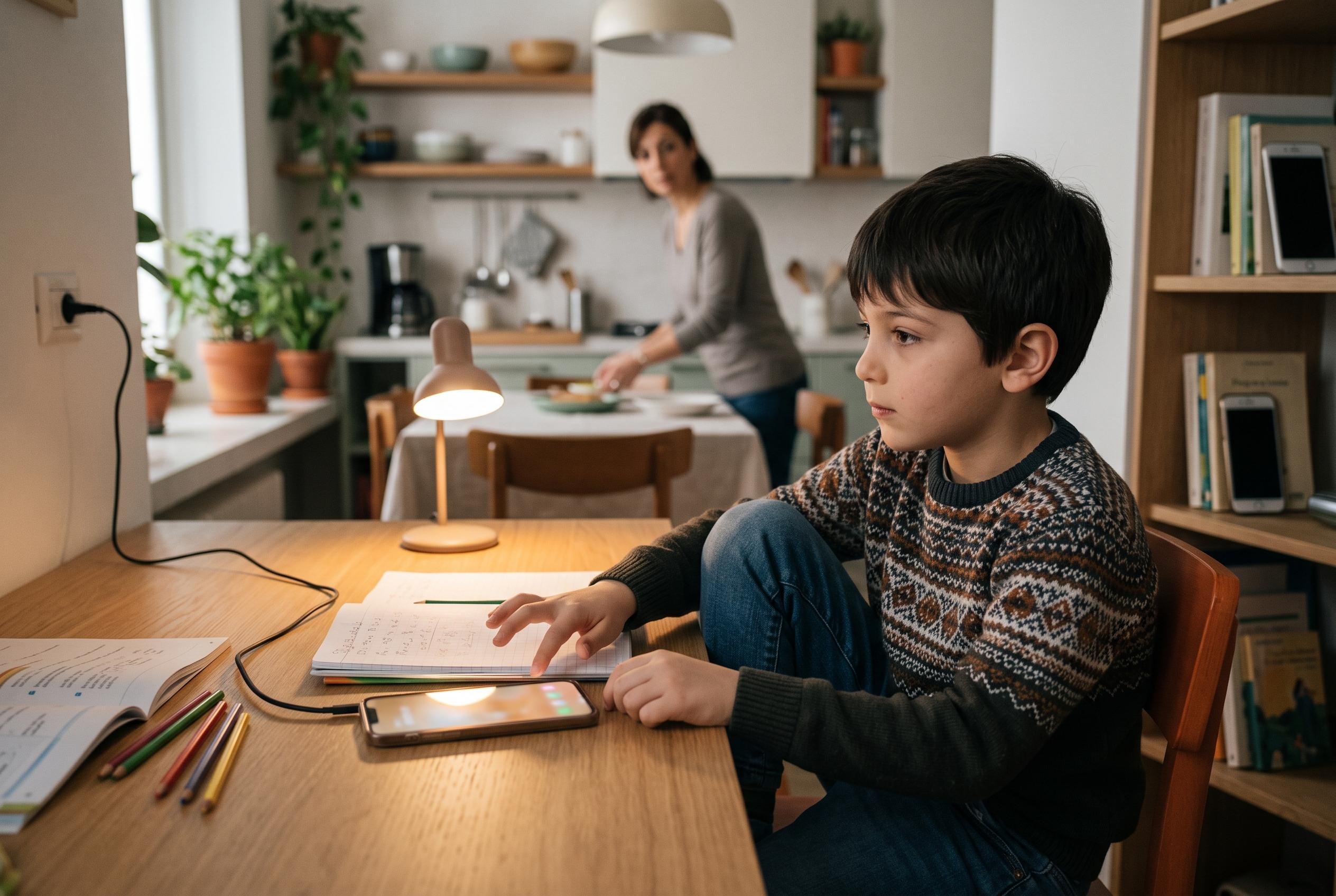

A recent Italian study following over 5,200 pupils indicates that children who start using social media early tend to perform worse in core subjects, highlighting the impact of device ‘pervasiveness’ on academic outcomes.
A long-running argument over when children should get their first smartphone has gained fresh scientific backing, with new research from Italy suggesting that early social media use is linked to weaker academic performance. The study followed 5,227 pupils over several years and found that those who created personal accounts in early adolescence tended to do worse later in school than peers who waited until they were older, according to findings published in Nature Human Behaviour and highlighted by Nature Portfolio.
The researchers tracked students from roughly age seven to 16 and compared children from broadly similar family backgrounds and earlier attainment levels. Euronews reported that pupils who joined social platforms at 11 or 12 performed worse in Italian and mathematics than those who delayed signing up, while the gap widened by later secondary school years. The impact was strongest in core subjects rather than in every area of learning.
One of the study’s most striking findings was that the damage appears to come less from the phone itself than from how it fits into daily life. The research team linked a large share of the weaker results to smartphone “pervasiveness” , the habit of using the device before bed, after waking or while doing homework. According to the Nature paper, that pattern helped explain a substantial part of the drop in mathematics scores.
There was one notable exception. English scores were largely unaffected, which the researchers said may reflect informal exposure to online content in English. The University of Milano-Bicocca, which publicised the work, described the project as part of the EYES UP study on early exposure to screens and unequal performance. The authors also noted limits to the findings, including the fact that the data came from northern Italy, but said the global reach of social platforms makes the results relevant well beyond one region.
Disclaimer: This content is for informational purposes only and is not intended to be a substitute for professional medical judgment, advice, diagnosis, or treatment.