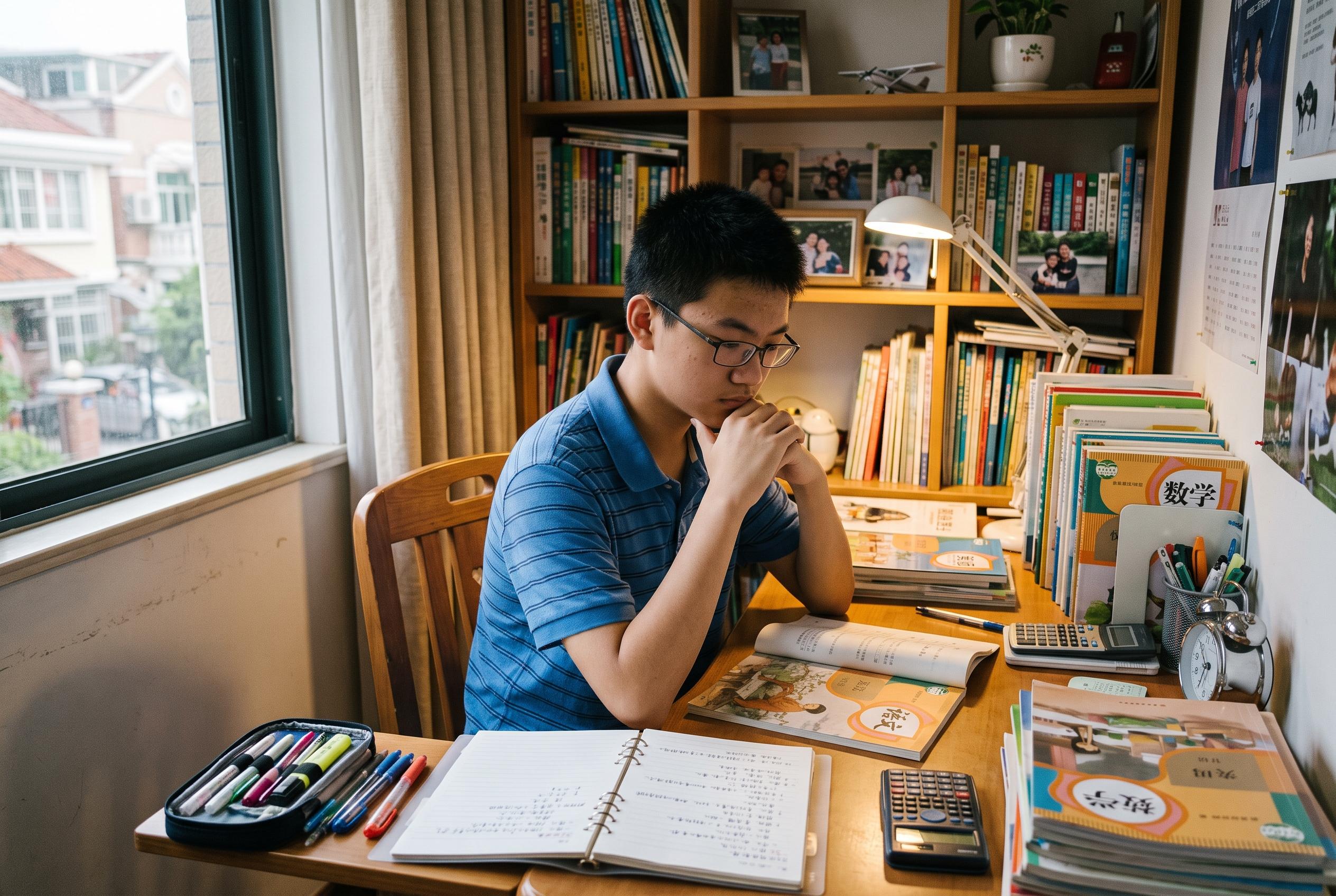

A recent study uncovers the nuanced effects of parental social comparisons on Chinese teenagers, highlighting how upward and downward comparisons uniquely impact their relationships, authenticity, and school adjustment.
Chinese adolescents who feel their parents are constantly comparing them with others may experience a more complicated mix of stress and support than previously understood, according to new research in the International Journal of Psychology. The study suggests that parental comparison is not a single behaviour with a single effect; instead, different kinds of comparison appear to influence authenticity, peer relations and school adjustment in different ways.
The research followed 449 adolescents in China, with an average age of 15.81, at two points in time and used a cross-lagged panel network approach, a method that helps identify how psychological factors influence one another over time. Among the comparison styles examined, upward social comparison, in which parents benchmark a child against someone perceived to be doing better, emerged as the most influential factor in the network. It had the strongest outward effects and also acted as a bridge to other parts of adolescents’ functioning, while self-alienation and peer relationship problems also occupied central positions.
The findings point to a nuanced picture. Upward and downward social comparisons were linked to peer relationship problems in opposite directions, while progress-focused comparison was associated with lower self-alienation. School adjustment also appeared to feed back into later parental comparisons focused on decline, suggesting that the relationship runs both ways rather than moving in only one direction.
The study adds to a broader body of research showing that adolescents’ outcomes are shaped by the wider family environment, not just by parenting style in the narrow sense. Earlier work published in Adolescence found that clear, consistent parental structure supports more adaptive adolescent functioning, especially among girls. Other studies have linked autonomy-supportive parenting to stronger school adjustment, and have shown that parental mental health, work conditions, and school climate can all shape young people’s academic performance, behaviour and emotional well-being.
Taken together, the new findings suggest that parental comparison is part of a larger system in which family expectations, adolescent authenticity and school experience continually interact. For parents, the message is not simply to stop comparing children altogether, but to recognise that the form such comparisons take may matter as much as how often they happen. Comparisons framed around improvement may be less damaging than those focused on decline, while repeated upward comparisons may carry particular risks for relationships and self-concept during adolescence.
Disclaimer: This content is for informational purposes only and is not intended to be a substitute for professional medical judgment, advice, diagnosis, or treatment.