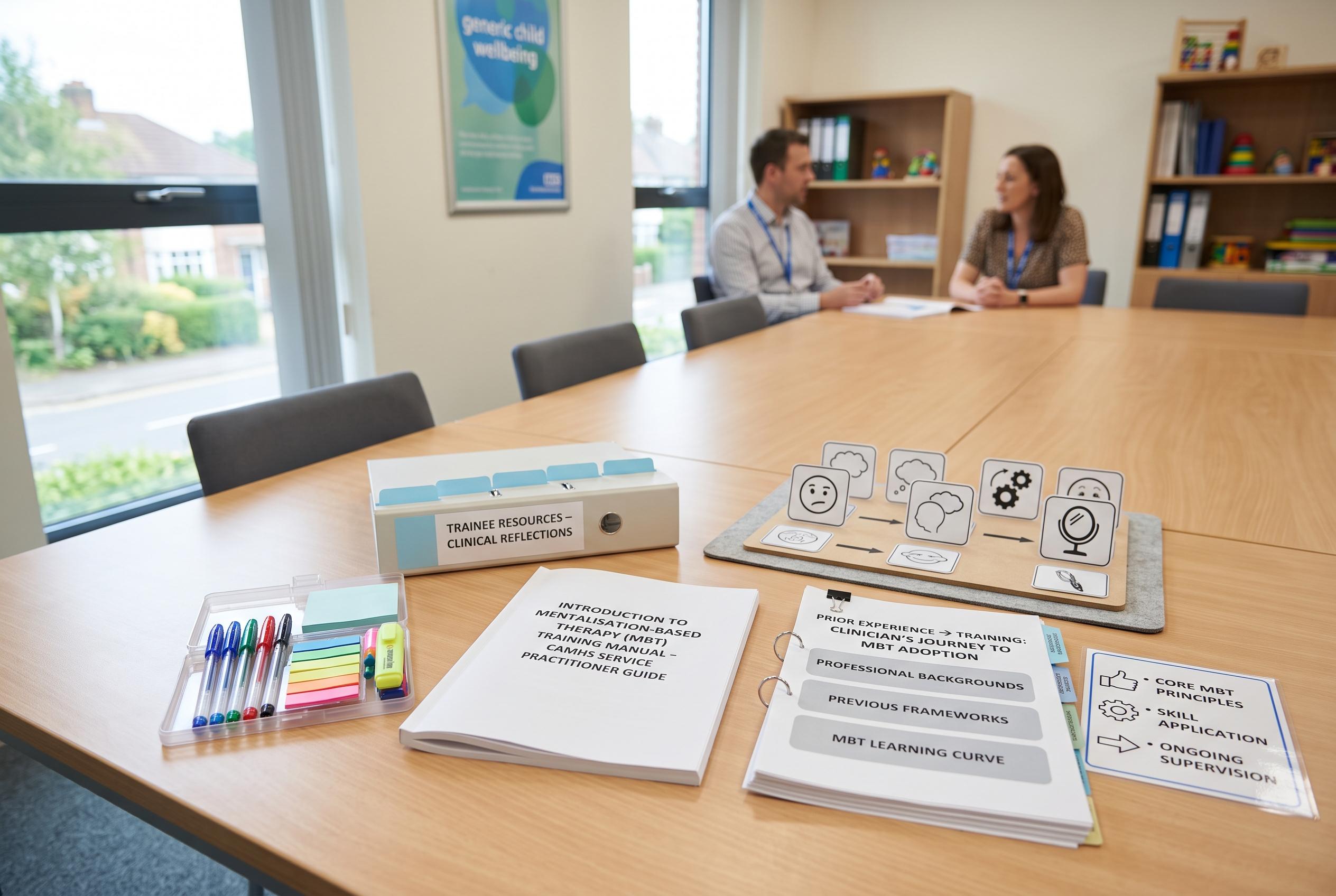

A recent study explores how clinicians’ prior therapeutic experience shapes their understanding and adoption of mentalisation-based therapy in UK child and family services, highlighting the importance of integrating existing knowledge into new evidence-based practices.
Mentalisation-based therapy is becoming more prominent in child and family services because it is designed to be flexible enough for a range of presenting problems, yet clinicians often bring very different therapeutic backgrounds to their training. A study in the journal paper underlying this article argues that those earlier experiences matter: prior knowledge can make new learning easier when the two approaches align, but it can also create tension when they do not. That question is especially relevant for mentalisation-based treatment, or MBT, which aims to help children, families and clinicians better understand thoughts, feelings and intentions behind behaviour. Reviews of MBT in children and families have found tentative evidence that it can strengthen mentalising and reflective functioning, while also noting that the field still needs more rigorous trials. Recent work in schools and a randomised controlled trial of MBT for children have added to that picture by suggesting benefits for emotional regulation and broader mental health outcomes.
The study examined how practitioners in UK child mental health services experienced learning MBT at the start of training and how their previous professional education shaped that process. It sits within the Emotional Regulation in Children trial, which is testing MBT against treatment as usual for 5- to 12-year-olds with mixed behavioural and emotional difficulties in services across England. Practitioners received a short-term MBT model for children, adapted from an existing child-focused version, through a training package that combined self-directed preparation, three days of online teaching and fortnightly supervision. According to the article, the training was intentionally structured to move participants from theory into supervised practice, giving researchers a chance to explore how clinicians translated older therapeutic habits into a new model.
Eleven practitioners took part in interviews for the qualitative study. The group included clinicians working in child and adolescent mental health services, community child and family services and mental health support teams in schools. Cognitive behavioural therapy was the most common background, with most participants describing it as their main or only prior modality, although some had also trained in compassion-focused therapy, acceptance and commitment therapy or systemic therapy. Two participants came from psychoanalytic child psychotherapy rather than CBT. At the time of interview, all were still early in their MBT learning, although only six had begun a first supervised case. The authors note that this spread of backgrounds is important because MBT has some features that differ from more familiar approaches such as CBT, including its emphasis on mental states rather than symptoms alone.
The researchers conducted one-to-one semi-structured interviews between June and July 2024, after obtaining ethical approval from the Health Research Authority as part of the ERiC study. Participants joined voluntarily, data were anonymised and confidentiality was maintained. The lead researcher completed the training herself before interviewing participants, including the self-guided module and the online group sessions, in an effort to understand the material being taught. The interviews, lasting 35 minutes to an hour, were recorded on Microsoft Teams, transcribed and analysed using reflexive thematic analysis. The authors say the design was meant to capture how clinicians made sense of a new evidence-based therapy through the lens of what they already knew, and what that means for future efforts to retrain practitioners across child mental health services.
Disclaimer: This content is for informational purposes only and is not intended to be a substitute for professional medical judgment, advice, diagnosis, or treatment.