

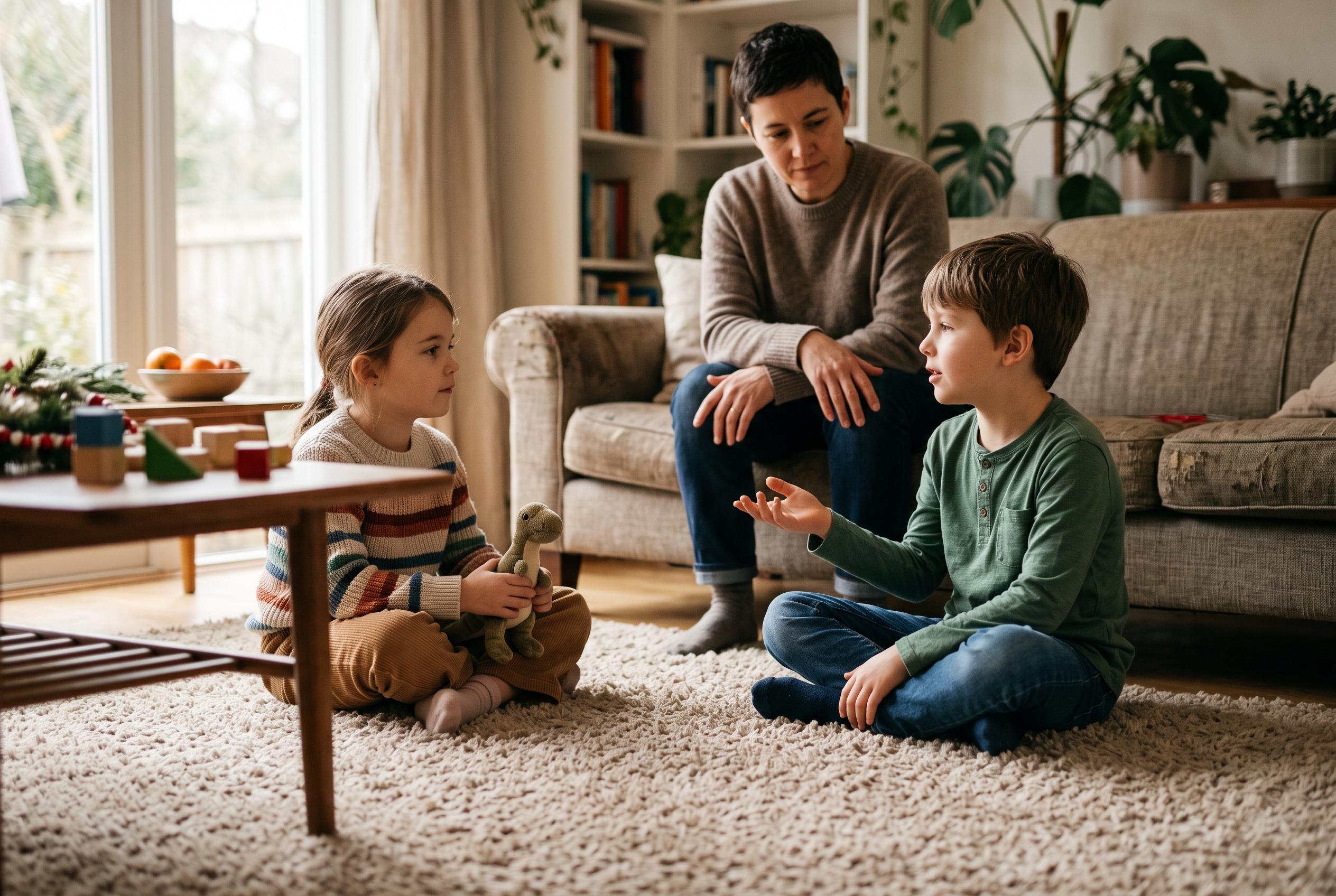

Experts advocate for emotion-focused parenting approaches that empower children to resolve disagreements independently, fostering healthier relationships during school holidays.
Sibling rows are a normal part of family life, but they can be especially frequent during school holidays, when children spend more time together, have less structure and must share everything from toys to screens to parental attention. The challenge for parents is not to eliminate conflict altogether, but to handle it in a way that helps children learn how to sort things out for themselves.
The clearest advice from child-development specialists is to stay close enough to keep everyone safe, but avoid acting as a judge. If a dispute turns physical or becomes one-sided, adults should step in at once. Otherwise, experts say children benefit more when parents resist the urge to decide who was right and who was wrong. The Child Mind Institute says children learn better when adults help them calm down and understand their feelings before any attempt to resolve the argument.
That approach puts the emphasis on emotion rather than on a strict fact-finding mission. Rather than demanding an instant apology, parents can first help each child feel heard. Psychology Today notes that conflict is part of healthy relationships and that repair matters as much as resolution. When children feel understood, they are more able to take another person’s perspective and less likely to treat every disagreement as a contest to be won.
Several parenting guides recommend a simple structure once emotions have settled. Michigan Medicine advises against taking sides and suggests giving children time to calm down before discussing what happened. Cornerstones for Parents offers a step-by-step method that asks children to stop, take turns, accept different views, listen and then learn a solution together. Help Starts Here adds that parents should keep the focus on the current problem, use empathy and encourage children to come up with their own fixes, such as taking turns or using “I” statements to explain how they feel.
Parents also play a powerful role by modelling repair. If adults own up to their own mistakes and apologise when they snap, children learn that conflict does not have to end a relationship. PBS KIDS for Parents says disagreements can become chances to practise respect, empathy and mending rifts. Over time, that matters more than winning the argument in the moment.
Disclaimer: This content is for informational purposes only and is not intended to be a substitute for professional medical judgment, advice, diagnosis, or treatment.



