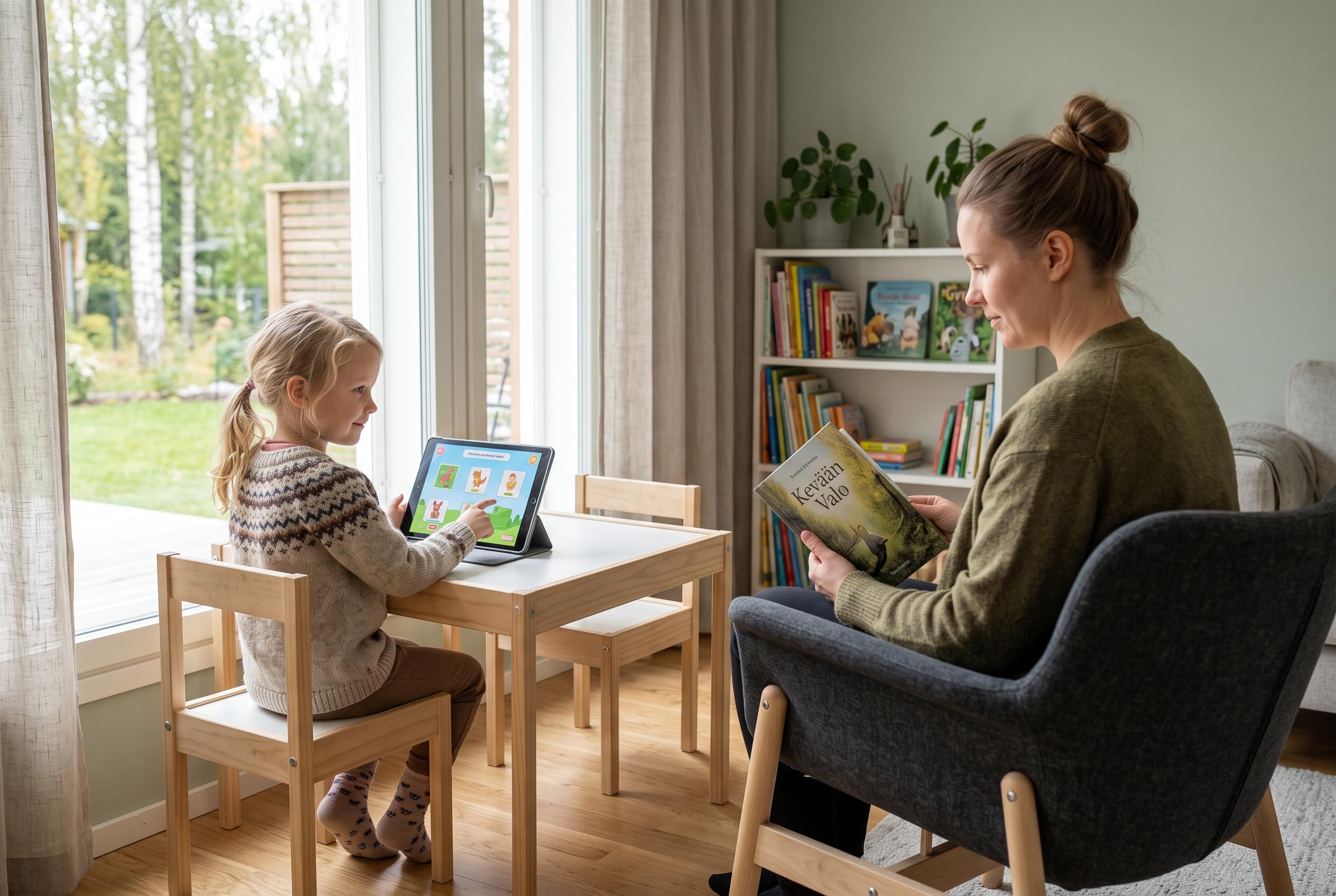

A Finnish study indicates that when used thoughtfully, smart devices can support children’s cognitive growth, challenging the notion that screen time is inherently harmful.
A Finnish study has added a more nuanced view to the debate over children and screens, suggesting that moderate use of smart devices may support cognitive development rather than hinder it. According to the report in Al Ittihad, the researchers followed 260 children from the age of eight into adolescence and found that some time spent on smart devices was linked with stronger cognitive abilities by the time they were around 16.
The work, published in the journal Pediatric Exercise Science, tracked physical activity, sedentary behaviour and the time children spent on smart devices over several years. Peter Jalkanen, the study’s lead researcher at the University of Jyväskylä, said children’s device use should not be viewed as harmful in itself. Speaking to HealthDay, he argued that what matters most is how the device is used, with educational and creative activities carrying more value than passive consumption.
That conclusion fits with a wider body of research showing that screen time does not affect all children in the same way, or in the same areas of development. A separate study in Complementary Therapies in Medicine found that screen exposure in preschoolers aged three to five had different links to different skills: more device use was tied to weaker name writing but stronger counting, while family background and sleep appeared to have a more consistent influence on development than screens alone.
Other research has pointed to both benefits and risks. A systematic review in Child: Care, Health and Development found that interactive digital devices were associated with better receptive language and executive function in children aged seven and under, although the authors said the evidence was uneven and difficult to compare. By contrast, researchers at the University of Helsinki reported that screen time spent alone may be linked with poorer language development in preschool children, particularly when mothers also spent more time on screens.
Taken together, the findings suggest that the question is less about whether children use devices and more about the balance, context and content of that use. A separate longitudinal study in Academic Pediatrics found that both older-style media and app use were associated with later executive function and psychosocial development, while research in Mental Health and Physical Activity linked physical activity and meeting screen-time recommendations with better intellectual ability. Another study in JAMA Network Open found that heavier screen use in early childhood was associated with greater vulnerability in school readiness, underlining why parents and educators continue to weigh the quality of screen time, not just the quantity.
Disclaimer: This content is for informational purposes only and is not intended to be a substitute for professional medical judgment, advice, diagnosis, or treatment.