

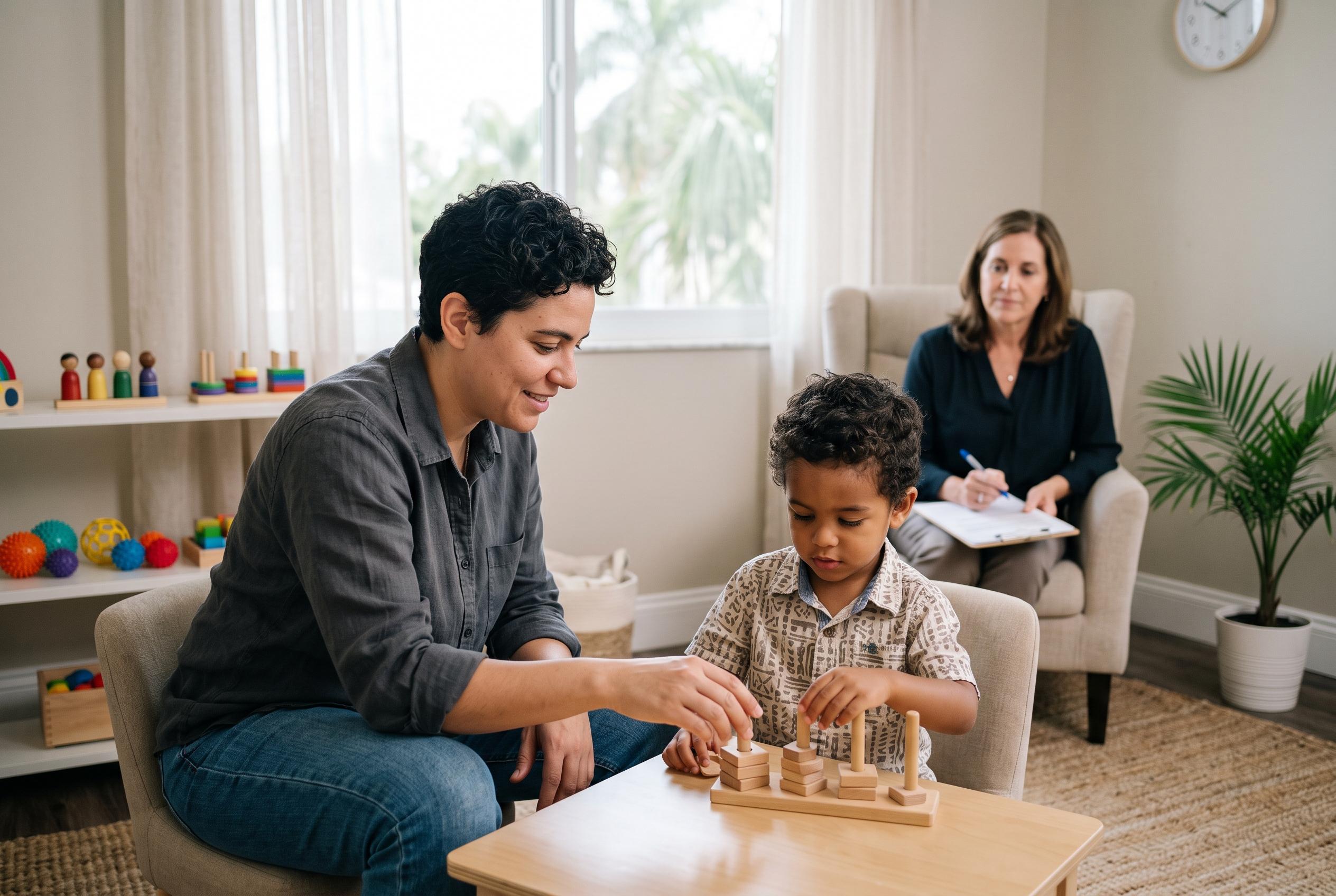

A Miami-based, free PCIT programme is transforming support for families with autistic children by coaching parents in real-time, helping to reduce disruptive behaviours and improve family dynamics.
Parents of young children with complex needs are often told what to do in theory, then left to figure out how to apply it when emotions are already running high. That gap is what Abby Peskin, a clinical psychologist at the University of Miami’s PCIT 305 programme, says she sees most often in therapy: families can leave with useful strategies but struggle to use them in the moments that matter most. Parent-Child Interaction Therapy, better known as PCIT, tries to close that gap by coaching caregivers directly as they work with their own child.
PCIT is an evidence-based treatment for children roughly aged two to seven who struggle with tantrums, aggression, non-compliance or emotional regulation difficulties, according to the University of California, Davis and the University at Buffalo. Rather than placing the therapist in the role of primary interventionist, the model teaches parents to deliver the response themselves while a clinician coaches them in real time. The approach is built around two core ideas Peskin highlighted in the interview: behaviour communicates a need, and children usually want to succeed when the environment makes success possible.
That framework can be especially relevant for autistic children, for whom disruptive behaviour is often linked to communication challenges, sensory stress or difficulty with transitions. A University of Miami study on change patterns during PCIT for autistic children and their caregivers found the therapy can help reduce disruptive behaviours and support progress for both child and parent. The university’s PCIT work is also backed by specialist training, including a postdoctoral fellowship, underscoring that the approach is part of a wider clinical effort rather than a one-off programme.
For families in Miami-Dade, one practical advantage is access. PCIT 305 is offered free through funding from The Children’s Trust, and the University of Miami says services are also available in Spanish. That matters in a county where cost, language and logistics can all block access to care. The broader promise of PCIT is straightforward: when parents are given live support and children are placed in settings that help them regulate and respond, the family is more likely to make progress together.
Disclaimer: This content is for informational purposes only and is not intended to be a substitute for professional medical judgment, advice, diagnosis, or treatment.



