

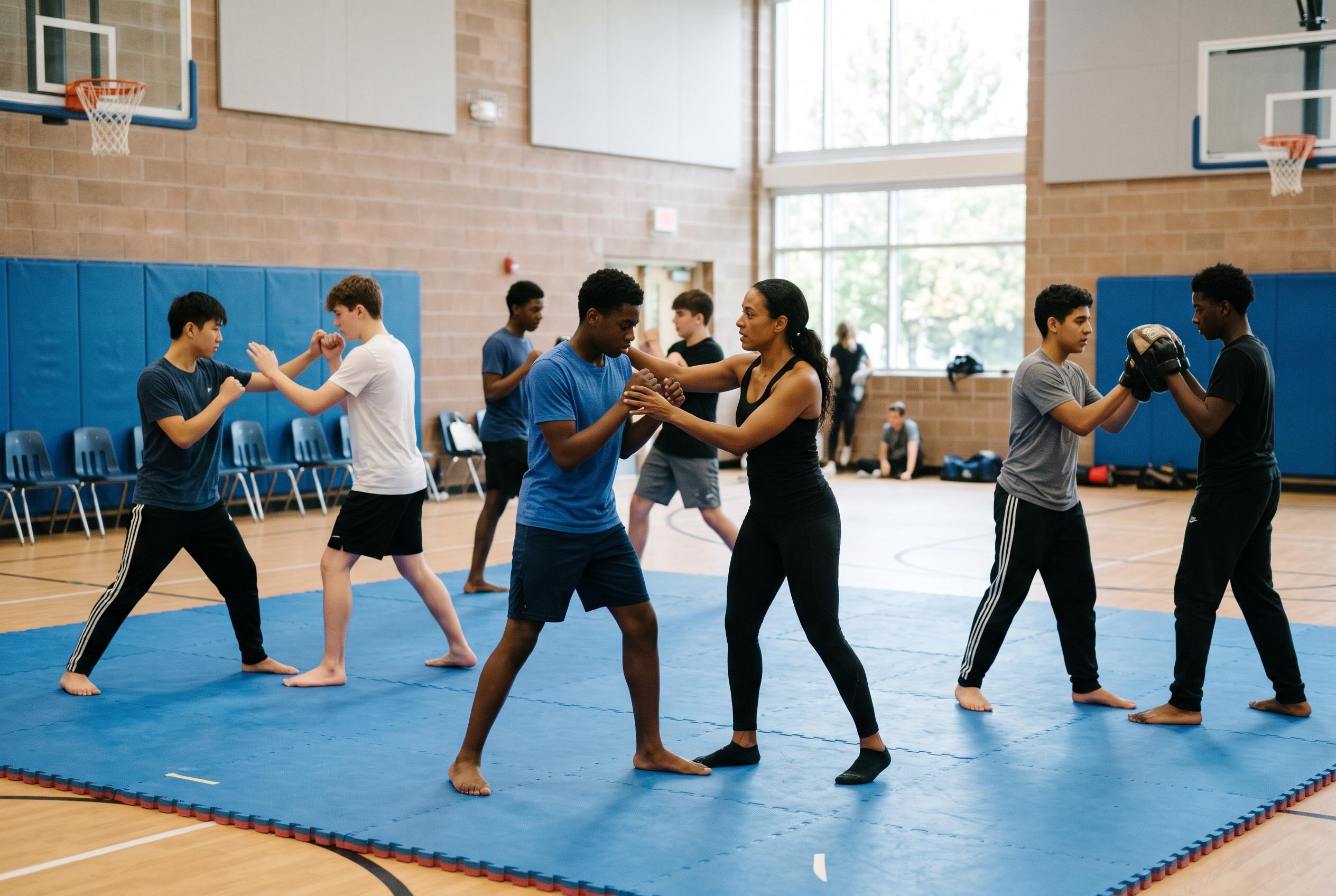

A 12-week school programme was associated with gains in executive function, fitness and psychological wellbeing among Chinese middle school boys, although researchers cautioned that the study could not prove causation.
A school-based martial arts programme appears to have done more than improve fitness in a group of Chinese middle school boys.It was also associated with sharper executive function, stronger psychological resilience, better self-regulation and lower perceived stress, according to a new study published in Frontiers in Psychology.
The 12-week project followed 120 boys aged 13 to 16 from three middle schools in Nanchang, China.Participants were split into three groups: one took part in martial arts training, another continued with standard physical education, and a third followed usual school routines.The sessions ran three times a week for an hour and were built around warm-ups, skills practice, conditioning and cool-downs.
By the end of the programme, the martial arts group had improved across every measured domain and generally outpaced the other two groups.They were quicker in agility testing, showed better dynamic balance, jumped farther in the standing broad jump and recorded stronger estimated cardiorespiratory fitness.In the cognitive tests, they also performed better on inhibitory control, working memory and cognitive flexibility, which are core parts of executive function used for planning, focus and mental switching.
The psychological findings were equally notable.Researchers reported higher resilience and self-regulation scores in the martial arts group, alongside lower perceived stress.The physical education group also improved, but the gains were smaller, while the control group changed little over the same period.The authors said the overall pattern suggests that martial arts may offer a more demanding and more engaging form of exercise than conventional school PE, with benefits that extend beyond physical conditioning.
The study adds to a growing body of research suggesting that activities combining movement, attention and discipline may be especially useful in adolescence, a period when habits and coping skills are still taking shape.Previous studies cited by the authors have linked martial arts with improvements in balance, academic behaviour, self-control and resilience in young people. The new paper argues that the mix of structured technique, rapid decision-making and rule-based practice may help explain why the intervention produced gains across so many domains.
Even so, the findings should be treated with caution.The study was not individually randomised, and each condition was carried out in a separate school, which means school-specific factors could have influenced the results rather than the training alone.The researchers also studied boys only, did not include long-term follow-up, and used estimated rather than directly measured aerobic fitness.It means the results are promising, but not the final word on whether martial arts alone caused the changes.
Disclaimer: This content is for informational purposes only and is not intended to be a substitute for professional medical judgment, advice, diagnosis, or treatment.



