

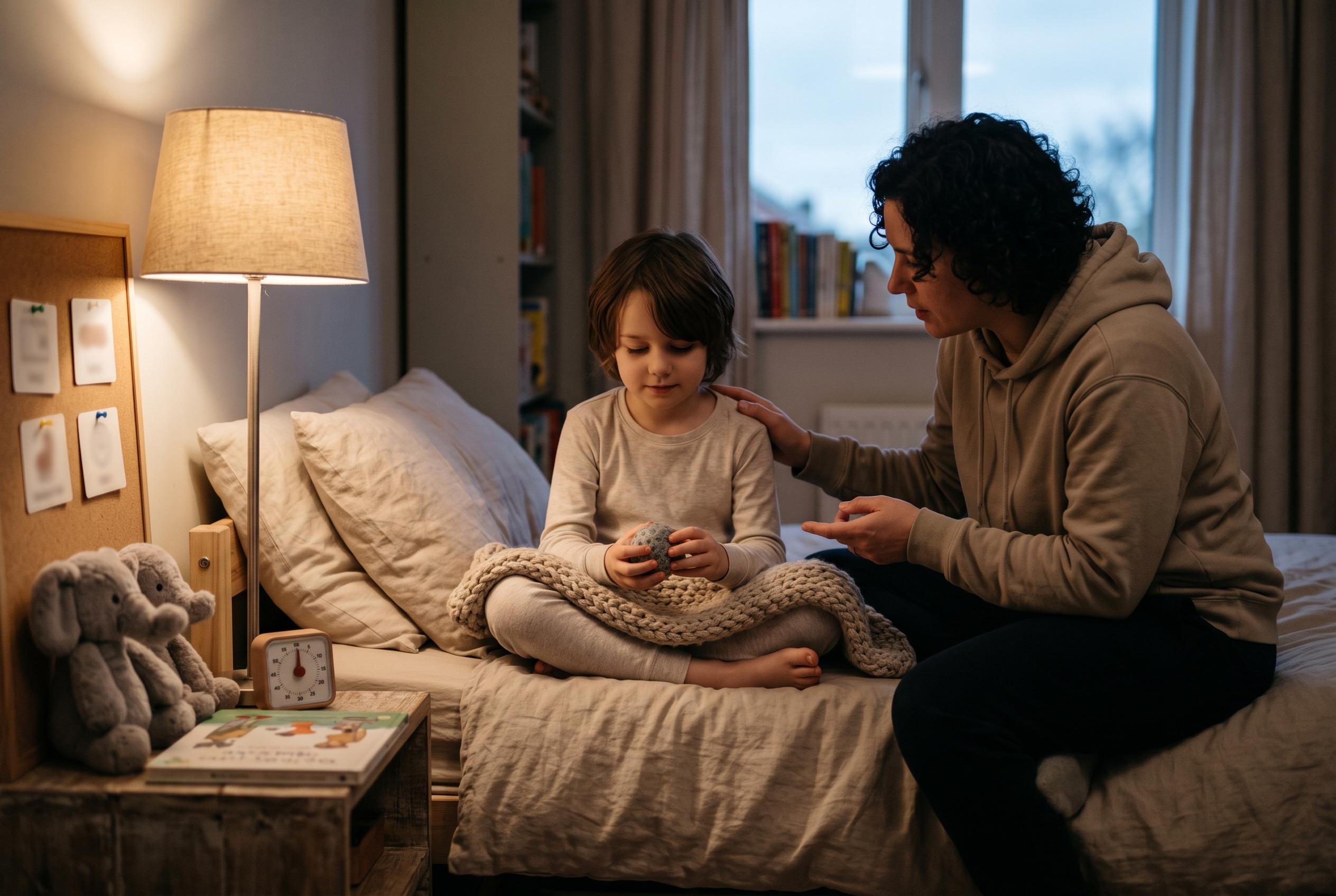

Using visual schedules and sensory-friendly adjustments can ease bedtime resistance in children with autism and ADHD, helping parents establish calming routines tailored to their needs.
Bedtime can turn into a nightly standoff when a child with autism or ADHD cannot easily move from the pace of the day into the stillness needed for sleep. Parents often assume they are missing a simple trick, but the challenge is usually more fundamental: neurodivergent children may struggle with transitions, sensory discomfort and the anxiety that comes with an unpredictable end to the day. Netmums has noted that these factors can make sleep far harder for autistic and ADHD children than for their peers.
One of the most effective ways to ease that struggle is to make bedtime visible. A picture schedule or step-by-step routine removes guesswork and gives a child a clear path through the evening. That might mean a fixed sequence of bath, pajamas, tooth-brushing, bathroom, story and lights out, with photographs, drawings or icons that match the child’s needs. The point is not decoration but clarity: when the next step is obvious, the evening can feel less threatening and more manageable.
The bedroom itself can also shape how smoothly bedtime goes. Sensory sensitivities often sit behind resistance that may look like defiance, so small adjustments can matter. Soft, tagless sleepwear may prevent irritation; blackout curtains can reduce light sensitivity; and a fan or white noise may help some children while others need near silence. Parents are also often advised to dim lights well before bed and cut back on screens in the final hour, since both can make it harder for a child’s body to settle.
Consistency is another important part of the equation. A bedtime that happens at roughly the same time each night, with the same sequence of steps, can help the routine become familiar over time. Experts highlighted by Netmums recommend working backwards from the target bedtime so there is enough time for the full routine without rushing. Visual timers can help children understand how long they have for each step, which is especially useful for children who find abstract time difficult to grasp.
When resistance does come, the goal is to stay calm without giving up the routine. Parents may find it helpful to acknowledge the child’s feelings, offer limited choices within the plan and use simple “first-then” language to explain what happens next. Quiet wind-down activities such as colouring, puzzles, gentle stretching or calm music can provide a bridge between active play and sleep. Progress may be slow, but even small gains matter: for neurodivergent children, a better bedtime often comes from patience, repetition and a routine that respects how their brains and bodies work.
Disclaimer: This content is for informational purposes only and is not intended to be a substitute for professional medical judgment, advice, diagnosis, or treatment.



