

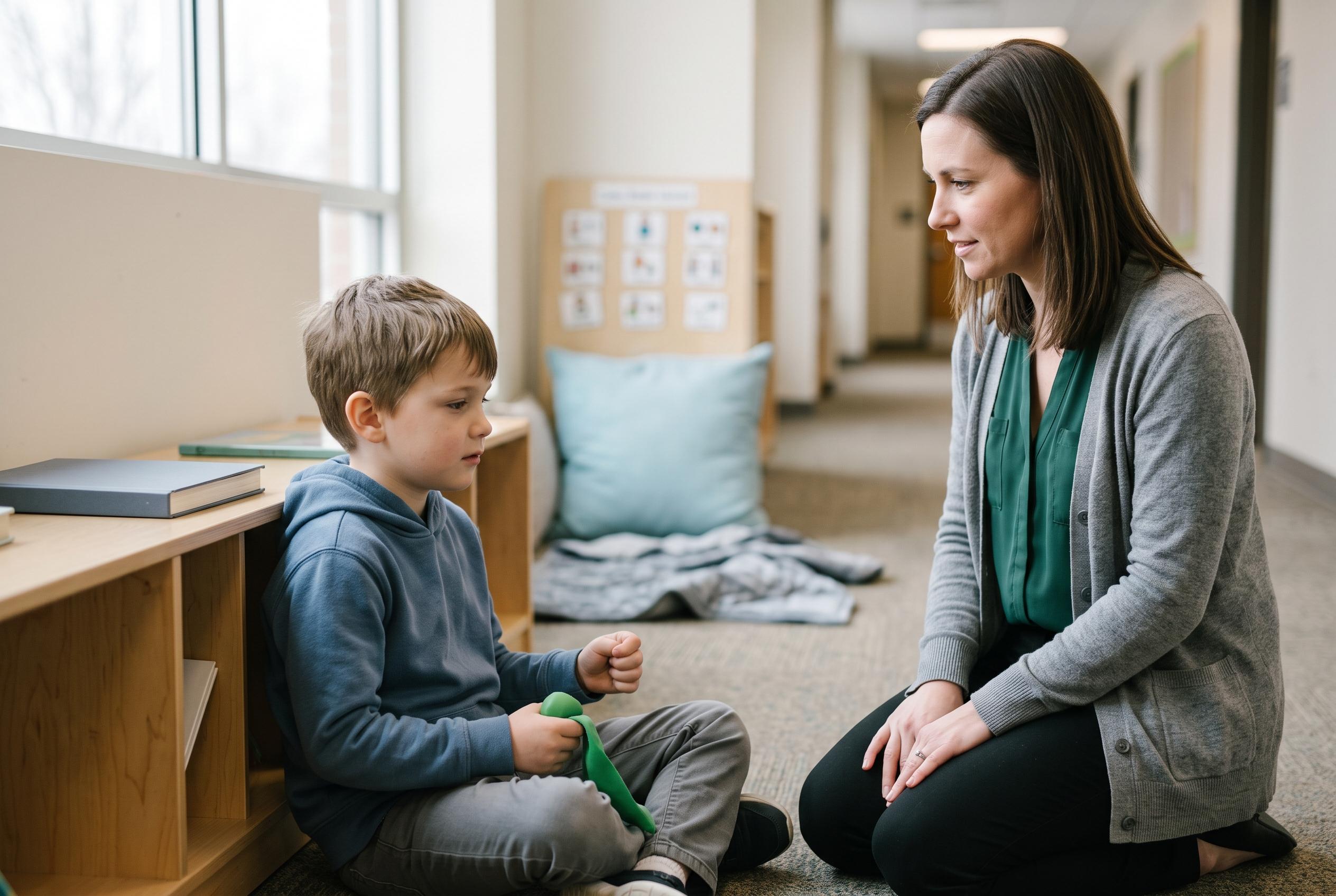

Experts emphasise the importance of understanding how neurodivergent children communicate distress, urging parents and educators to recognise subtle signs and plan proactively to ensure their safety and wellbeing in school environments.
Parents of neurodivergent children are often told to look past the literal wording and listen for what a child is trying to convey. That was the central message in a conversation on “Stress-Free IEP” between special education attorney Frances Shefter and psychotherapist Ethan Ulanow, who argued that a child saying school feels unsafe, or that their body feels wrong, may be signalling distress long before adults recognise a crisis. UNICEF says warning signs of stress in children can vary by age, while the Centre for Mental Health has warned that standard mental health programmes can miss the way neurodivergent young people process feelings and communicate need.
The distinction between what adults see and what a child experiences matters most in schools. A classroom may appear orderly and safe to teachers, yet still feel threatening to a child who is struggling with noise, demands, transitions or social pressure. That idea echoes work on “felt safety” in education settings, which argues that a pupil’s sense of safety can shape whether they can learn or participate at all. Research and reporting on school distress have also found that children with autism are disproportionately affected, underscoring how often school itself can become the site of sustained stress rather than relief.
Shefter and Ulanow urged parents to respond with curiosity rather than correction when a child uses unusual language to describe pain, anxiety or overload. A child who says “my skin feels like it’s crawling” or “my body is on fire” may not be using clinical terms, but that does not make the experience unreal. Experts in neurodivergent support recommend strengths-based approaches that pay attention to the child’s own framing of what helps and what overwhelms them, instead of forcing them into a one-size-fits-all interpretation. In some cases, the answer may come from the child themselves, as when a parent learns that quiet time, reading or retreating to a bedroom can restore calm.
That same principle applies when behaviour changes. UNICEF advises parents to watch for shifts in sleep, appetite, mood, energy, interests and social connection, because distress often shows up as a change from a child’s usual pattern rather than as one dramatic event. Ulanow encouraged families to know their child’s baseline so they can spot when something is off, whether that means withdrawing from friends, abandoning a favourite activity or speaking in ways that suggest hopelessness. In those moments, the priority is not to dismiss the comment as melodrama or attention-seeking, but to treat it as a possible sign that support is needed.
The conversation also focused on planning before a crisis hits. Families can make a practical list of therapists, trusted adults, school contacts, medical providers and crisis resources, so they are not trying to assemble help in the middle of an emergency. Shefter described giving her own child a clear exit plan if school became too much, and said simply knowing that leaving was possible could reduce pressure. The same logic can help at home: when a child understands there is a safe way out, they may be better able to stay engaged for longer.
During an acute mental health crisis, both speakers said academic concerns should move into the background. Parents may worry about attendance, grades or college prospects, but the immediate task is to stabilise the child and address safety first. Schoolwork can be made up later; the child cannot. That is especially important for neurodivergent children, whose distress may be expressed through behaviour long before anyone labels it as communication. As UNICEF notes, recognising signs of distress early gives adults a better chance of responding before a situation becomes more serious, while specialist guidance increasingly calls for support that is adapted to how neurodivergent children actually experience the world.
Disclaimer: This content is for informational purposes only and is not intended to be a substitute for professional medical judgment, advice, diagnosis, or treatment.



