

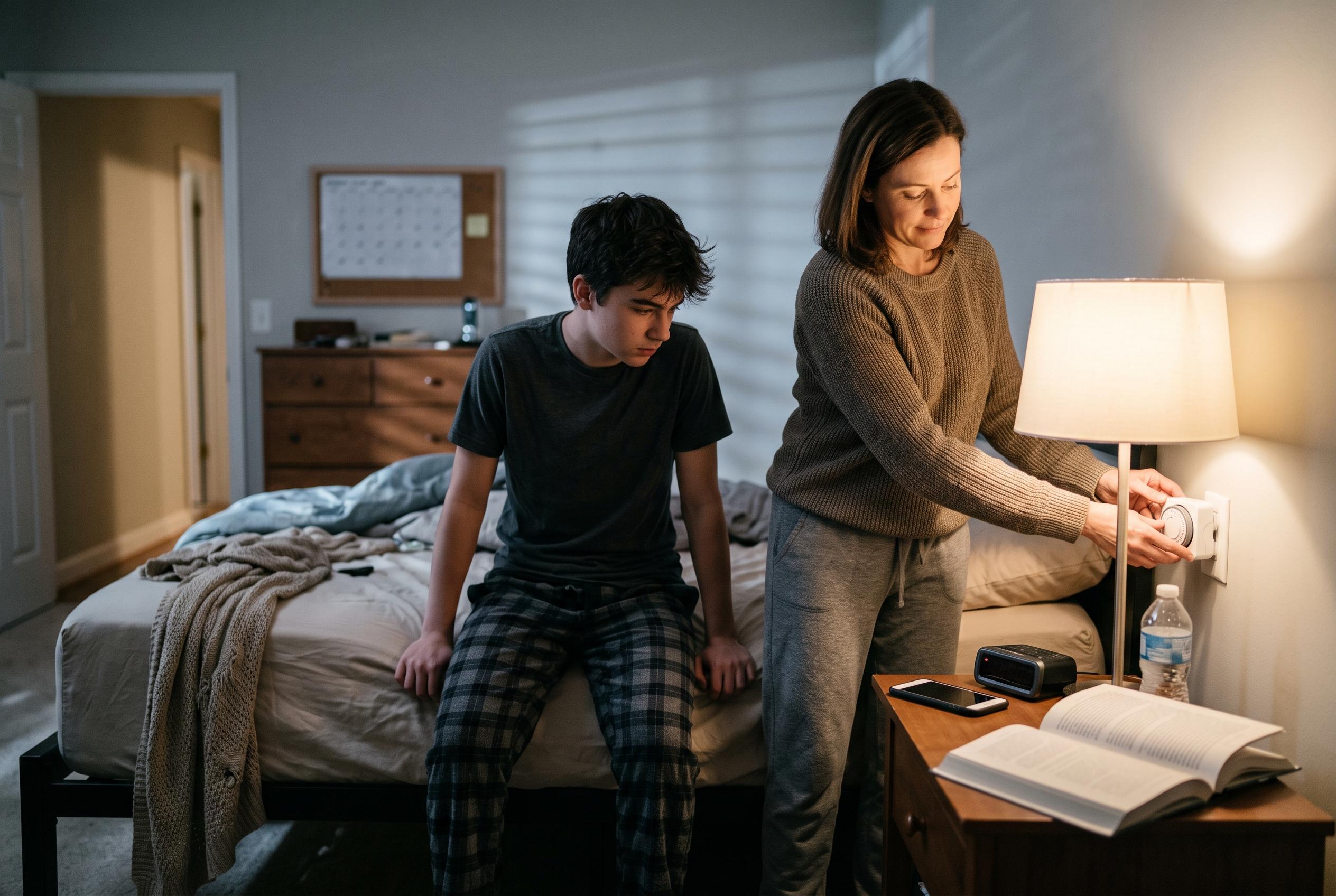

New research links inconsistent bedtimes and reduced sleep duration to increased cognitive difficulties among American teenagers, highlighting the importance of sleep patterns and injury history for youth wellbeing.
A new analysis of nationally representative survey data suggests that two familiar features of teenage life, short sleep and irregular bedtimes, are each linked to a higher likelihood of serious cognitive difficulty in US adolescents. The study, published in the Journal of Clinical Sleep Medicine, examined parent-reported problems with concentration, decision-making and memory among 12- to 17-year-olds and found that sleep pattern, injury history, activity levels and family circumstances all appeared to matter.
The research, led by Adam P. Knowlden at the University of Alabama, drew on the 2022-2024 National Survey of Children’s Health and used a multidimensional view of sleep rather than focusing only on how long teenagers sleep. In this framework, bedtime consistency is treated as a separate marker of sleep health, alongside sleep duration. After adjusting for other factors, adolescents with shorter sleep had higher odds of serious cognitive difficulty, as did those whose bedtimes varied widely from night to night. A history of concussion, lower physical activity, no sports participation, higher exposure to adverse childhood experiences and reduced caregiver capacity were also associated with worse outcomes.
The analysis suggests these risks do not operate in isolation. In particular, the researchers found that short sleep and irregular bedtimes appeared to reinforce one another, rather than simply adding together. That fits with earlier research, including studies funded by the National Institutes of Health, which linked irregular sleep schedules and late bedtimes with poorer grades and more school-related behaviour problems. Separate work from the University of California, Berkeley, has also connected inconsistent sleep patterns with academic and emotional difficulties in teenagers.
The findings add to a growing body of evidence that adolescent sleep is not just about total hours in bed. Specialists commonly recommend 8 to 10 hours a night for teenagers, yet many fall short of that target. Puberty shifts the body clock later, while early school starts, screen use and packed schedules make regular sleep harder to maintain. Experts say short sleep can undermine attention, memory and executive function, and irregular bedtimes may disrupt circadian rhythm, the body’s internal timing system, in ways that affect learning and judgement.
The concussion result is also notable. The study found that teenagers with a head injury history had roughly twice the odds of serious cognitive difficulty, independent of sleep and other factors. That reinforces the importance of longer-term monitoring after concussion and suggests that sleep screening could be a useful part of follow-up care. Still, the authors caution that the study is cross-sectional, so it cannot prove cause and effect. Poor sleep may contribute to cognitive problems, but cognitive difficulties could also make sleep more irregular.
Disclaimer: This content is for informational purposes only and is not intended to be a substitute for professional medical judgment, advice, diagnosis, or treatment.



