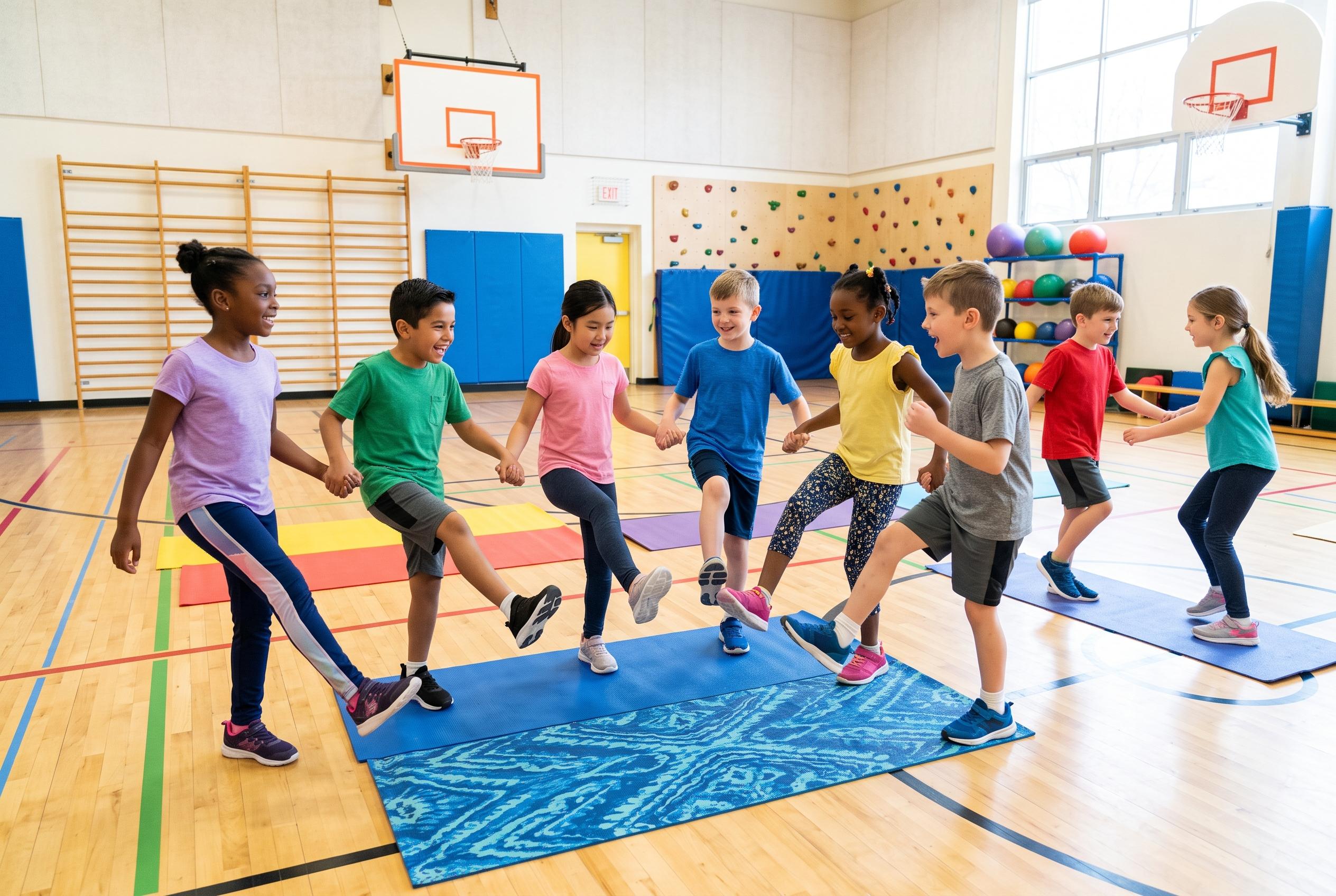

A recent study in Frontiers in Psychology shows that interactive physical activities in schools significantly decrease psychological stress and enhance group cohesion among children, with social interaction playing a key role in mental wellbeing benefits.
A study published in Frontiers in Psychology suggests that the type of physical exercise children do at school may matter almost as much as the activity itself. In a 16-week intervention involving 144 fifth-grade pupils aged 10 to 11 in Suzhou, researchers found that both interactive and coactive exercise programmes eased psychological stress and strengthened group cohesion, but the interactive format produced larger gains on both measures. The work adds to a growing body of evidence that sport and structured movement can support children’s mental wellbeing, particularly when social interaction is built into the activity.
The children were split by class into two groups: one followed interactive sessions centred on basketball and football, while the other took part in coactive sessions built around track and field and gymnastics. According to the study, stress scores fell in both groups and cohesion scores rose, with the interactive group improving more sharply. Pre-test scores also showed that many pupils were already experiencing meaningful stress, underlining how common pressure can be in late primary school.
The findings fit with wider research showing that exercise can buffer anxiety, improve mood and support children’s social development. A Frontiers in Public Health review found that physically active adolescents tend to report lower perceived stress, while a separate systematic review in BMC Public Health linked sport participation with better mental health in children and teenagers. More recent work has also pointed to the value of team settings: a 2026 review in Systematic Reviews reported that sport participation is associated with psychological and social benefits, and that belonging and peer support are important parts of the mechanism.
What makes the Suzhou study notable is its distinction between interactive and coactive exercise. The interactive sessions required coordination, communication and shared goals, and that appears to have mattered. The authors found that cohesion was negatively associated with stress, but it did not statistically explain the whole relationship between interactive exercise and reduced stress. In other words, the stress reduction seemed to come mainly through a direct effect rather than through cohesion acting as a bridge.
That distinction is increasingly relevant as schools and child-focused providers look for ways to turn movement into broader wellbeing support. Programmes such as Move & Connect, X Movement, Zenlings and InPACT at Home all place social-emotional development, confidence and self-regulation alongside exercise, reflecting a wider shift towards more holistic movement-based provision for children. The Frontiers study suggests that this approach has merit, but also that not every psychological benefit is explained by teamwork alone.
Disclaimer: This content is for informational purposes only and is not intended to be a substitute for professional medical judgment, advice, diagnosis, or treatment.