

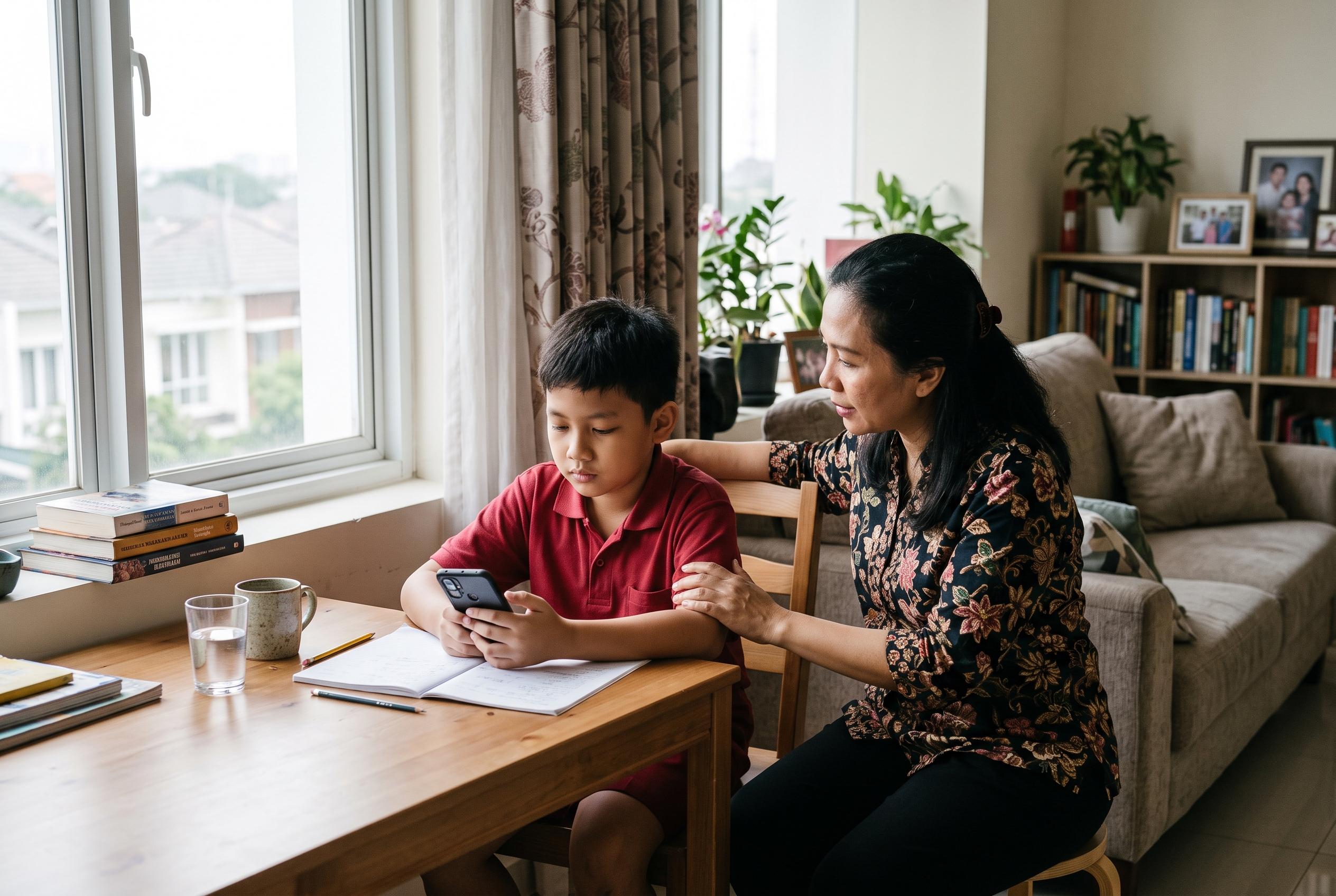

Government screening has identified depression and anxiety symptoms in hundreds of thousands of Indonesian children, prompting calls for closer parental oversight of smartphones and social media.
Indonesia’s widening digital habits are drawing fresh attention to the mental health of children, after government screening found hundreds of thousands showing signs of depression and anxiety. The Ministry of Health said that, by October 2026, more than 71 million people had taken part in its free health check programme, with over 380,000 children identified as having indications of depression and almost 380,000 showing signs of anxiety. The Jakarta Post reported that the rate among children is far higher than among adults and older people, underlining how early mental health problems are emerging.
The findings have prompted renewed calls for parents to take a more active role in managing children’s use of smartphones and social media. Meiri Dias Tuti, a clinical psychologist and member of the Indonesian Association of School Psychologists under the Indonesian Psychologists Association, said parents need to combine warmth with firmness if they want to reduce the risks linked to excessive screen time. She said the first step is to build a stronger emotional connection at home so children feel able to talk about online habits, difficult content and boundaries without fear of punishment.
Tuti also advised parents to steer children towards activities away from screens, especially sport, movement and hobbies that give them a sense of routine and achievement. For younger children, she argued that smartphones should not be handed over as a default convenience, while teenagers should not be treated as if the device or social media account were entirely their own property. She said adults should retain oversight, including over passwords and online access, because the phone remains the parent’s responsibility.
Her warning aligns with guidance from health organisations that social media can expose children to bullying, reduce face-to-face interaction and weaken self-esteem when use becomes excessive. Dartmouth Health Children says children and teenagers may struggle to stay present and develop a stable sense of self if online approval becomes too important, while the Mayo Clinic Health System advises families to set clear boundaries and teach children about digital risks. Indonesian health officials have similarly stressed that the problem is serious enough to require closer monitoring, after the ministry said the screening programme revealed mental health concerns that had often gone unnoticed.
Parents should also watch for changes in behaviour that may signal distress. Tuti said irritability, sudden aggression, persistent negative moods and marked shifts in attitude can all be warning signs that a child is struggling. The broader message from health experts and officials is that social media is not simply a harmless pastime for the young: without clear limits, supervision and open conversation, it can add pressure at a stage when children are especially vulnerable.
Disclaimer: This content is for informational purposes only and is not intended to be a substitute for professional medical judgment, advice, diagnosis, or treatment.



