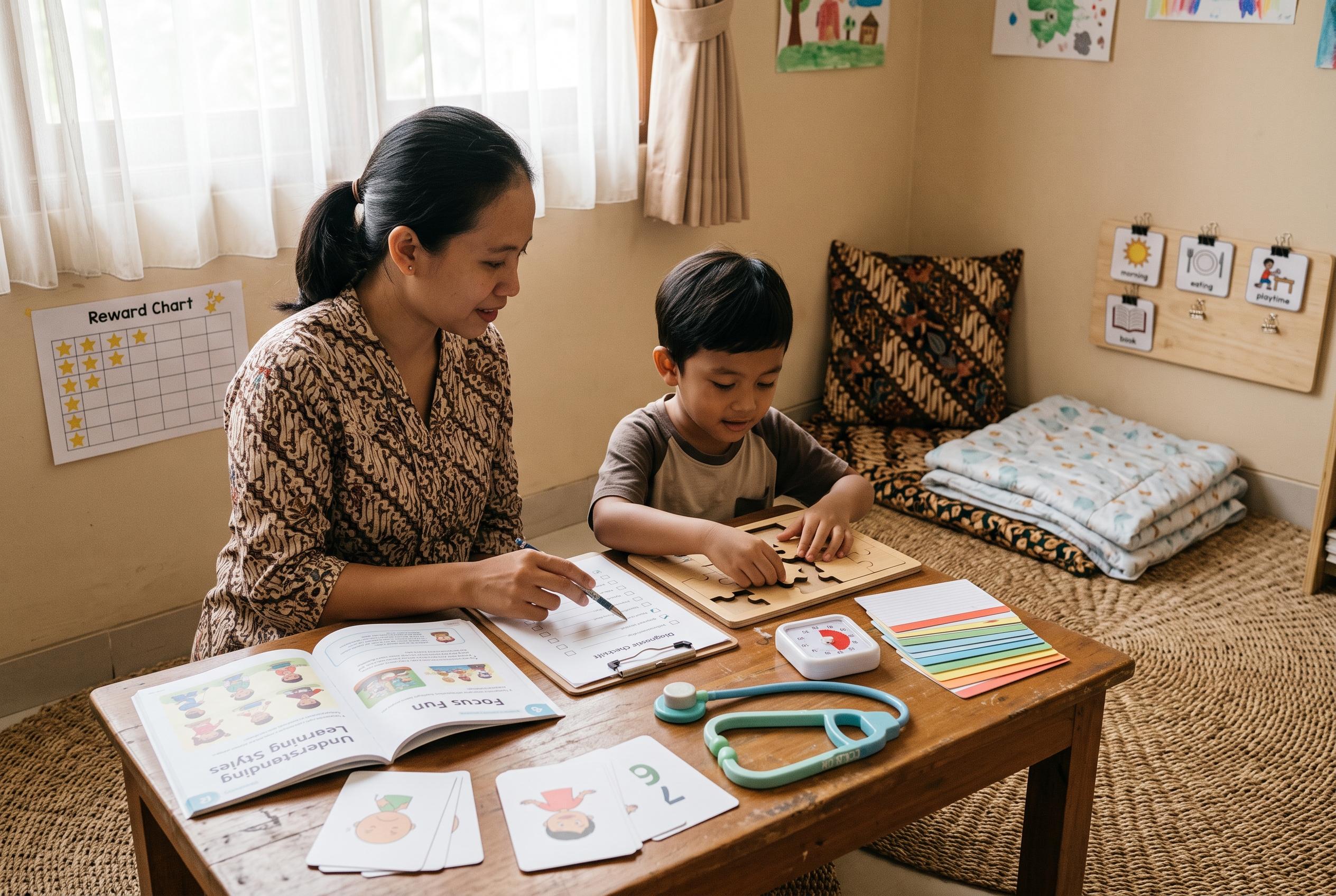

A survey by Atelier of Minds highlights that Indonesian parents often spot signs of neurodivergence first, underscoring the need for clearer pathways from recognition to support amidst rising awareness and diverse support needs for children with autism, ADHD, dyslexia, and giftedness.
A recent survey by Atelier of Minds suggests that parents in Indonesia are often the first to spot signs that a child may be neurodivergent, underscoring both the importance of early recognition and the uncertainty many families face afterwards.
The survey, called “Suara Orang Tua”, was conducted from May to July 2026 among 173 parents of neurodivergent children, including those with autism spectrum disorder, ADHD, dyslexia and giftedness. It found that 76% said they were the first to notice differences in their child’s development, before doctors, psychologists, teachers or other professionals did. That finding points to a broader reality described by Indonesia’s Health Ministry: autism is a spectrum condition, with symptoms and support needs varying widely from one child to another, and families often need patience and consistency in responding to them.
Erna Yulianti, lead psychologist at Atelier of Minds, said parents today are navigating a flood of information from search engines, social media, peer communities and artificial intelligence. The challenge, she suggested, is no longer simply recognising that a child may need support, but deciding what kind of support is appropriate. That concern echoes wider discussions in Indonesia about neuro-affirming care, an approach that seeks to adapt environments and support systems to children’s sensory and emotional needs rather than forcing them to fit rigid expectations.
Atelier of Minds has previously positioned itself as an inclusive student care and enrichment centre in South Jakarta, focusing on social skills, life skills, emotional regulation, executive functioning and academic confidence. The survey’s message aligns with that model: for many families, the hard part begins after the first concern is identified. With Indonesia’s Health Ministry estimating that about 2.4 million children may have autism, the need for clear pathways from early observation to diagnosis, intervention and day-to-day support remains substantial.
Disclaimer: This content is for informational purposes only and is not intended to be a substitute for professional medical judgment, advice, diagnosis, or treatment.