

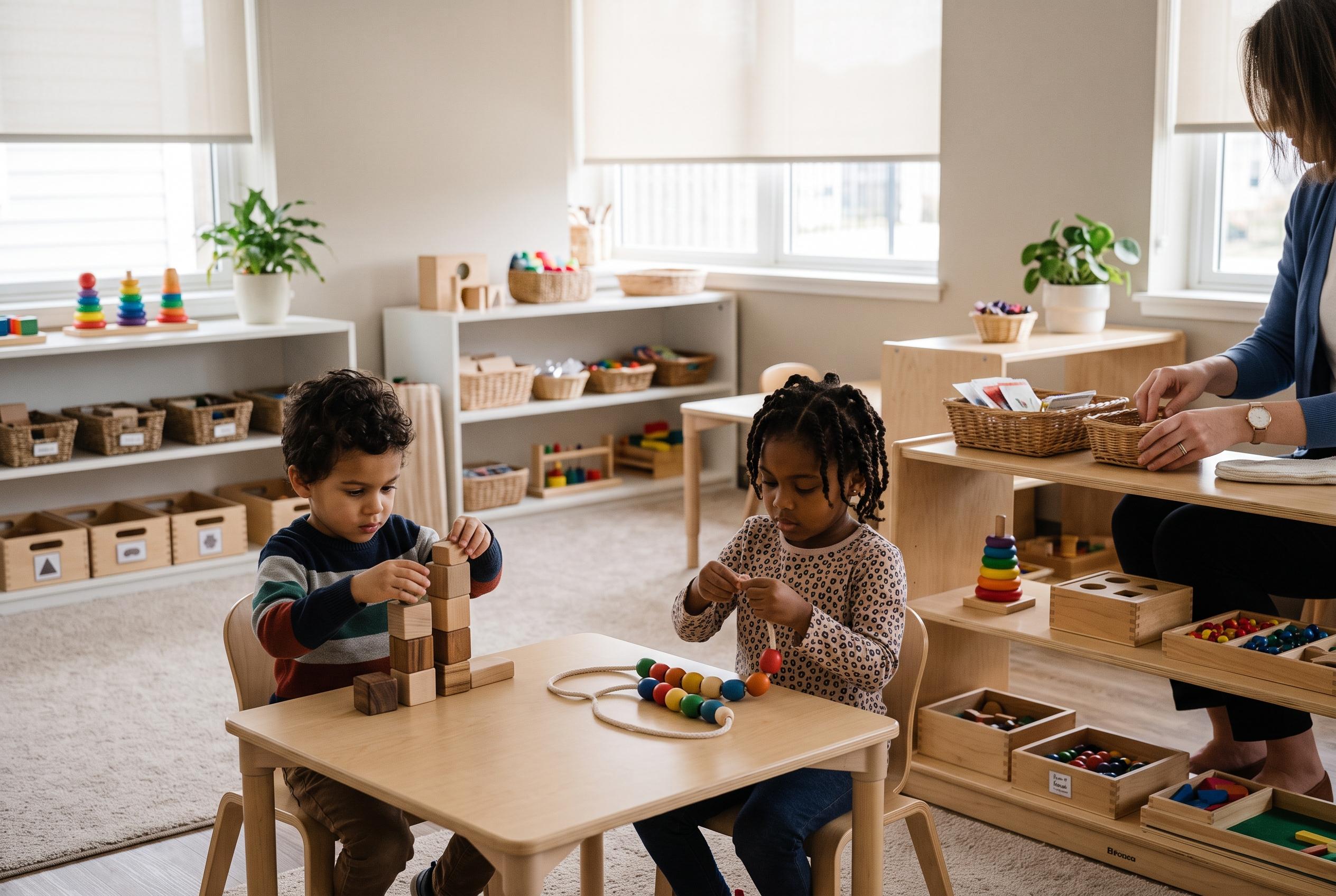

Structured, purposeful independent learning centres can transform busy early years classrooms, fostering confidence, organisation and resilience while giving teachers vital teaching time.
Independent learning centres can transform a busy early years classroom from constant interruption into purposeful, calm activity. For teachers of kindergarten, Pre-K, Year 1 or home education, the appeal is obvious: while one group is working independently, another can receive focused teaching, assessment or support. The idea is not simply to keep children occupied, but to give them repeated chances to practise skills, build confidence and learn how to manage a task on their own. The Texas Education Agency says kindergarten learning centres should be age-appropriate, accessible and designed to reinforce literacy, maths and social development through hands-on experience.
What makes these centres effective is not only the activity itself, but the routine surrounding it. Early childhood specialists frequently stress that young children thrive when the structure is predictable and the expectations are clear. Centre-based learning, according to Peacock Learning Academy, supports cognitive, social-emotional, physical and language development because children learn through active engagement rather than passive instruction. In practice, that means children need to know where to go, what to collect, how to begin, what to do when finished and how to tidy up. Without that consistency, even a well-designed activity can quickly become confusing.
A common mistake is introducing too many stations at once. The better approach is to begin with a small number of centres and teach them carefully, step by step. Children should be shown how to gather materials, start the task, ask for help appropriately, clean up and move on to the next activity. Research summaries on independent learning in early childhood consistently point to the same conclusion: independence develops over time. It is supported by practice, repetition and opportunities to solve small problems, not by expectation alone.
The best independent learning centres are usually simple, hands-on and familiar in format, even when the skill changes. Literacy centres might involve matching letters, building words or practising sight words. Maths centres can focus on counting, number sense, teen numbers or sorting. Writing stations can begin with drawing and labelling before moving towards sentences and short compositions. Fine motor activities, such as using manipulatives or small tools, are especially useful because they strengthen the hand muscles children need for writing while also keeping the task engaging.
Keeping the structure consistent is often more valuable than constantly inventing something new. A repeated pattern, such as pick, complete, check and put away, allows children to concentrate on the learning rather than on decoding the routine. That approach fits with broader early childhood thinking from Montessori-style and child-led programmes, which emphasise self-directed work, choice and movement at a child’s own pace. When the framework stays the same, the teacher can change the academic content without forcing children to relearn the entire process every time.
Visual support also matters. Many young learners are not yet fluent readers, so picture directions, simple step cards and completed examples can make a centre far more independent. Equally important is organisation: if children cannot easily find the materials or know where to return them, the station is no longer truly independent. Clear storage, labelled containers and consistent placement of resources reduce confusion and save teaching time. In well-run early years classrooms, organisation is not a luxury; it is part of the instruction.
Even then, perfection should not be the goal. Young children will make mistakes, ask for help and occasionally drift off task. That is normal. What matters is gradual progress towards greater responsibility, stronger problem-solving and a better understanding that effort counts. Independent learning in the early years can support focus, working memory, emotional resilience and motivation, while also giving teachers the breathing room to work with small groups more effectively. When centres are purposeful, well taught and predictable, they become more than filler activities. They become a practical way to build capable, confident learners.
Disclaimer: This content is for informational purposes only and is not intended to be a substitute for professional medical judgment, advice, diagnosis, or treatment.



