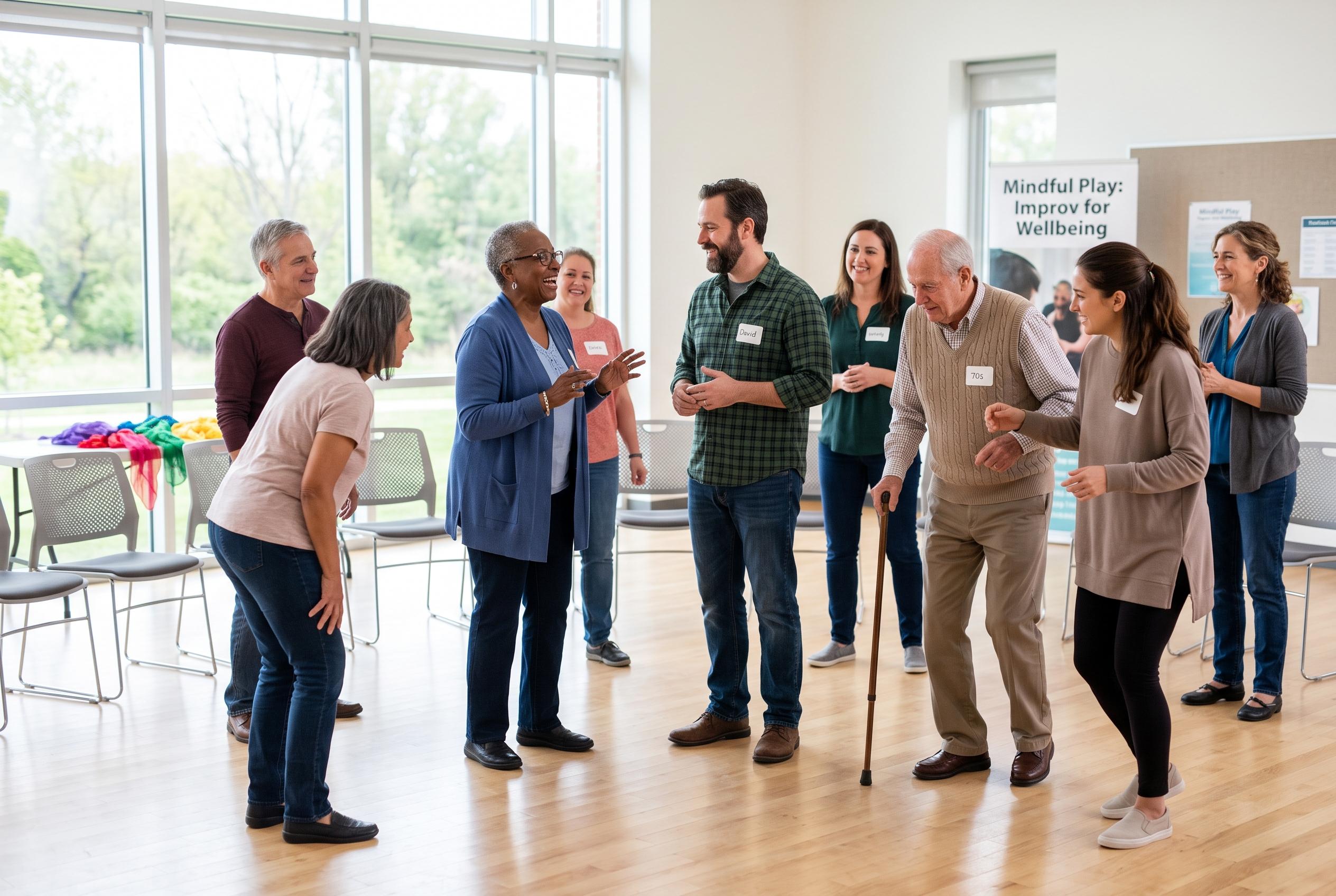

Recent research highlights how improvisational theatre techniques are transforming mental health support, education, and elder care by fostering self-awareness, social connection, and cognitive resilience beyond traditional stagecraft.
Improvisational theatre is increasingly being treated as more than a performance skill. Researchers cited by Frontiers in Psychology and other journals suggest that the practice can sharpen self-awareness, heighten attention to others and build trust inside groups, largely because performers have to respond in real time without a script or safety net.
That openness to uncertainty is one reason the work is drawing interest from psychology and education. A Frontiers article comparing improv with applied psychology approaches argues that the discipline overlaps with mindfulness and positive psychology, while a separate study in a ScienceDirect journal found that training in improvisation can improve divergent thinking, tolerance of ambiguity and emotional well-being.
The idea has also been extended into research on social meaning-making. A study in a SAGE journal describes improvisational drama as a way to explore human interaction, using techniques such as image theatre and hot-seating to examine how people construct truth and narrative in collaborative settings.
In healthcare, the appeal is partly practical. A scoping review indexed on PubMed found that improv principles such as acceptance, collaboration and deep listening may benefit clinicians, students, patients and carers, while another PubMed study on Playback Theatre suggested that having personal stories immediately re-enacted by performers can support therapy and community connection.
The field is now moving beyond emotional and social outcomes. An exploratory study in ScienceDirect examined whether improv might aid older adults by supporting physical and cognitive function as well as quality of life, pointing to the format’s multi-layered nature as an intervention. Taken together, the research suggests that improvisation is being redefined as a serious tool for learning, wellbeing and care, not merely a stagecraft exercise.
Disclaimer: This content is for informational purposes only and is not intended to be a substitute for professional medical judgment, advice, diagnosis, or treatment.