

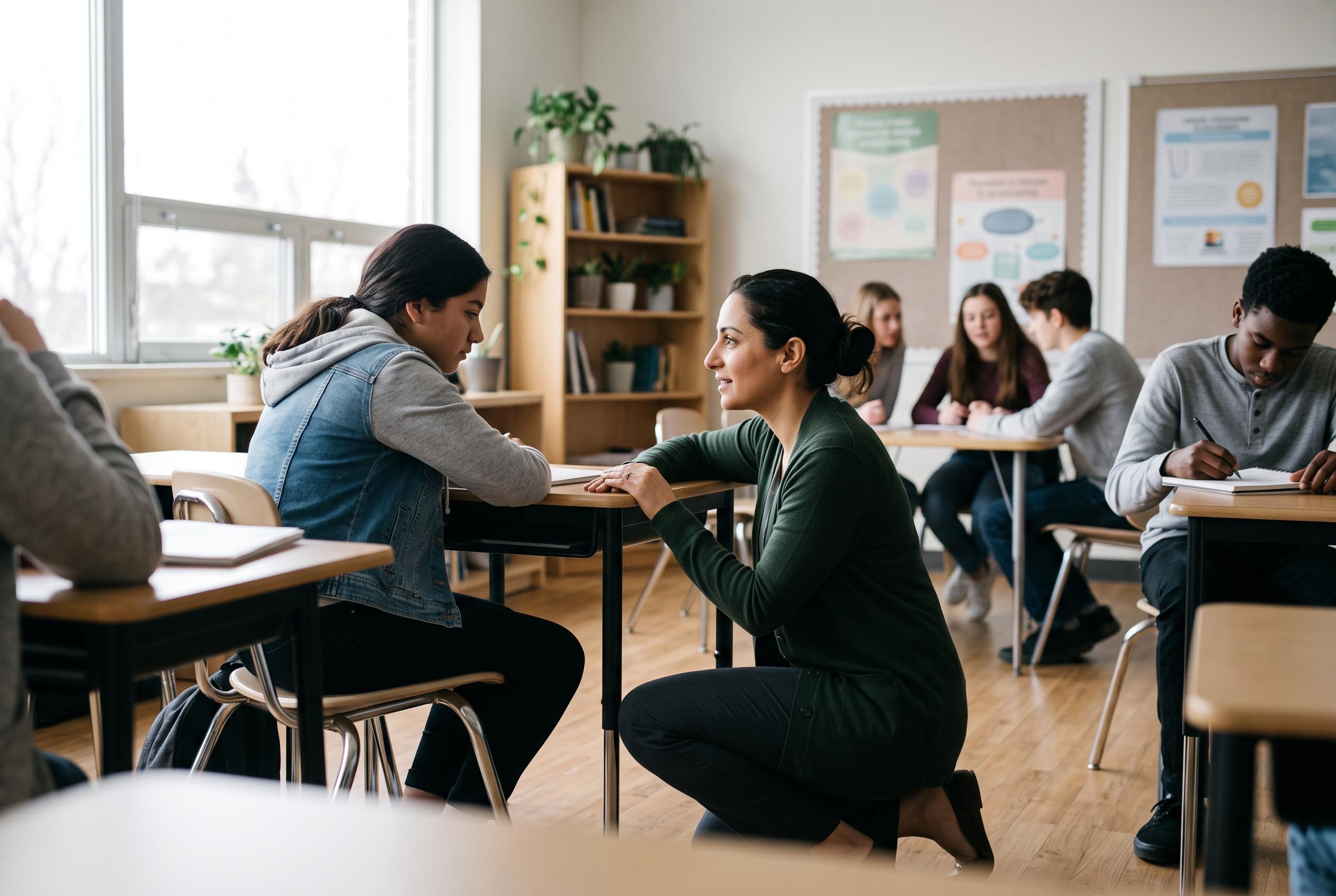

Educators’ careful observation and practical adjustments can play a crucial role in identifying early signs of emotional distress among students, fostering a healthier school climate and improving academic outcomes.
Teachers are often the first to notice when a pupil’s emotional state has changed. A sudden drop in participation, withdrawal from classmates, irritability or a decline in marks can be early signs that something deeper is going on, but specialists say these shifts should be read through careful observation rather than instinct alone. Flavia Marsola Cembranel, a psychologist who works with adolescents and adults, says distress can look very different depending on age: younger children may show it through tears, refusal to go to school or physical complaints, while teenagers may become isolated, sleep badly or lose interest in activities they once enjoyed.
That matters because emotional strain can interfere with learning itself. Elaine Cristina, a psychopedagogist with training in cognitive neuroscience and neuropsychopedagogy, says stress can disrupt attention, working memory and planning as the brain diverts resources towards dealing with threat. The California Department of Education says a supportive school climate is linked to stronger motivation and better academic performance, while the US Centers for Disease Control and Prevention places social and emotional climate at the centre of its whole-school health model. A review indexed in PubMed also found that healthier school environments can improve pupils’ mental health as well as other wellbeing outcomes.
The key, specialists say, is for schools to observe and record, not diagnose. Rather than labelling a child as depressed or unmotivated, teachers are encouraged to note concrete changes over time, such as a pupil who has become withdrawn during breaks or whose performance has fallen over several weeks. Research on teacher responses to emotional and behavioural difficulties suggests that adults in schools are well placed to notice problems, but their responses are often uneven, which is why training and clear procedures matter.
Schools can also make practical adjustments without lowering expectations. Breaking larger tasks into smaller steps, giving instructions more clearly and avoiding public exposure can help pupils who are feeling overwhelmed regain a sense of structure and safety. The wider school environment also plays a role: youth health guidance in the United States says students’ sense of belonging and safety protects healthy development and reduces risks such as bullying and substance use. When concerns arise, the conversation with families should be collaborative and focused on what has been observed, not on assumptions, with urgent referral to safeguarding staff if there are signs of violence, self-harm or suicidal thoughts.
Disclaimer: This content is for informational purposes only and is not intended to be a substitute for professional medical judgment, advice, diagnosis, or treatment.



