

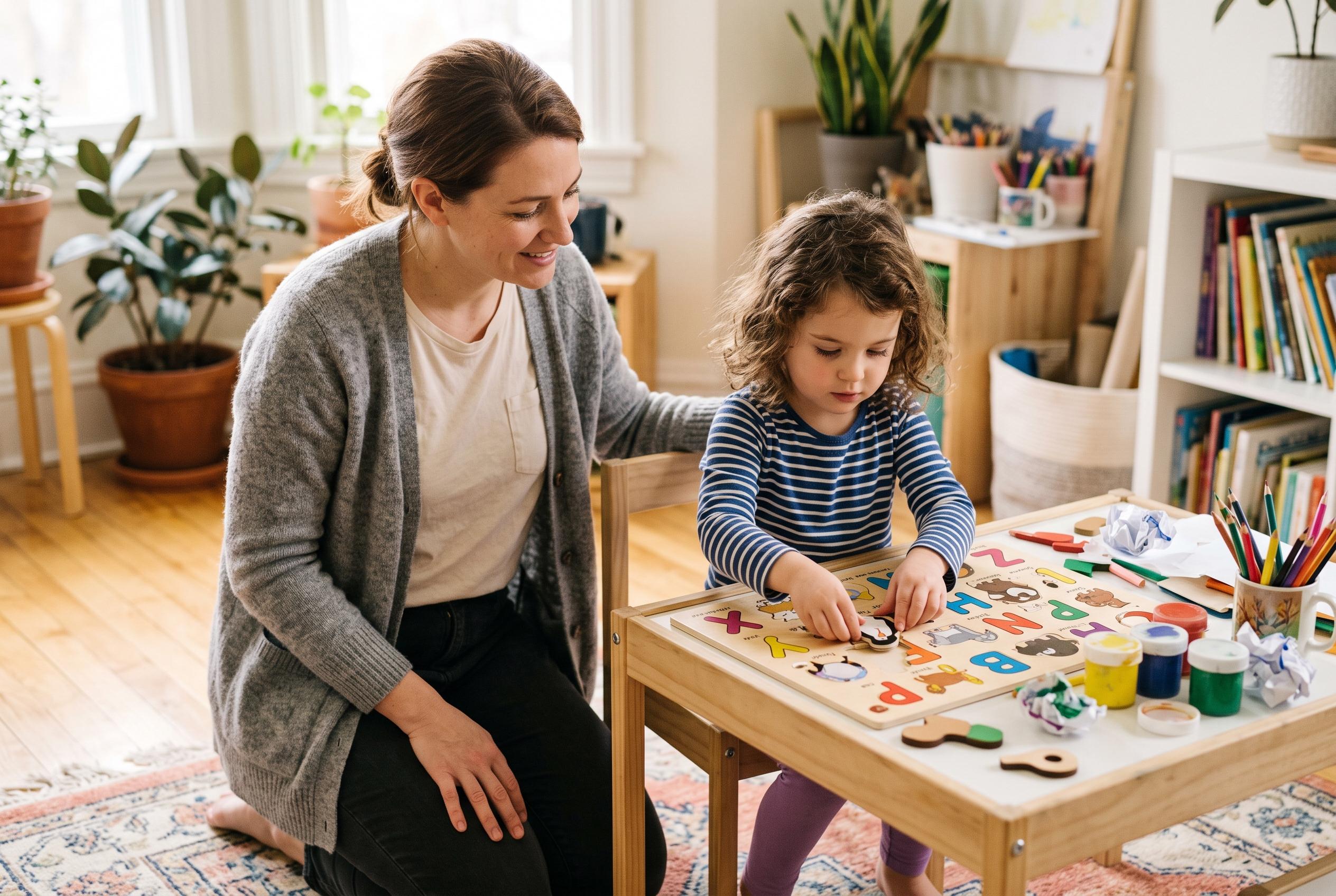

Specific praise, supportive responses to mistakes and adults modelling persistence can help children see ability as something that develops through practice.
Children who repeatedly tell themselves, “I’m so bad at math” or “I’ll never learn this” may be showing a fixed view of ability, but parents can help shift that thinking. A growth mindset is the idea that skills improve through effort, practice, support and learning from mistakes. Traci Haly, a school counsellor at CBA, says children can be encouraged to see setbacks as part of the learning process rather than proof that they are not capable.
One of the most effective tools is praise that focuses on the process, not the child’s supposed talent. Instead of saying a child is “so smart”, parents can point to the specific action that helped, such as checking work carefully or trying another method. Boston Children’s Health Physicians says this kind of encouragement helps children understand that progress comes from effort and persistence, while Connecticut Children’s adds that recognising challenge and improvement can strengthen motivation and resilience.
Parents can also turn mistakes into a normal part of learning. Haly suggests asking what was confusing and what might be tried differently next time, keeping the conversation focused on what the setback can teach. That approach is echoed by other child-development writers, who say children benefit when adults treat errors as useful information rather than failure. Using the word “yet” can be especially powerful, as in, “You haven’t learned this yet”, because it leaves room for progress and reduces the sense that ability is fixed.
Modelling the behaviour matters too. Haly recommends thinking out loud when something does not go to plan, so children hear an adult say, “That didn’t work. I’m going to try another way.” Harvard Graduate School of Education has also noted that children are more likely to adopt a growth mindset when the adults around them demonstrate one themselves. Other guidance, including from parenting and child-health sources, stresses the value of curiosity, realistic goals and a supportive home environment where children are encouraged to keep trying rather than comparing themselves with others.
Building these habits into daily life can be simple. Parents can ask at dinner or bedtime what their child learned that day, or what mistake taught them something useful. That kind of routine helps children practise reflection, notice progress and understand that abilities are not fixed. In that way, a growth mindset becomes less of a slogan and more of a family habit that can support resilience, confidence and steady improvement over time.
Disclaimer: This content is for informational purposes only and is not intended to be a substitute for professional medical judgment, advice, diagnosis, or treatment.



