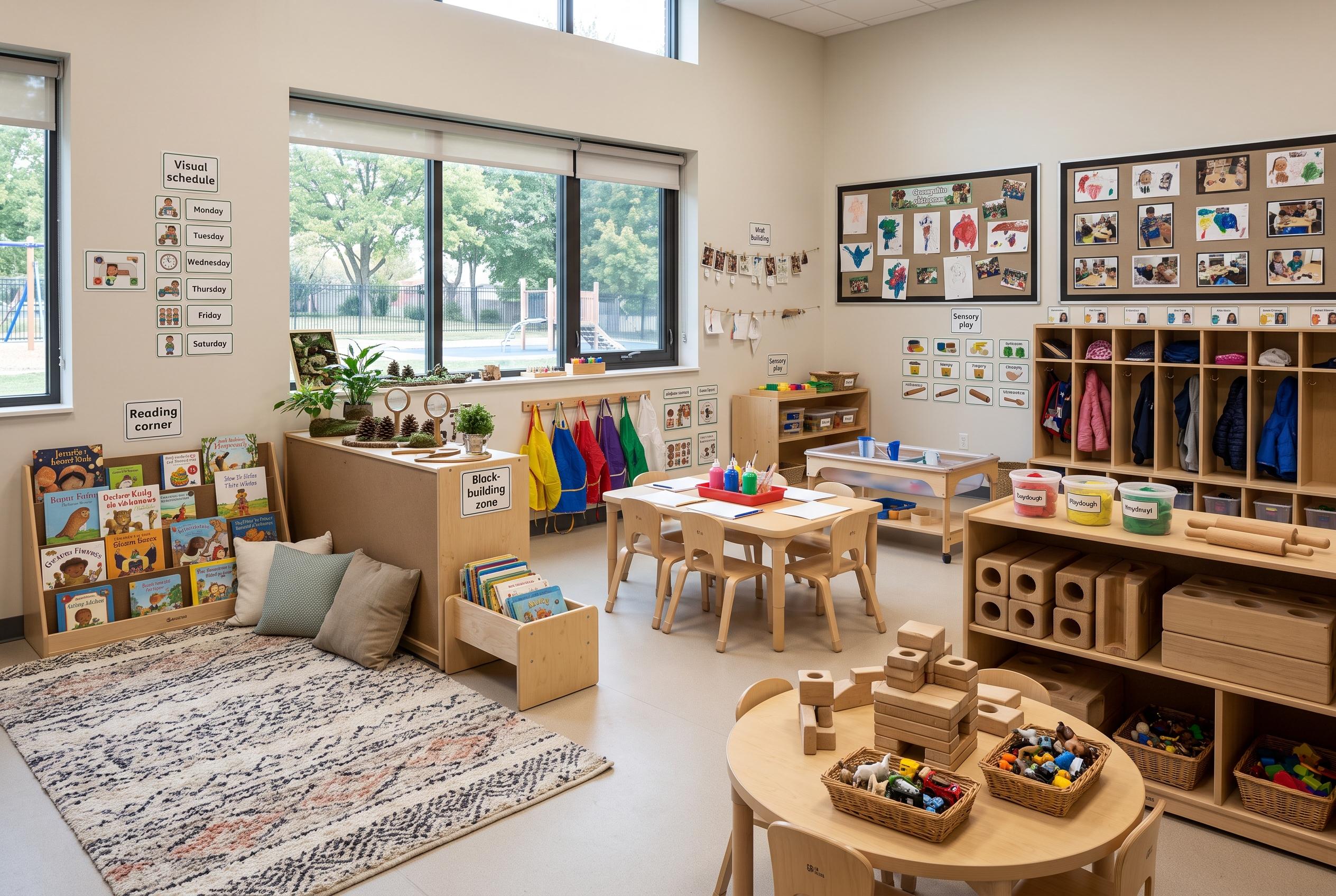

Research shows that thoughtfully planned classroom environments can significantly influence children’s behaviour and learning, emphasising the importance of purposeful space arrangements to foster engagement and independence in early years education.
As another school year begins, many teachers are reaching for fresh markers, new display paper and a long list of classroom tasks. Yet before the walls fill up and the furniture is fixed in place, it is worth remembering that room layout is not just decorative. According to research on classroom design, the physical setting can shape behaviour, attention and learning in ways that are easy to miss but hard to ignore.
That matters most in the early years, when children are especially sensitive to what they see around them. A crowded, confusing room can leave young pupils overstimulated and unsure where to focus. Studies have found that heavily decorated classrooms can increase distraction and reduce time on task, while a more orderly environment can support better engagement. In other words, what looks lively to adults may feel noisy to a child’s developing brain.
The idea has deep roots in early years practice. Reggio Emilia educators have long described the classroom environment as a “third teacher”, alongside adults and peers, because a well-planned space can guide children towards independence, curiosity and self-regulation. That view is backed by later research. One review in the journal Educational Research found that factors such as seating, density, noise and windows can affect behaviour and achievement, while another study of more than 3,700 pupils across 27 schools found that classroom design had a measurable effect on learning progress.
For teachers, the practical lesson is not to create a picture-perfect room, but a purposeful one. Clear boundaries between activity areas, simple labels, visual reminders at child height and uncluttered walls can all reduce unnecessary confusion. A rug can mark a meeting space, shelving can define a reading corner, and fewer displays can make the most important routines easier to follow. Small changes often have outsized effects, especially at transition points where many behaviour problems begin.
The broader message is that classroom management starts long before the first reminder is given. A calm, well-organised room helps pupils understand what is expected of them and lowers the emotional strain of navigating the day. For teachers heading into a new term, that can mean fewer interruptions, smoother routines and a space that quietly supports learning from the start.
Disclaimer: This content is for informational purposes only and is not intended to be a substitute for professional medical judgment, advice, diagnosis, or treatment.