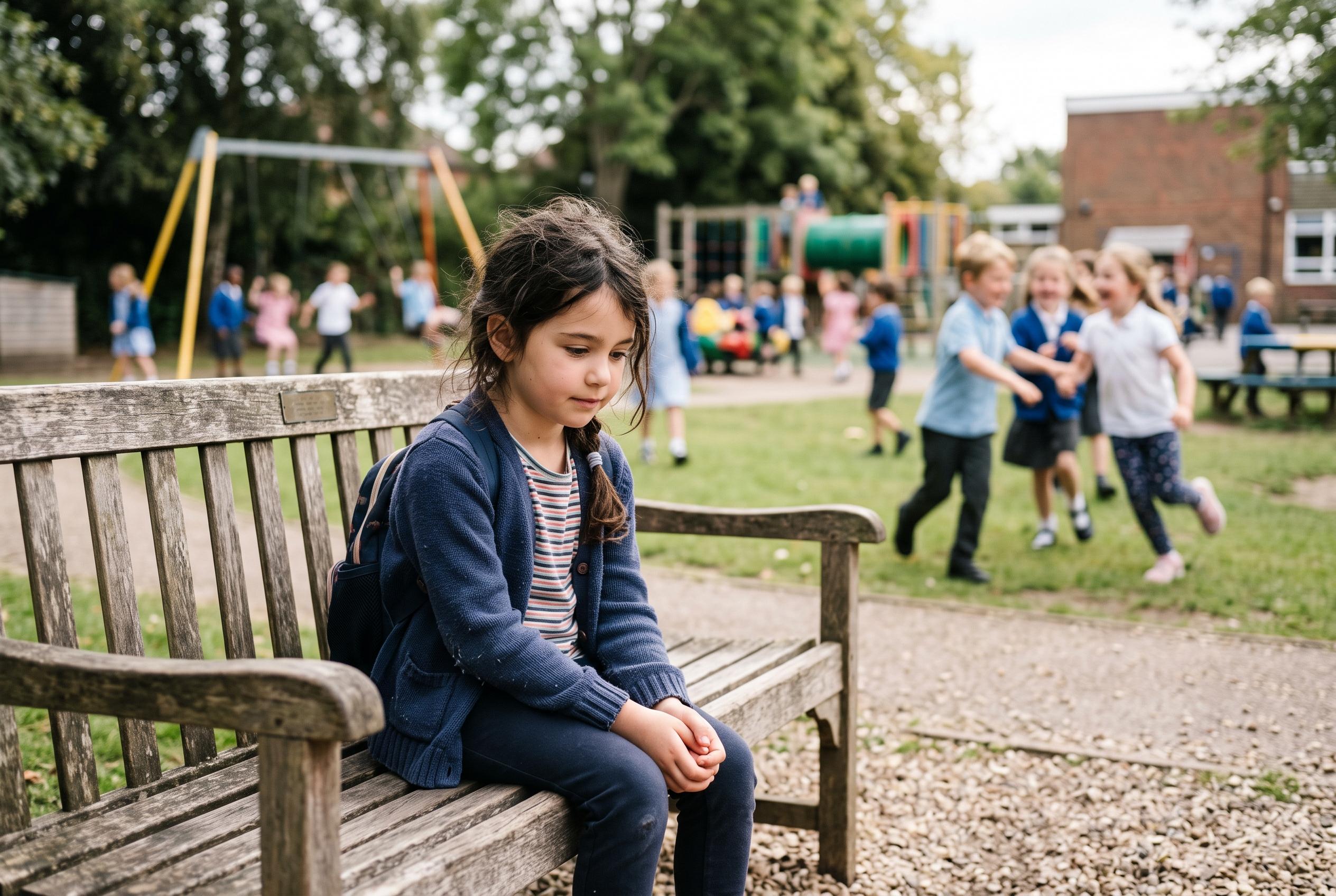

New research suggests that while empathy reduces bullying behaviour, highly empathetic children may be more vulnerable to victimisation, urging schools to tailor anti-bullying programs carefully.
Primary school pupils who show strong empathy for children being bullied may be less likely to become bullies themselves, but they may also face a greater risk of being picked on later. A study published in JCPP Advances, (acamh.onlinelibrary.wiley.com) using data from 4,660 children aged six to 11, found that both cognitive empathy, recognising another child’s feelings, and affective empathy, sharing those feelings, were linked to lower odds of later bullying perpetration and higher odds of later victimisation.
That matters because empathy training is built into many school anti-bullying programmes on the assumption that more empathy will help reduce cruelty. The researchers argue that the picture is more complicated. In the paper’s conclusion, (acamh.onlinelibrary.wiley.com) they describe high empathy as a “new risk factor for peer victimisation” and say schools should not assume that increasing empathy will always be beneficial for every child involved in bullying.
The analysis drew on the “usual practise” control arm of the Stand Together trial, (acamh.onlinelibrary.wiley.com) a large UK anti-bullying study carried out in 118 state-maintained primary schools across England and Wales. From an original trial population of 11,111 pupils, the researchers focused on 4,660 children who completed baseline surveys in 2021 and follow-up surveys in 2022. The group included 2,341 girls, had a mean age of 8.77, and came from mainstream schools with Key Stage 2 classes. Baseline data were gathered between April and June 2021, with follow-up collected a year later between April and June 2022.
To try to separate cause from correlation, the team used generalised propensity score matching and multinomial logistic regression, (acamh.onlinelibrary.wiley.com) matching children on age, gender, bullying involvement at baseline and emotional symptoms. The researchers said that approach let them approximate some of the control of a randomised study while working with observational school data. Emotional symptoms were included partly because heightened sensitivity linked to empathy might itself make some children more exposed to distress or more likely to report it.
The statistical results were striking. Low affective empathy predicted later bullying perpetration with an odds ratio of 0.60, while low cognitive empathy predicted perpetration with an odds ratio of 0.73, (acamh.onlinelibrary.wiley.com) both highly significant findings. At the same time, high affective empathy predicted later victimisation with an odds ratio of 1.34, and high cognitive empathy predicted later victimisation with an odds ratio of 1.33. There was no significant association between either form of empathy and later becoming a bully-victim, the mixed group who both bully others and are bullied themselves.
The paper’s descriptive breakdown adds some texture to that picture. Most children in the sample were not involved in bullying, but 1,583 were classified as victims, 270 as bullies and 331 as bully-victims, (pure-oai.bham.ac.uk) according to the study tables. Boys made up 54.81 per cent of the bully group and 60.42 per cent of the bully-victim group. Children identified as victims also recorded higher average empathy scores than those not involved in bullying, while bullies showed slightly lower scores on both cognitive and affective empathy.
What the study cannot yet explain is why empathy might make some younger children more vulnerable. The authors note that earlier work had often treated the link the other way round, suggesting that being victimised could increase empathy over time. But after adjusting for bullying at baseline and other factors, including emotional symptoms, the new analysis still found high empathy predicting later victimisation. In the discussion, (pure-oai.bham.ac.uk) the researchers say that raises questions about whether sensitive, highly attuned children may be more exposed to distress, more visibly affected by conflict, or otherwise easier for peers to single out. They also warn that a “one size fits all” approach to empathy work could create problems.
The research had been circulating before the journal paper appeared. The project was presented by Katerina Romanova of the University of Oxford in Lisbon on 19 June 2024, (2024biennial.issbd.org) in a symposium titled “Insights into bullying dynamics and antibullying interventions”. Oxford’s research archive and departmental publication pages later listed the study as open access through Wiley, with the DOI 10.1002/jcv2.70127, (ora.ox.ac.uk) and PubMed indexed it as a longitudinal analysis of Stand Together data. The author list spans Oxford, Bangor, Birmingham and Warwick.
For schools, parents and programme designers, the message is not to abandon empathy, but to use it more carefully. The findings support efforts to reduce bullying by helping children understand and respond to others’ distress, (acamh.onlinelibrary.wiley.com) while also suggesting that highly empathetic pupils may need stronger protection through classroom climate, peer norms and adult support. The next step for the field is to work out which children benefit most from empathy-focused interventions, and how to make sure a strength that ought to foster kindness does not leave some pupils more exposed.
Disclaimer: This content is for informational purposes only and is not intended to be a substitute for professional medical judgment, advice, diagnosis, or treatment.