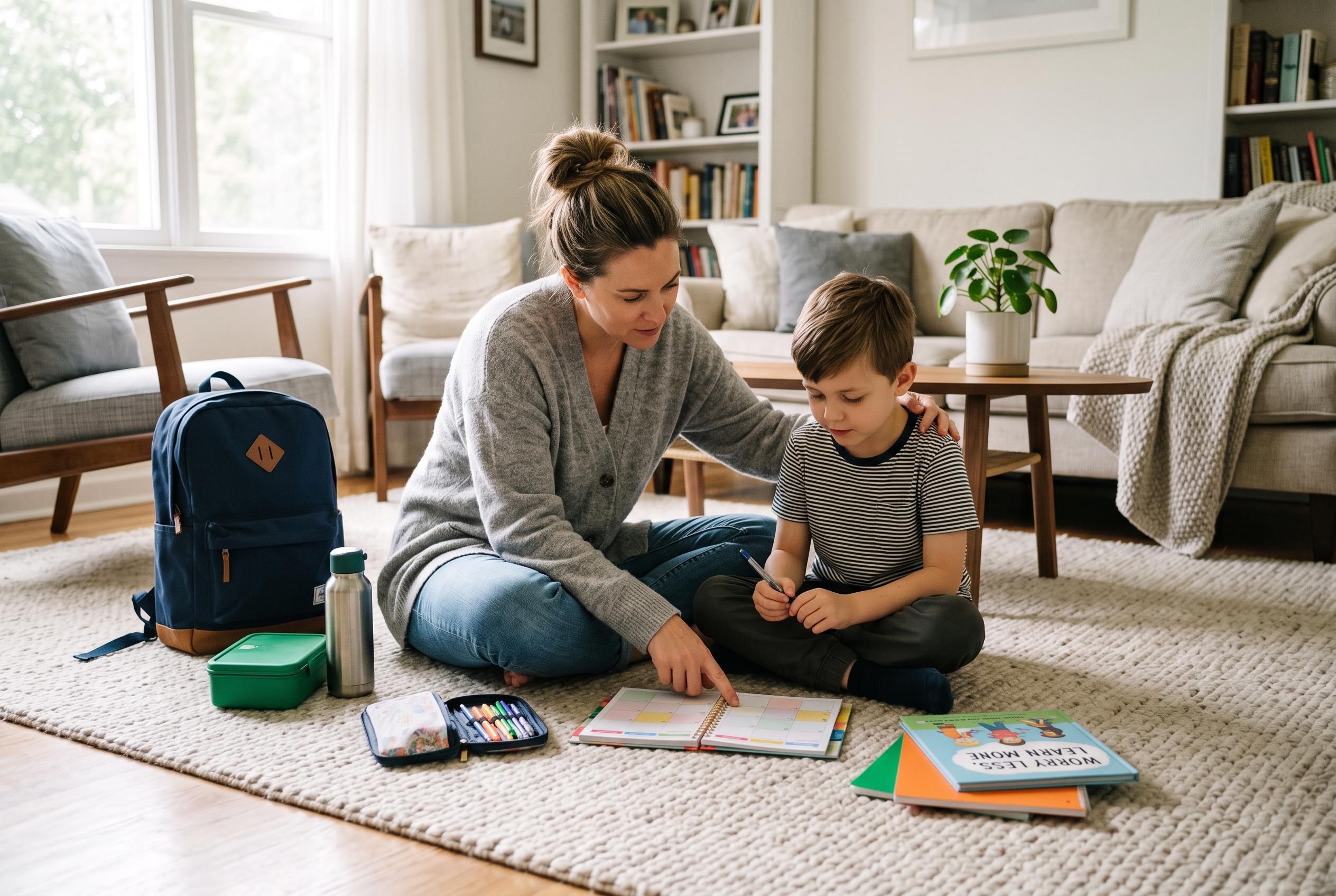

Child mental health experts emphasise that managing back-to-school anxiety is about fostering resilience through routine, modelling calmness, and teaching simple coping skills, ensuring children are prepared for the new academic year.
The start of a new school year can stir up a familiar mix of nerves and excitement, and according to Jody Baumstein, a licensed psychotherapist with Children’s Healthcare of Atlanta, that reaction is often a healthy response to change. As Johns Hopkins Medicine and other child mental health experts note, children may worry about new routines, teachers, classmates and expectations, whether they are entering school for the first time or returning after a long break.
Baumstein said the goal is not to remove every trace of anxiety, but to keep it manageable. “There’s a sweet spot where we can feel some, but not be overwhelmed and consumed by it,” Baumstein said. She recommends teaching coping skills before a child is under stress, so the tools are already familiar when the school day becomes difficult.
Those tools can be simple: slowing the body with deep breathing, planting feet firmly on the floor, counting to 10 or practising stomach breathing with a hand on the belly. For younger children, Baumstein suggested using a stuffed animal on the abdomen while lying down so they can watch it rise and fall with each breath. Children’s Health and the Kids Mental Health Foundation say similar preparation can help, including revisiting routines before the first day, visiting the school building, arranging playdates with familiar peers and involving children in shopping for supplies to build confidence.
Experts also stress the value of parents modelling calm behaviour. Baumstein said children learn by watching how adults respond to pressure, and that talking through a stressful moment out loud can be instructive. “Explain what you’re feeling and what you’re going to do with that feeling to prepare, because that’s how they learn,” Baumstein said. Johns Hopkins Medicine and Psychology Today both say acknowledging a child’s fear, setting clear expectations and solving problems together can reduce worry, while persistent anxiety that lasts more than a few weeks may warrant professional help.
Disclaimer: This content is for informational purposes only and is not intended to be a substitute for professional medical judgment, advice, diagnosis, or treatment.