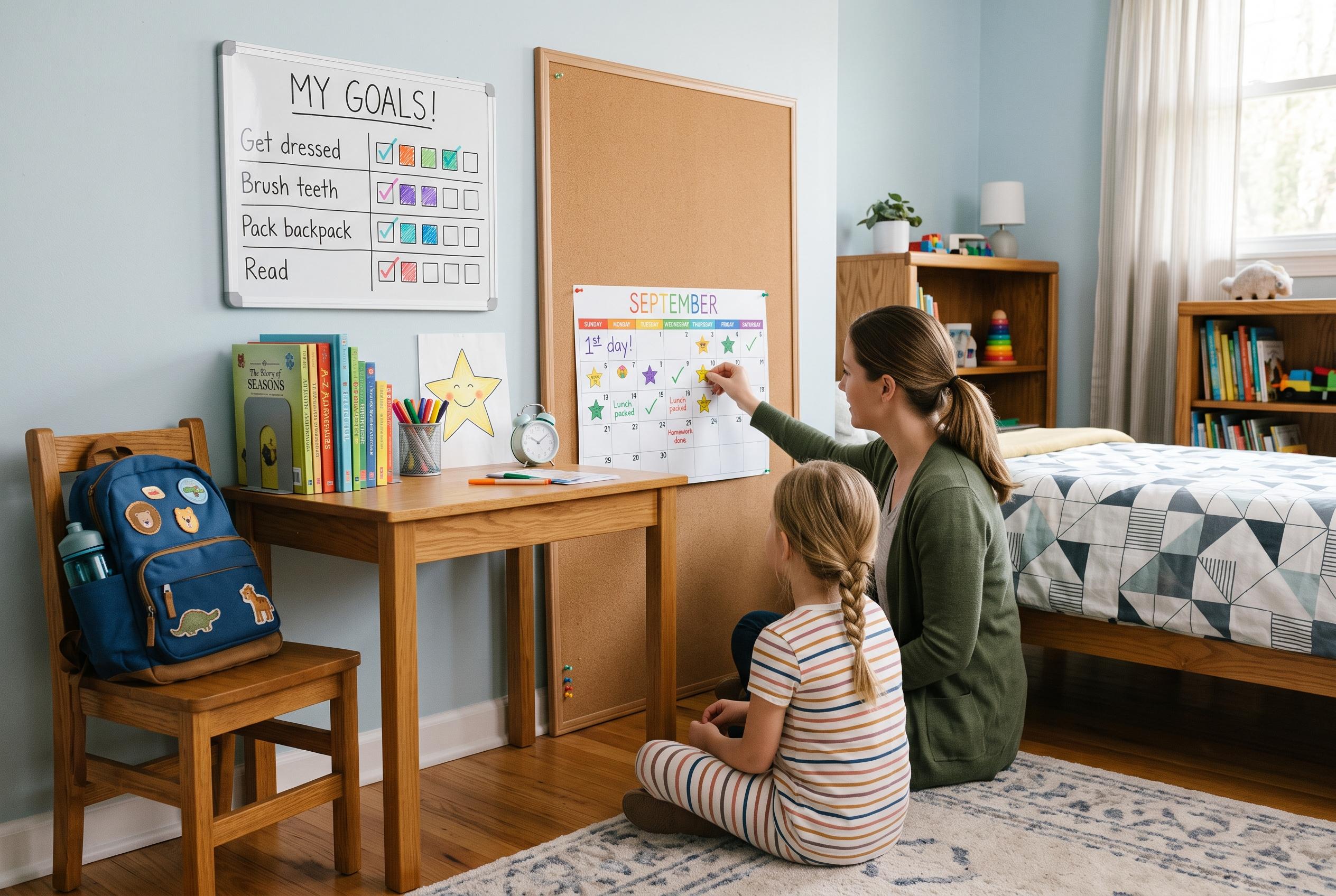

Experts recommend gradual routines, small goals, and visual progress tools to support children returning to school after summer break, reducing stress and fostering motivation.
The return to school after six weeks off can feel like a sudden climb for many children, with new timetables, expectations and social pressures arriving all at once. Ulrike Lichtinger, a social science professor at the IU International University of Applied Sciences who researches positive education, says parents should resist the instinct to push harder when a child seems tense, blocked or unmotivated. She argues that criticism, comparisons and commands such as “pull yourself together” usually deepen shame and resistance rather than spark effort.
Instead, Lichtinger says children do best when the first steps back are small and manageable. Her approach is built around early wins: revisiting just a few tasks the child has already mastered, rather than trying to cover an entire year’s worth of material. She recommends setting tiny goals in advance, then following up the next day with specific feedback that names exactly what went well, such as sticking with a difficult task or beginning work despite not feeling ready.
That emphasis on structure aligns with guidance from child-focused health and parenting organisations, which say families should ease back into school routines gradually. The Children’s Psych Center advises shifting bedtime in small increments and restoring predictable morning habits, while Johns Hopkins Medicine suggests parents should not let the first day of term arrive as a surprise. Both recommend using the days before school starts to reset sleep patterns and reduce stress.
Lichtinger’s other strategies focus on helping children see progress rather than failure. She suggests turning the school year into a visual climb, with a simple progress board that records completed tasks along the way, so a child can see evidence of effort that might otherwise be forgotten. She also recommends a short pre-test exercise: asking children to write down three things they still know, two they are unsure about and one thing they do not yet understand, so they start from what is familiar rather than from a sense of emptiness.
When homework or revision feels overwhelming, Lichtinger says the answer is not for parents to take over, but to reduce the starting barrier. That can mean asking a child to begin with only one worksheet question, underline a key phrase or write just a heading and three bullet points before continuing. The idea, echoed by other parenting guidance that stresses predictable routines, snacks and gradual preparation, is to make school feel less like a wall and more like a series of small, winnable steps.
Disclaimer: This content is for informational purposes only and is not intended to be a substitute for professional medical judgment, advice, diagnosis, or treatment.