

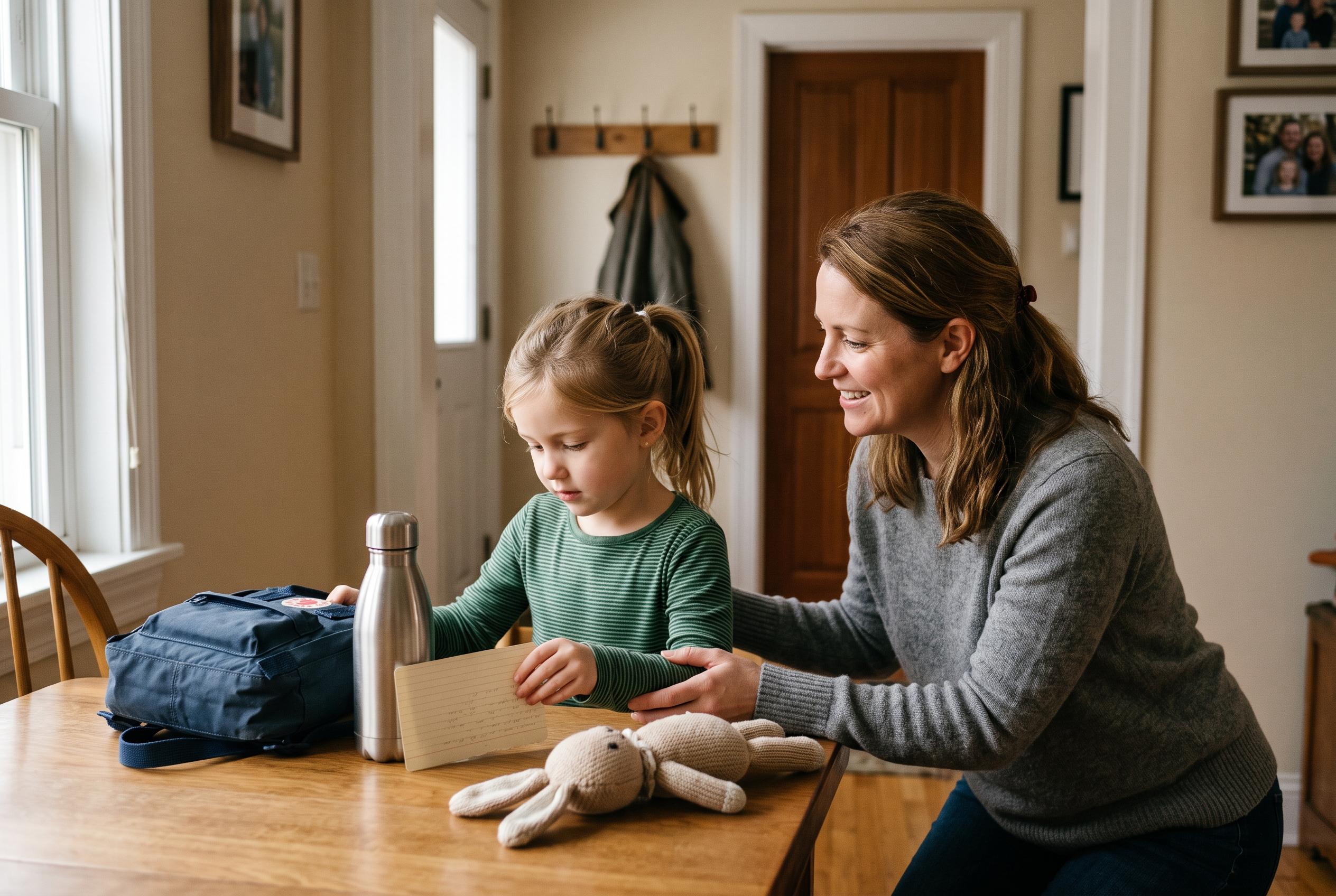

Parents and caregivers can ease children’s transitions during change by preparing them in advance, maintaining routines, and responding calmly, helping kids build confidence and resilience in the face of disruption.
Some children adapt quickly when plans shift. Others need more warning, more reassurance and more repetition before a change feels manageable. For parents and caregivers, the challenge is often not the change itself but the way a small disruption can unsettle an entire morning, especially when children are already tired, hungry or on a tight schedule.
One of the most effective steps is simply to prepare children in advance. Utah State University Extension advises parents to be open and honest about likely changes, while keeping explanations simple enough for young children to follow. That can mean saying in the morning that a grandparent will collect them after school, then repeating the message later so it has time to settle. The aim is not to remove every uncertainty, but to help children understand what will be different and what will stay the same.
Predictable routines can also soften the impact of disruption. Children’s Health and Nationwide Children’s Hospital both recommend preserving familiar anchors during periods of change, whether that means keeping the same bedtime story, maintaining regular limits or sticking with a usual breakfast routine when the rest of the day looks different. Small elements of normal life can make an unfamiliar day feel less threatening, especially during bigger transitions such as a move or a new school. The Children’s Health guidance on school changes also stresses that giving children time to adjust, and helping them become familiar with new surroundings, can reduce distress.
Another useful tool is choice. When children feel that a plan has been imposed on them, even small decisions can restore a sense of control. Parents can offer limited options that both work for the family, such as which jumper to wear or which toy to bring in the car. That approach is especially helpful for children with ADHD, who may find transitions more difficult and benefit from extra structure, positive self-talk and support that helps counter anxious or negative thinking, according to guidance from Navigating ADHD.
Just as important is the way adults respond in the moment. Experts cited by several child-health organisations advise naming the feeling without trying to argue with it. A child who is upset about a change may need to hear that their reaction makes sense before they are ready to move on. Teaching coping skills, such as slow breathing or simple calming phrases, works best when children are already settled rather than in the middle of a meltdown. Connecticut Children’s notes that parents’ own calm can also help children feel more secure during periods of transition.
Parents should also watch for patterns. Some children struggle most at bedtime, while others find goodbye moments especially hard. Spotting those triggers can help families plan ahead in smarter ways. And if transitions regularly disrupt sleep, school, friendships or daily life, the difficulty may need more support. Child-health organisations say parents should speak with a paediatrician or other professional when reactions to change become intense or persistent, since there may be sensory issues, anxiety or another underlying factor.
Ultimately, children learn as much from watching adults as they do from direct instruction. When a plan changes, a simple, steady response can show them that disappointment is manageable and that the day can still go on. Over time, those repeated experiences help children build confidence, even if surprises never become their favourite thing.
Disclaimer: This content is for informational purposes only and is not intended to be a substitute for professional medical judgment, advice, diagnosis, or treatment.



