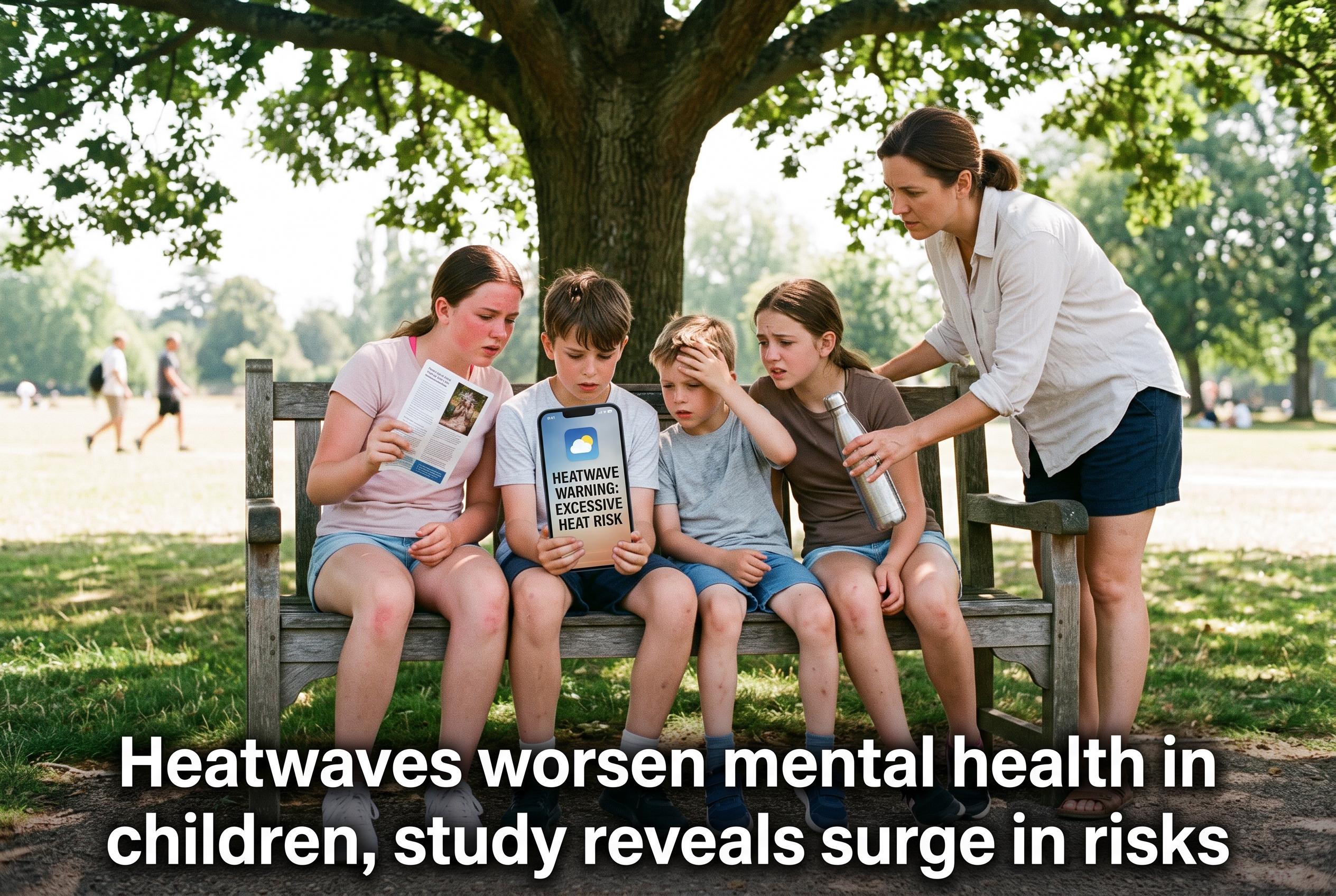

A new review highlights a significant link between hotter days and increased mental health issues among children and adolescents, with heatwaves intensifying risks and impacting emotional wellbeing.
A new review has found that hotter days and heatwaves are linked with worse mental health in children and adolescents, adding to a growing body of evidence that climate-related heat can affect more than physical health. The review, published in the International Journal of Epidemiology, pulled together 23 studies and found that a 1C rise in daily temperature was associated with a 0.9% increase in mental health-related health care use and diagnoses.
The youngest and school-age groups appeared to be most exposed. According to the review, children and teenagers aged 5 to 18 faced a 1.5% higher risk during hotter weather and a 25% higher risk during heatwaves. The biggest effects were seen in humid subtropical and hot-summer continental climates, suggesting that local weather patterns may shape how strongly heat affects mental wellbeing.
Researchers at Flinders University in Adelaide said there are several reasons children may be especially vulnerable, including sleep disruption on hot nights and knock-on effects within families. Jacqueline Stephens said heat can affect emotional regulation and can also increase parental stress, caregiving strain and family conflict, all of which may worsen during heatwaves.
The findings fit with other recent research pointing in the same direction. A systematic review by the UK Health Security Agency found higher suicide risk in many of the studies it examined, while an editorial in the Journal of the American Academy of Child and Adolescent Psychiatry noted that children are biologically less able to cope with heat stress than adults. Separate research from the University of Sydney and Imperial College London has also linked rising temperatures with more mental health hospital visits, poorer wellbeing and, in some studies, higher suicide rates.
Disclaimer: This content is for informational purposes only and is not intended to be a substitute for professional medical judgment, advice, diagnosis, or treatment.