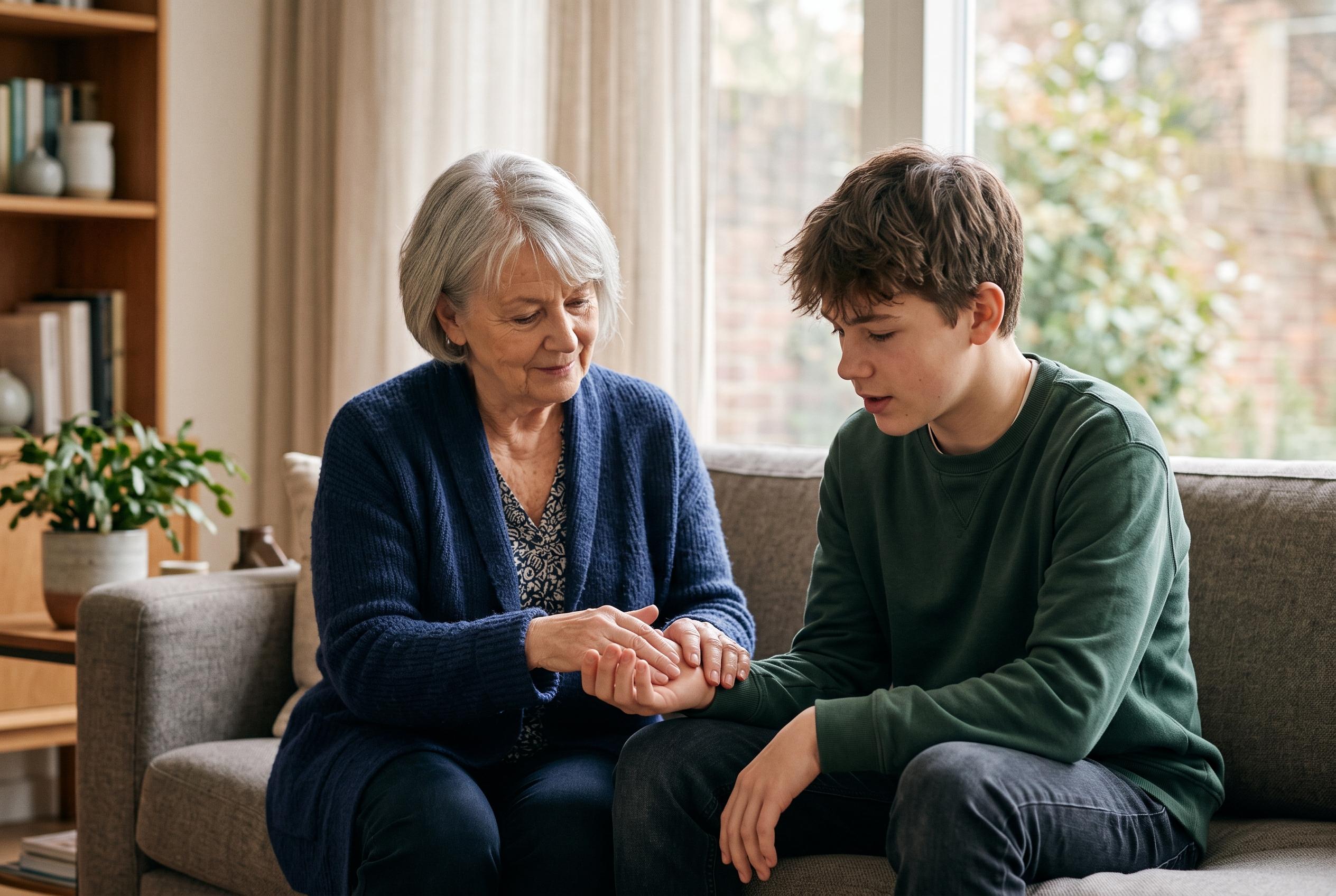

As concerns around youth mental health grow, grandparents are recognised for their unique ability to spot warning signs and provide stability for teenagers navigating emotional challenges, provided they approach with sensitivity and support.
Grandparents can often spot trouble in a teenager before anyone else does. That is partly because they are close enough to notice changes, but not so immersed in the daily pressure of parenting that the signs blur into routine adolescence. Child psychologists have noted that grandparents can play an increasingly important role in young people’s emotional wellbeing, offering steady relationships, meaningful conversation and a sense of security when family life feels unsettled.
The difficulty is separating ordinary teenage moodiness from something more serious. Persistent withdrawal from friends, a clear drop in energy, changes in sleep or appetite, slipping school performance and talk of hopelessness are all warning signs that merit attention. Health guidance on teen mental wellbeing says the key is looking for patterns that last, rather than reacting to a single bad day. Any mention of self-harm should be treated as urgent.
For grandparents, the most important rule is to support rather than sidestep the parents. Mental health advice for extended families stresses the value of asking what help is wanted, respecting parental decisions and offering practical support instead of criticism. That can mean giving lifts to appointments, helping with routines, or simply being available in ways that reduce pressure on the household.
The tone of the conversation matters too. Family guidance on supporting teens says a calm, private approach works better than a confrontation. Grandparents who lead with what they have noticed, rather than with judgement, are more likely to be heard. Listening without lecturing can open the door for a teenager who may not feel able to speak as freely to a parent.
When grandparents speak directly to a grandchild, the aim is not to diagnose or fix everything at once. It is to be a safe, consistent adult who can say, in effect, that the young person is not alone. Child mental health experts interviewed about the wider youth crisis say that this kind of dependable presence can strengthen resilience, especially at a time when many teenagers are struggling with sadness, anxiety or hopelessness.
For grandparents who are raising a grandchild themselves, the responsibility is heavier but the same principles apply: notice changes early, take them seriously and seek professional help when needed. However they fit into the family structure, grandparents can be a stabilising force. They do not have to solve every problem. They do need to stay steady, stay respectful and be ready to help the family find the right support.
Disclaimer: This content is for informational purposes only and is not intended to be a substitute for professional medical judgment, advice, diagnosis, or treatment.