

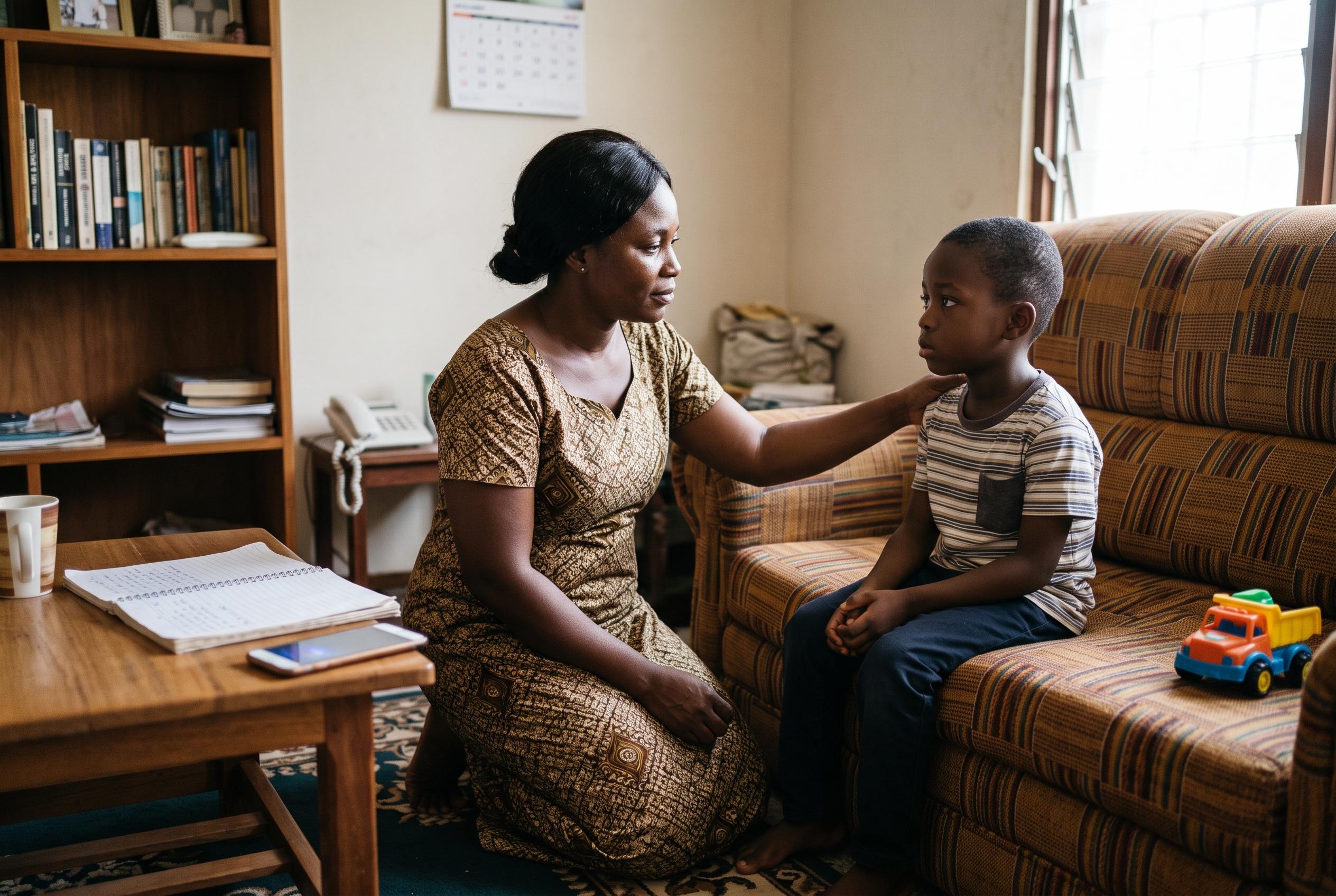

Dr Angela Dwamena-Aboagye urges parents and caregivers to maintain clear boundaries between discipline and abuse, coinciding with a new investigation exposing weaknesses in Ghana’s child protection system.
Dr Angela Dwamena-Aboagye, founder of the Ark Foundation, has urged parents and caregivers to keep discipline in child-rearing firmly separate from abuse, saying guidance and boundaries are essential but must never be used to excuse cruelty. Speaking on Joy FM’s Super Morning Show on Monday, she said discipline is necessary for children in their formative years, but insisted that there is a clear point at which correction becomes harmful.
Dwamena-Aboagye said discipline matters not only for children but also for adults, arguing that societies suffer when self-control and responsibility are weak. Even so, she warned that physical punishment should not escalate into violence, saying many people can recognise when a line has been crossed. She cited the use of household objects, locking a child in a room and withholding food as examples of conduct that should be treated as abuse rather than discipline.
Her remarks come as JoyNews prepares to air an investigative documentary, “Hands That Hurt, Hands That Heal”, made with SOS Children’s Villages. The programme is set to examine violent punishment of children in Ghana, alongside the systems and safeguards meant to protect them, and to highlight gaps that continue to weaken child protection in homes, schools and other care settings. GhanaWebbers reported that Dwamena-Aboagye has also warned that the country’s child protection framework has become less effective despite existing laws and policies.
The Ark Foundation has been pressing for stronger protection more broadly. In recent months, the organisation has called for an overhaul of school safeguarding policies after the alleged sexual abuse of a 14-year-old autistic student, urging mandatory child protection training, better support for survivors and specialised safeguards for children with disabilities. Earlier statements from the foundation have also pointed to weak coordination, poor funding and uneven implementation as persistent barriers in Ghana’s response to gender-based violence and abuse.
Disclaimer: This content is for informational purposes only and is not intended to be a substitute for professional medical judgment, advice, diagnosis, or treatment.



