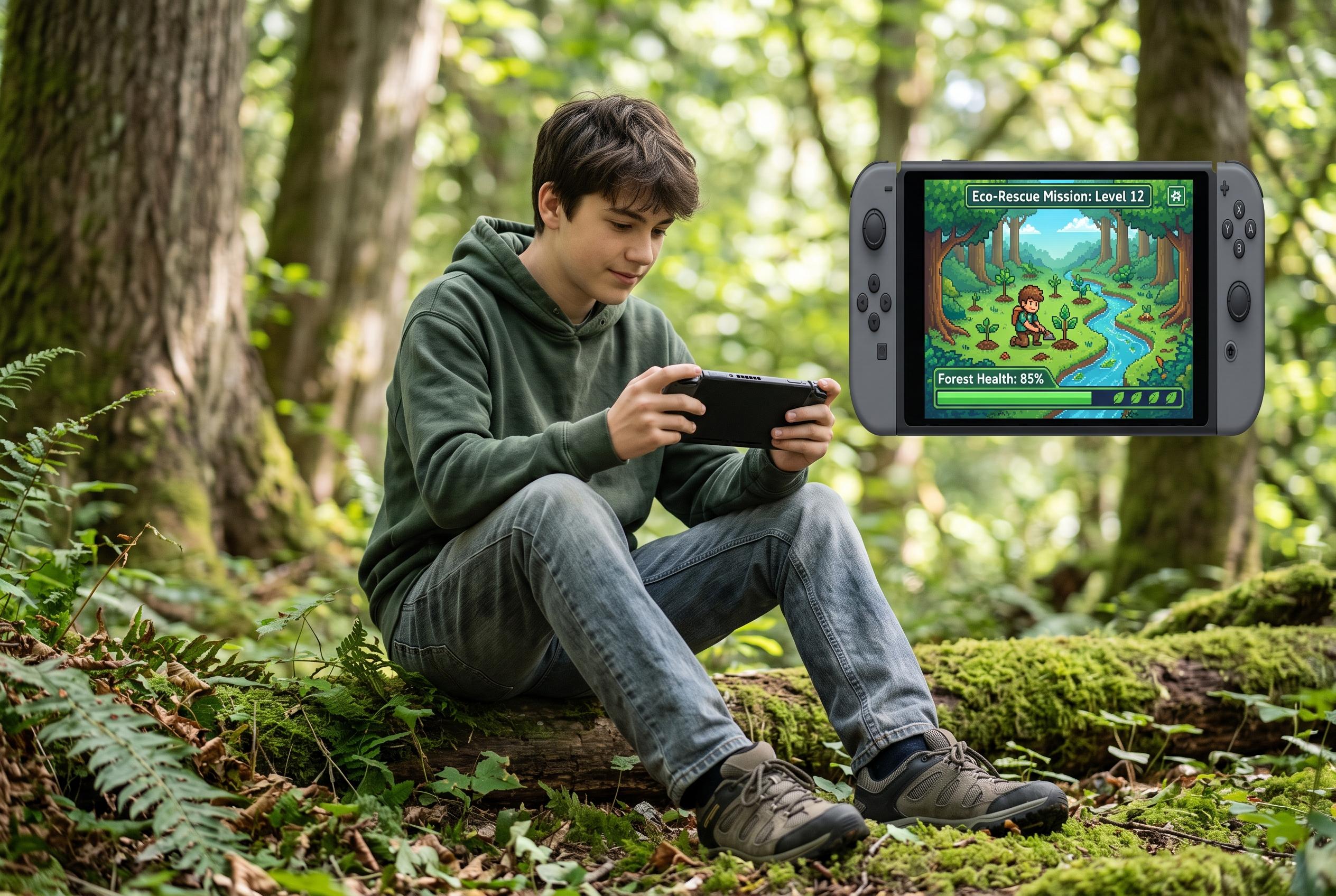

Researchers at Florida International University are evaluating Eco-Rescue, a video game designed to improve attention control, as an innovative treatment for anxiety in teenagers, marking a new step in digital mental health solutions.
Researchers at Florida International University are testing whether a video game can do some of the work usually handled in therapy for anxious teenagers. The project centres on Eco-Rescue, a game built to train attention control, a skill linked to how young people focus, filter distractions and cope with stress. In the game, players act as pilots restoring damaged environments while tracking moving objects, adapting to sudden changes and juggling several tasks at once.
According to FIU’s Centre for Children and Families, the study is being run with the University of Geneva and is designed to see whether this approach can ease anxiety symptoms in adolescents. Jeremy Pettit, the centre’s executive director and a psychology professor, said the project is intended to reach teens through the media they already use while still delivering an intervention based on science.
The Florida trial is the first U.S. site to test the game and is recruiting 50 participants aged 11 to 15, with 150 teenagers expected across all research locations. Participants are split into three groups: one plays Eco-Rescue at home, another uses a different game without attention-training features and a third does not play a game during the six-week study. Those in the Eco-Rescue group spend about 30 minutes playing four days a week, or roughly 12 hours in total, while researchers measure changes in attention control, emotional regulation and anxiety.
The age group is deliberate. FIU says anxiety often begins in early adolescence, when the brain is still developing and may be especially responsive to targeted intervention. The university’s researchers say earlier work suggests that improving attention control may help reduce anxiety symptoms, including in some teenagers who have not responded well to standard treatment. The project also reflects a broader move towards digital mental health tools: other programmes, including Lumi Nova and REThink Game, have been developed to help children and teenagers manage anxiety and build emotional regulation skills.
The World Health Organization says anxiety disorders are the most common emotional disorders in adolescents, affecting an estimated 4.1% of 10- to 14-year-olds and 5.3% of 15- to 19-year-olds. It also reports that depression rises in older teens and can overlap with anxiety, with both conditions affecting school attendance, schoolwork and social connection. FIU’s researchers say that makes adolescence a critical window for testing new treatments that are accessible, engaging and grounded in clinical evidence.
Disclaimer: This content is for informational purposes only and is not intended to be a substitute for professional medical judgment, advice, diagnosis, or treatment.