

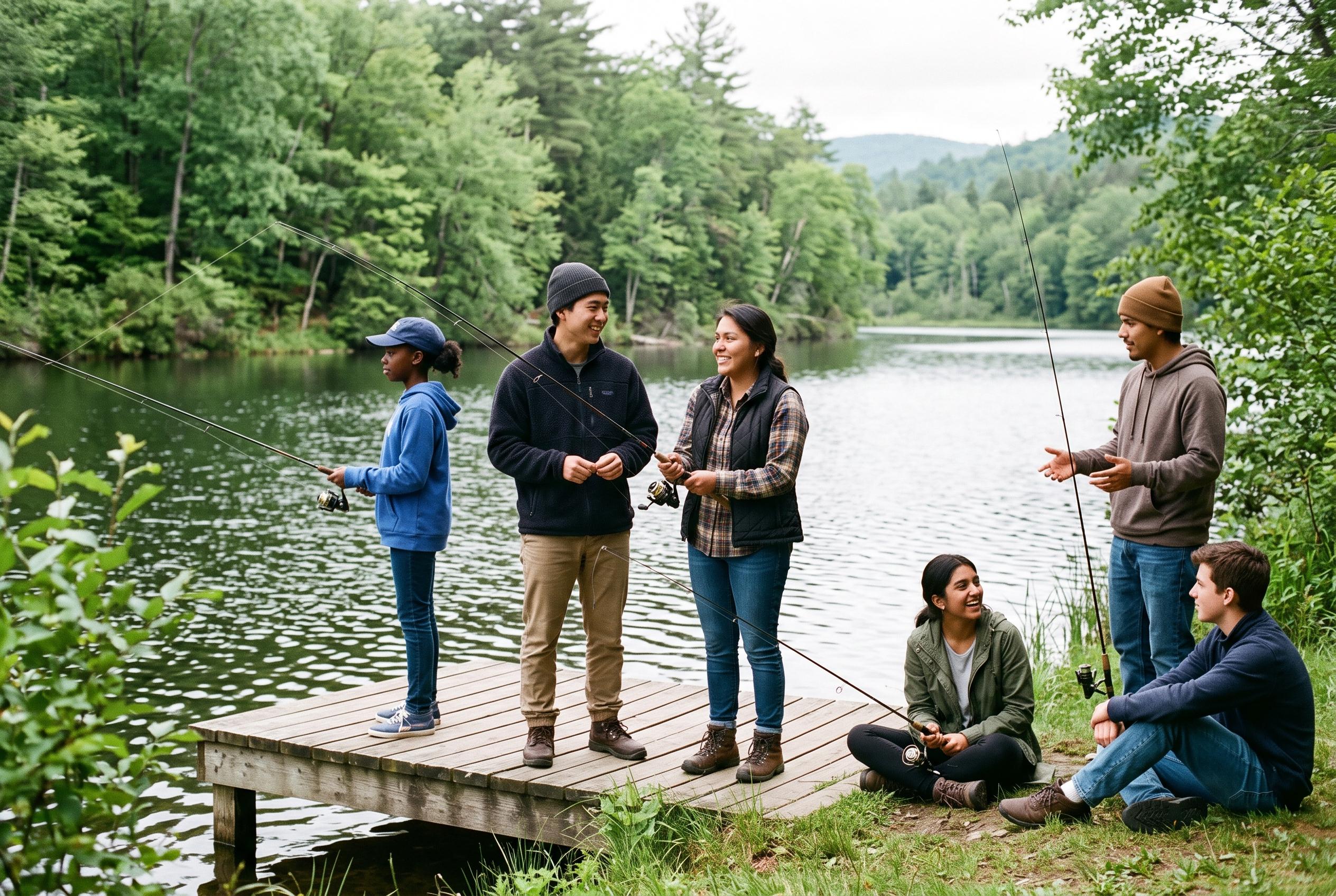

From fishing and music to nature and art, interest-led community programmes are emerging as a way to support young people while they wait for specialist mental health care.
Dave Lyons was in recovery when he discovered that a quiet stretch of water could do what many other interventions had not. After years of alcohol addiction and mental health difficulties, the founder of Tackling Minds turned to fishing, first by watching online tutorials and joining social media groups, then by spending long hours on the bank. He says the activity gave his mind room to move again, and what began as a personal routine has grown into a weekly gathering that now draws children, veterans and others looking for company as much as calm.
Tackling Minds, founded by Lyons in February 2020, now works as a charity offering free, person-centred fishing sessions, with equipment and support provided. The organisation says it aims to reduce isolation and improve mental wellbeing for people who often struggle to access traditional services. It also works with mental health groups, schools, NHS link workers and police divisions, reflecting a broader shift in how support can be delivered outside a clinic.
That shift is part of a larger movement known as social prescribing, in which health professionals refer people to community activities such as sport, arts, nature or volunteering. In the youth version of that model, the question is less about symptoms and more about what a young person actually wants from support. Researchers at University College London say that approach matters because tailored activities are more likely to keep teenagers engaged than one-size-fits-all programmes.
The need is considerable. According to figures cited in the article, anxiety among 16-to-24-year-olds in the UK has risen sharply in recent years, while more than 1 million children in England were on an active mental health referral list in 2024-25. At the same time, many still wait a long time for specialist treatment. UCL’s work on a social prescribing pathway for young people awaiting Child and Adolescent Mental Health Services, or CAMHS, was designed to ease that pressure by linking adolescents to community support while they wait.
Evidence from recent studies suggests the approach can help. UCL researchers reported that more than 550 young people aged 11 to 18 who were offered social prescribing while waiting for care showed modest gains in behaviour, resilience, relationships and confidence. A separate observational study found wellbeing scores improved after a youth social prescribing programme. The findings echo an earlier StreetGames pilot, which showed better wellbeing and lower use of primary care and emergency services, particularly among the most disadvantaged participants.
Lyons’ own experience reflects the larger idea behind the model: that belonging, purpose and the right setting can matter as much as formal therapy. The charity says fishing helps some people focus, settle and reconnect with others, and Lyons says it has been more effective for him than the many treatments he tried earlier in life. Similar principles are shaping programmes elsewhere, from music projects in Gloucestershire to nature-based sessions in Surrey and art-based schemes in Australia, as charities and researchers test whether practical, interest-led support can reach young people before problems deepen.
Disclaimer: This content is for informational purposes only and is not intended to be a substitute for professional medical judgment, advice, diagnosis, or treatment.



