

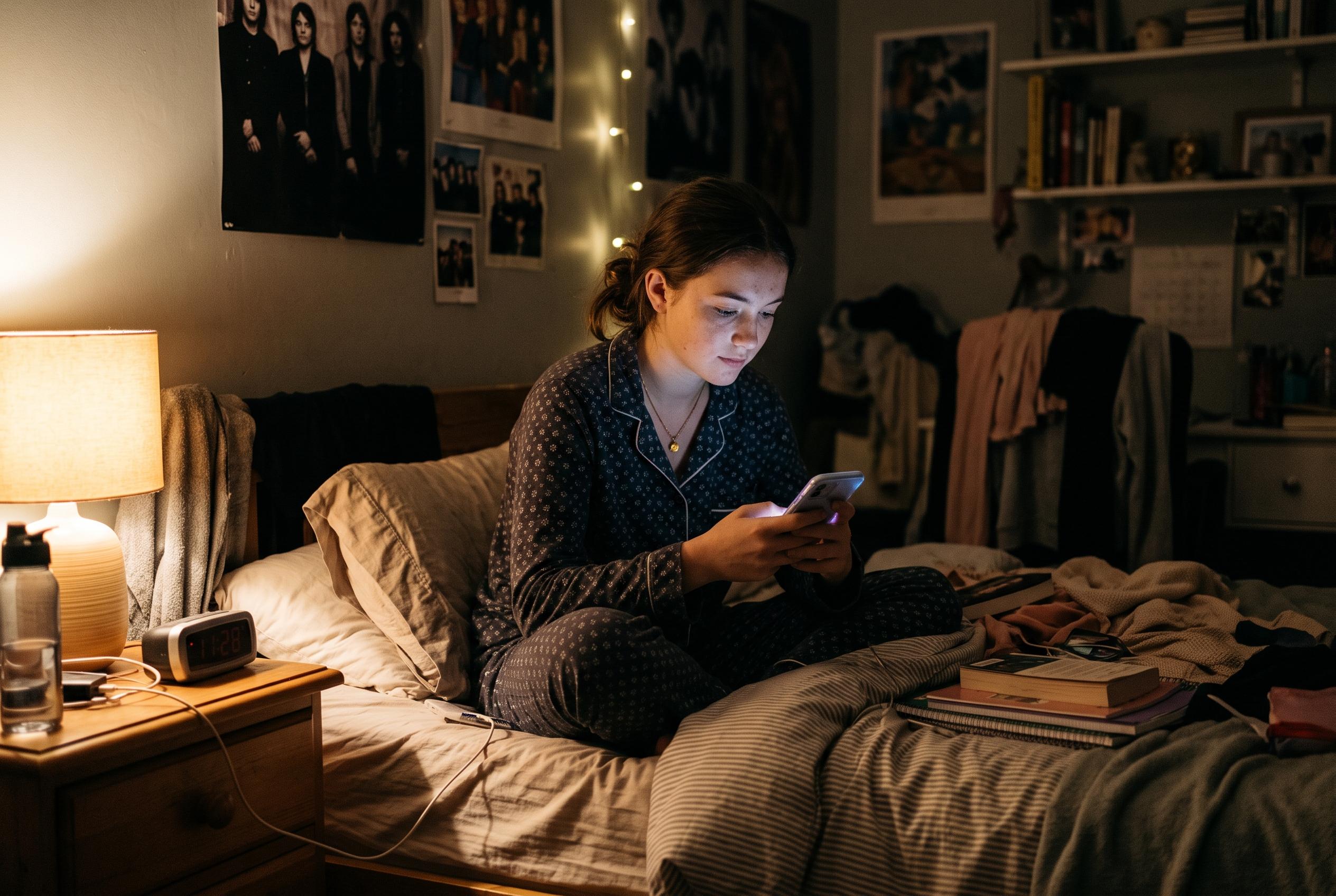

A study of 425 adolescents found that using phones beyond their usual level after 10pm was linked to later, shorter and more fragmented sleep.
Teenagers who spend more time on their smartphones late in the evening may be losing sleep, according to a new study in JAMA Pediatrics that adds to a growing body of evidence linking night-time screen use with poorer rest. Researchers found that when adolescents used their phones beyond their own usual level after 10 p.m., they tended to fall asleep later, sleep for less time and experience more fragmented rest.
The study drew on data from 425 adolescents with an average age of almost 15, who were followed as part of an ongoing project on brain development. Over the course of the research, the team collected nearly 7,600 nights of sleep and smartphone information. On evenings when a teen’s phone use after 10 p.m. exceeded that teen’s normal pattern, sleep time fell by about 20 minutes on average and sleep onset was pushed back by 64 minutes. The researchers also found that heavier late-night use made it more likely that teens would wake again within 30 minutes of falling asleep.
The findings suggest a dose response, meaning that even small increases in post-10 p.m. phone use were associated with measurable changes in sleep. That pattern matters because disrupted sleep in adolescence is linked with poorer attention, weaker concentration, irritability, emotional reactivity, anxiety and low mood, as well as daytime sleepiness and more difficulty with impulse control and decision-making, according to Dr Daniel Bigman, a child and adolescent psychiatrist and sleep medicine physician at Northwell Health in New York City, who reviewed the research for HealthDay.
Bigman said the timing of use is especially important, with the study pointing to 10 p.m. as a practical cut-off for many teens. He also noted that phone use in the final minutes before sleep was associated with more wakefulness early in the night. In his view, the problem is not only the light from the device but also the stimulation from social media, videos, texts and alerts, all of which can keep the brain in an alert state when it should be winding down.
The new study fits with earlier research suggesting that evening smartphone use can affect sleep, though some studies have reported more mixed results. A paper published in Computers in Human Behavior found only weak links between pre-bedtime smartphone use and sleep in a sample of Czech adolescents, while other work presented at the SLEEP 2026 conference and published in the Journal of Adolescence pointed to poorer sleep when teens used phones at night. Taken together, the evidence suggests that the relationship between smartphones and sleep may vary by how, when and how intensely devices are used.
For parents and carers, Bigman urged a practical rather than punitive response. Instead of threatening to remove phones, he recommended encouraging calmer pre-bed routines such as reading, listening to music, doing relaxation exercises or stretching. Those alternatives, he said, are more likely to support the kind of winding-down environment that helps teenagers fall asleep more easily and sleep more soundly.
Disclaimer: This content is for informational purposes only and is not intended to be a substitute for professional medical judgment, advice, diagnosis, or treatment.



