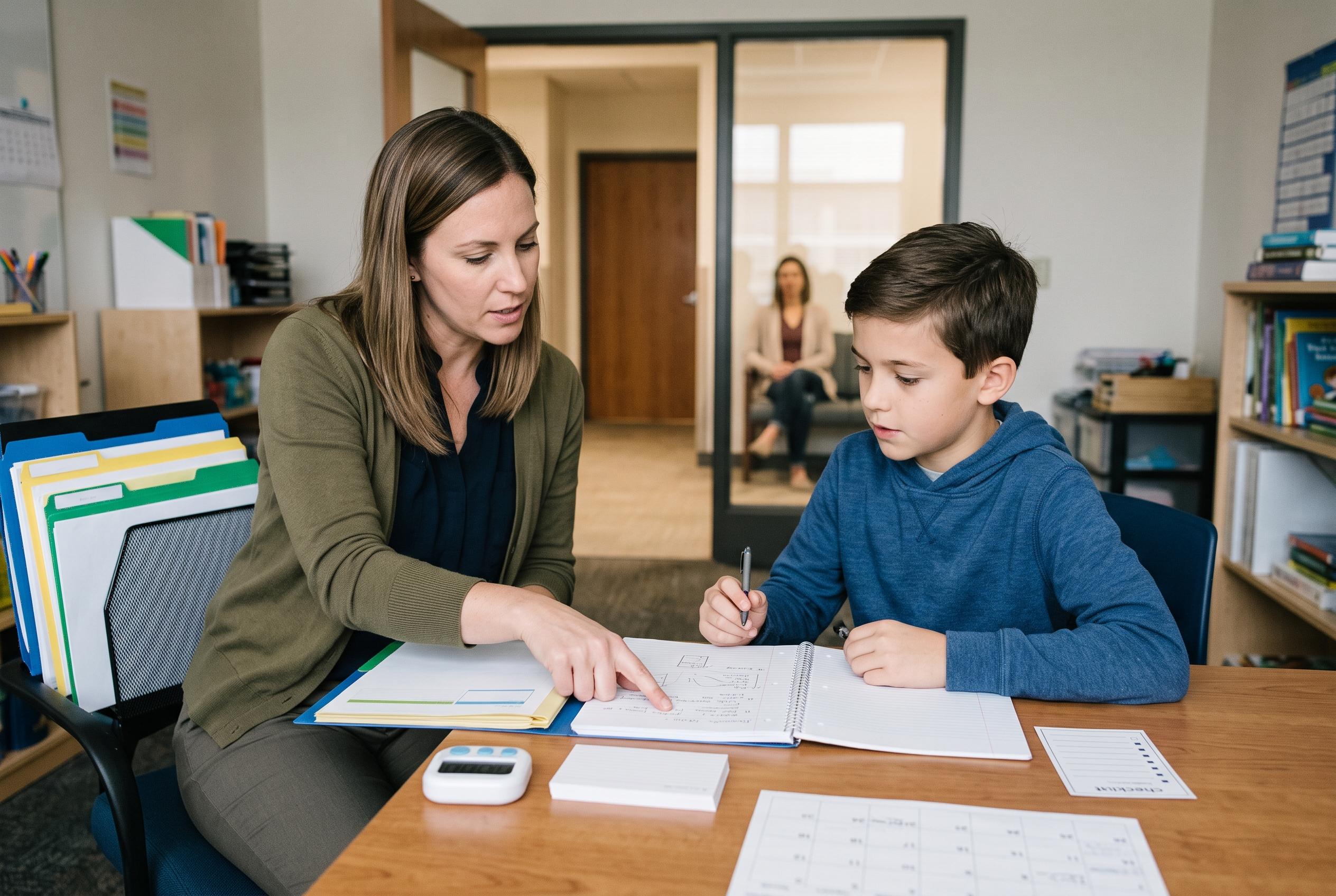

Research highlights the importance of teaching the mental processes behind organisational tools to foster true independence among students, moving beyond simple prompts to deliberate instruction and habit formation.
Teachers and therapists often hand students planners, checklists, timers and visual schedules in the hope that these aids will unlock independence. Yet, as Karen Dudek Brannan argues in her recent discussion of executive functioning, the presence of a tool does not mean a student knows how to use it. A child may forget to consult a checklist, struggle to organise the first step, or reject the support altogether, leaving adults to keep prompting the very behaviour the tool was meant to encourage.
That gap matters because executive functioning is not a single skill but a cluster of mental processes that help people work towards a goal. The Harvard Graduate School of Education describes it as including response inhibition, attention control, cognitive flexibility and working memory, while schools and specialist educators often fold in related abilities such as planning, organisation, time management and self-monitoring. Research summaries from Harvard and classroom-focused guidance from other education sources both point to the same conclusion: these skills are closely tied to academic success, and they are not reliably picked up by chance.
Brannan’s framework is built around that problem. Her argument is that many students are given external supports without being explicitly taught the thinking behind them. A checklist can break a task into steps, but it cannot teach a child to anticipate obstacles, revise a plan when something goes wrong, or decide what to do when a step is missing. In that sense, the tool can become another form of dependence unless adults also teach the underlying process.
That is where explicit instruction comes in. Education resources from LessonDraft, EveryDaySpeech and Continental Press all stress that executive functioning should be taught deliberately, much as reading or maths are taught: by modelling, practising in real situations, embedding the skills in daily routines and giving specific feedback. Those approaches are designed to move students beyond constant adult reminders and towards internal habits such as planning ahead, checking progress and adjusting course when needed.
Brannan’s emphasis on “getting ready to get ready”, monitoring and reflection reflects a broader view of school support: the aim is not simply to make one assignment smoother, but to help students build habits they can carry into new tasks and less supported settings. For parents, caregivers and educators, the message is practical. A well-designed scaffold can help a student complete work today, but independence comes from teaching the mental steps that make the scaffold useful in the first place.
Disclaimer: This content is for informational purposes only and is not intended to be a substitute for professional medical judgment, advice, diagnosis, or treatment.