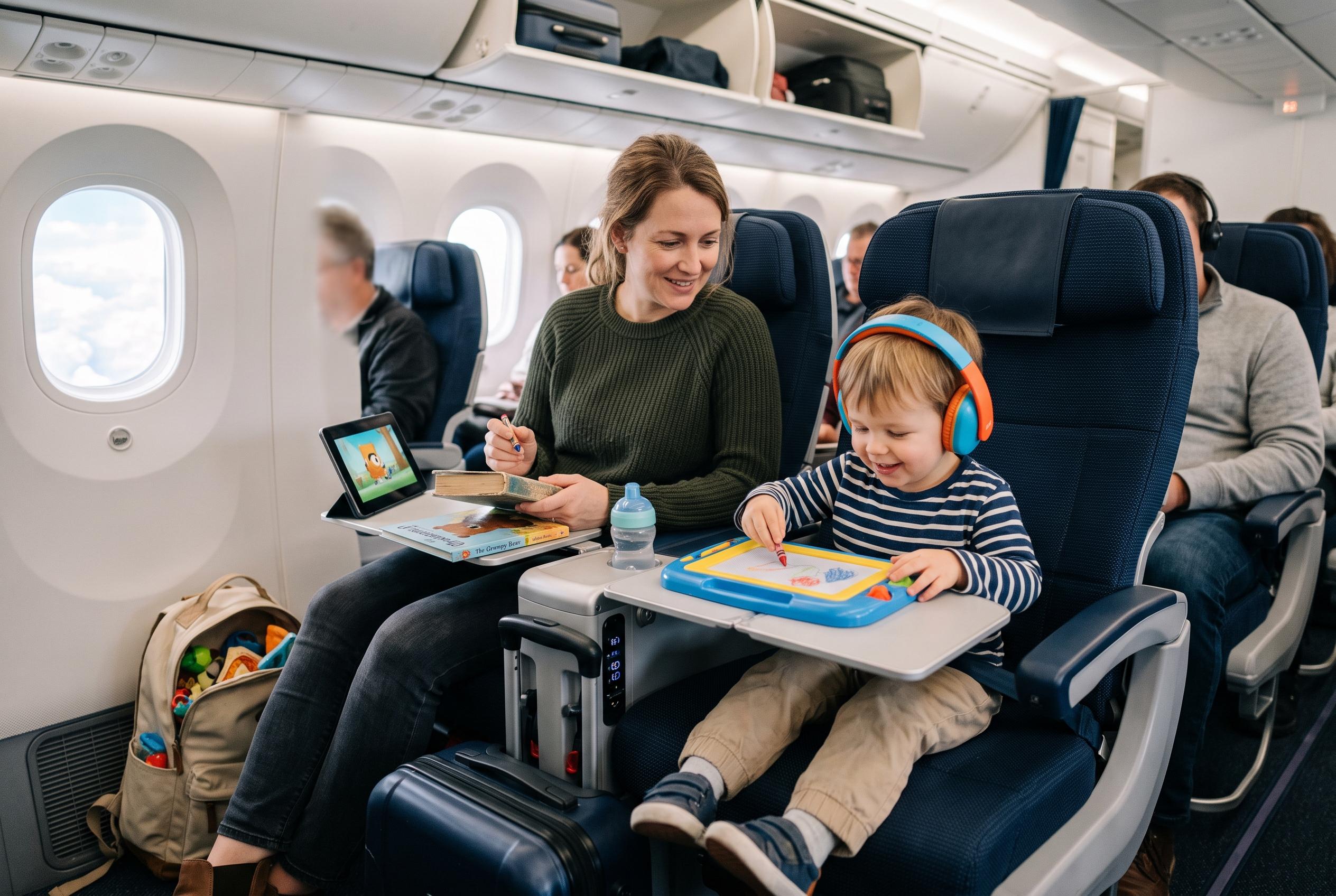

With travel disruptions and increasing parental awareness, experts reveal innovative approaches to managing toddler tantrums on flights, emphasising preparation, calmness, and family-friendly space considerations.
Travelling with a young child can turn even a routine flight into a test of patience. Long waits, a cramped cabin and the pressure of keeping a toddler settled often combine to create the sort of in-flight scene that many parents dread. In a case that has sparked debate online, Melanie Kaplan, the founder and chief executive of the postpartum support platform oPPal, shared footage of her 18-month-old daughter crying for about two hours on a family journey home before later greeting passengers in the aisle, which she described as an “apology tour”. According to Parents, the video drew sharply divided reactions, with some viewers arguing for adult-only flights and others saying occasional meltdowns are simply part of travelling with small children.
Child-development specialists say the more useful response is not to clamp down on the crying, but to prepare for it. Diana Barrett, a psychologist who serves on Lingokids’ Child Development Council, said parents can rehearse the journey in advance through role-play, practising seat belts, waiting and the kinds of frustrations children may meet in the air. Seana Diemer Iwanyk, a marriage and family therapist in Los Angeles, told Parents that adults should first steady themselves, because a calm caregiver is more likely to help a child settle. That approach echoes guidance from the American Academy of Pediatrics, which recommends that parents regulate themselves first, then connect with the child and only afterwards try to reason through the situation.
Experts also stress that the flight itself should be treated as something to manage, not something to win. HealthyChildren.org advises parents to look for practical triggers such as ear pressure or hunger, and then to use simple tools like deep breathing, comfort objects and brief distractions. National Geographic has recommended packing familiar toys, bringing one’s own entertainment and working with flight attendants when possible. The same guidance notes that screen time can be a useful tool on long journeys, even for parents who normally keep it limited, and that small jobs such as helping with a bag or finding the gate can give children a sense of control.
Setting clear boundaries before take-off can also reduce tension later. Psychologists quoted by Psychology Today say children cope better when limits are predictable, boredom is normalised and adults model steady behaviour. That means spelling out what is allowed, such as sitting and playing quietly, and what is not, such as kicking the seat in front. If the child becomes overwhelmed, experts say parents should shift from commands to support, for example by offering a specific breathing exercise or acknowledging the feeling rather than simply saying “stop crying”.
There is also a broader point about how public spaces accommodate families. Iwanyk told Parents that babies and preschool children are still learning how to behave in social settings and cannot always stay silent for long periods, but that does not mean safety rules can be ignored. She said families should follow seat-belt instructions and crew directions, and seek help from flight attendants if other passengers become hostile. Barrett, meanwhile, said a successful trip is not one in which a child never cries, but one in which a parent stays present and helps the child learn, over time, how to recover from distress.
Disclaimer: This content is for informational purposes only and is not intended to be a substitute for professional medical judgment, advice, diagnosis, or treatment.