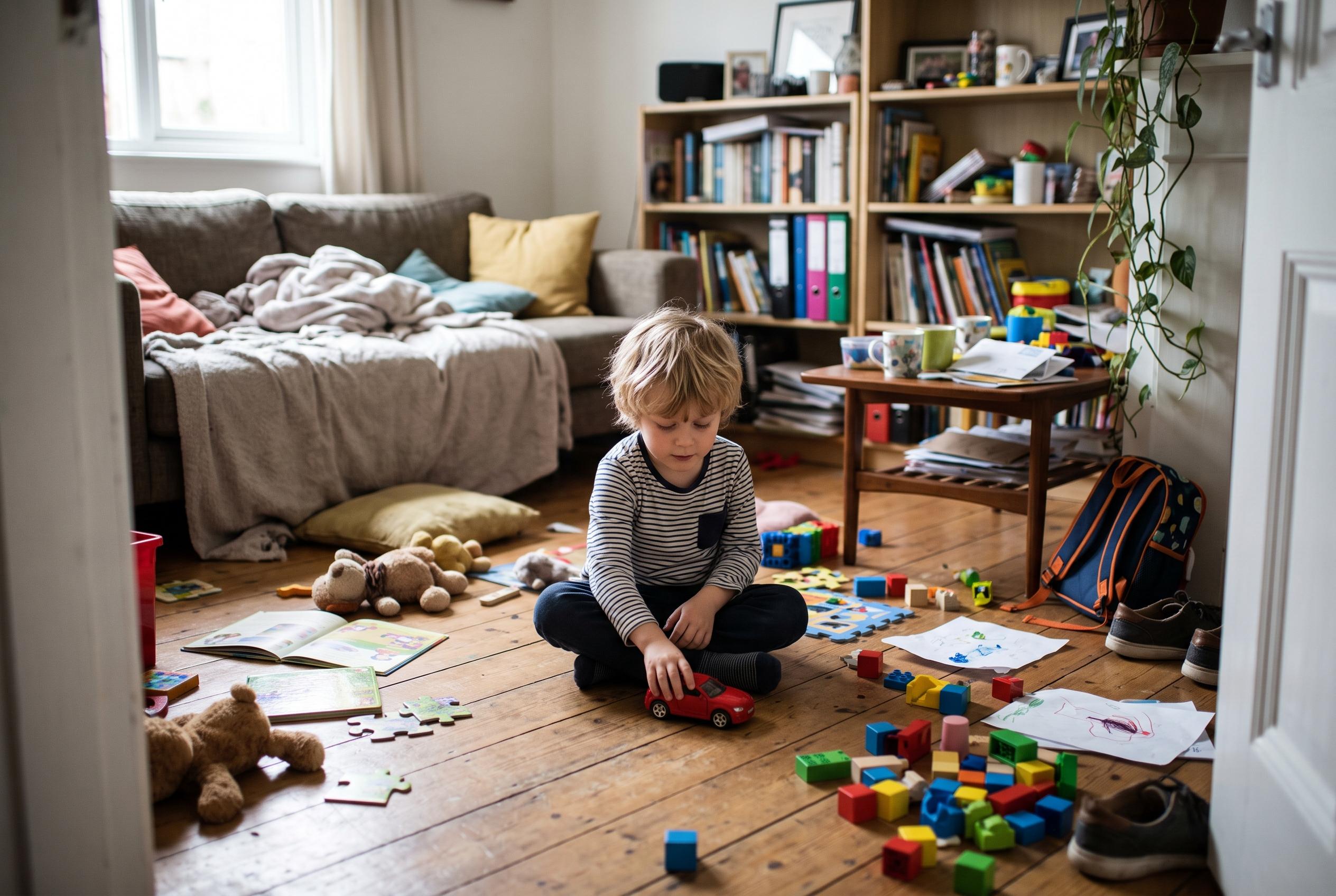

A new expanded screening approach incorporating measures of household unpredictability could better identify children at risk of depression and sleep problems, according to research in Nature Mental Health, leading to earlier intervention opportunities.
A new screening approach may help doctors spot children at risk of depression and sleep problems that standard adversity checks can overlook, according to research published in Nature Mental Health on July 21. The study, led by Tallie Z. Baram of the University of California, Irvine and Laura Glynn of Chapman University, looked at whether signs of instability in the home could improve the detection of mental health risks in children.
The work builds on earlier findings that unpredictable parenting and inconsistent routines can shape long-term wellbeing. Research published in 2022 and 2024 linked childhood unpredictability with later mental health and behavioural problems, while a separate validation study of the brief QUIC-5 questionnaire said unpredictability is a major dimension of early life adversity. Other research from the National Institutes of Health has also tied combinations of early adversity to worse adult outcomes, reinforcing the idea that the pattern of stress in a child’s life matters, not just the presence of trauma.
In the new study, the researchers added five measures of unpredictability to an existing adversity screen and tested the combined approach in about 30,000 children seen at 19 paediatric primary care clinics in Orange County, California. They then compared screening results with mental health diagnoses in electronic health records. The added measures performed as well as the traditional screen overall, but were better at identifying children at risk for depression and sleep disorders. Children who scored high on the unpredictability screen had a 12-fold higher risk of developing depression than children who scored zero, compared with an eight-fold increase among those who scored high on the traditional screen.
Using both tools together improved detection further. Children who scored highly on both were more likely to face depression, anxiety, behavioural concerns, sleep disorders and physical complaints such as headaches and abdominal pain. The authors say the findings could allow earlier monitoring and family support before symptoms become more serious. Glynn said, “Traditional screening has helped our understanding of childhood adversity, but it fails to identify many children who are at risk for mental health problems.” Baram added, “For parents, this isn’t about creating a perfect home. It’s about recognizing that consistency matters. Small routines and predictable patterns in daily life can support healthy development.”
Disclaimer: This content is for informational purposes only and is not intended to be a substitute for professional medical judgment, advice, diagnosis, or treatment.