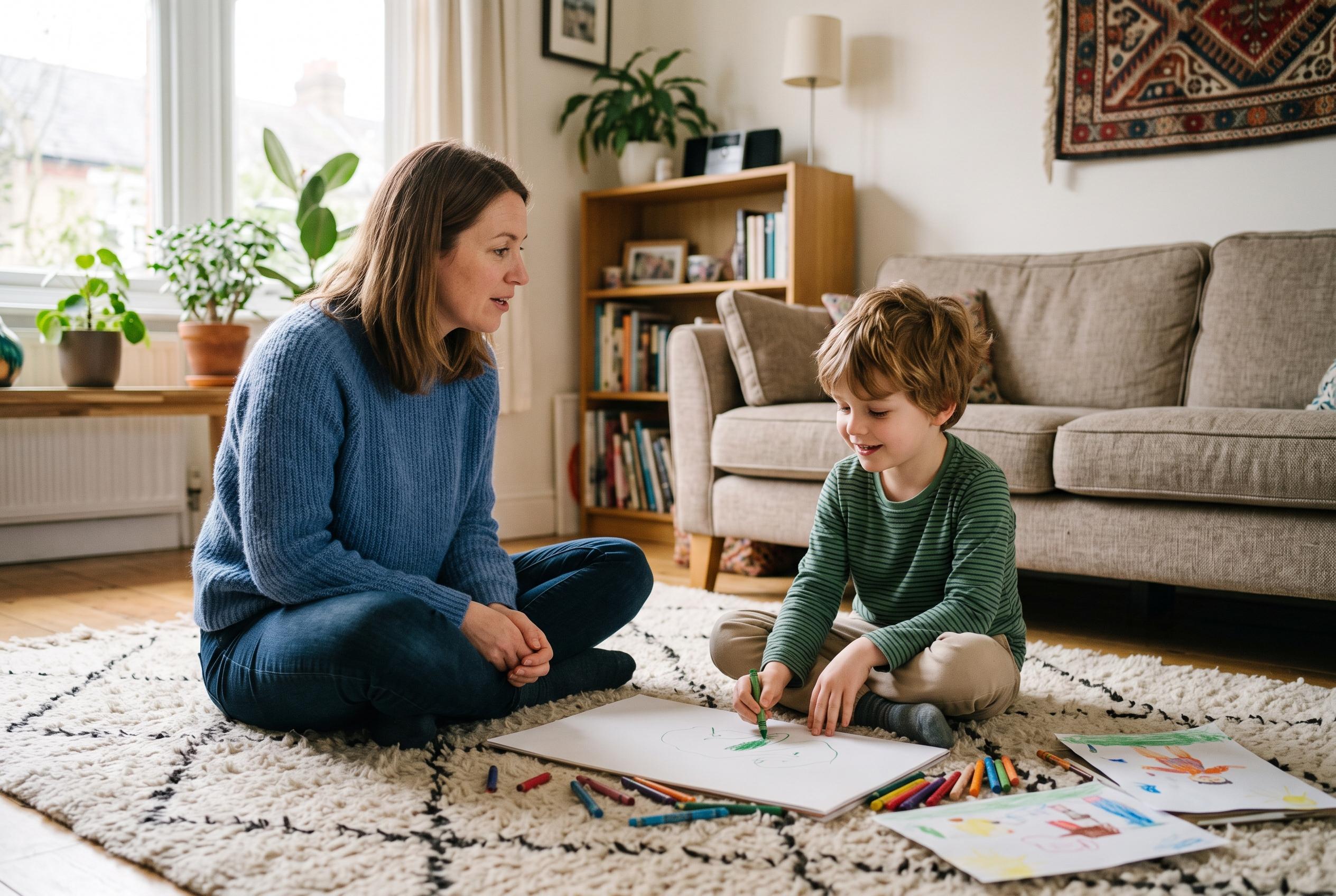

Child mental health experts advise that parents can foster resilience by gently recognising and talking about feelings. Using calm language, noticing facial and body cues, and offering creative outlets help children understand and manage their emotions better, leading to improved communication and confidence.
Parents often want to rush in and solve a child’s upset, but that instinct can make it harder for the child to stay with the feeling long enough to understand it. The message from child mental health resources is broadly the same: emotions are normal, children need help naming them, and calm, open conversations work better than pressure or interrogation.
One useful shift is to describe what you can see rather than firing off questions. Saying a child seems frustrated, hurt or overwhelmed gives them room to recognise the feeling without having to explain it immediately. Child health guidance also suggests that noticing facial expressions, body sensations and recent events can help children connect the feeling to what is happening inside them.
That matters because emotional awareness is a building block of resilience. When children learn that disappointment, anger and sadness can be recognised and talked about, they are better placed to cope when life does not go their way. Experts also note that some children need more support than others, especially when strong feelings are tied to anxiety, impulsivity or developmental challenges, so patience and repetition are part of the process.
Parents can support that learning in simple ways. Reflecting a feeling back, keeping the tone steady and offering creative outlets such as drawing can help a child move through an emotion instead of getting stuck in it. Over time, regular conversations about feelings can make home feel safer, improve communication and give children more confidence in handling everyday setbacks.
Disclaimer: This content is for informational purposes only and is not intended to be a substitute for professional medical judgment, advice, diagnosis, or treatment.