

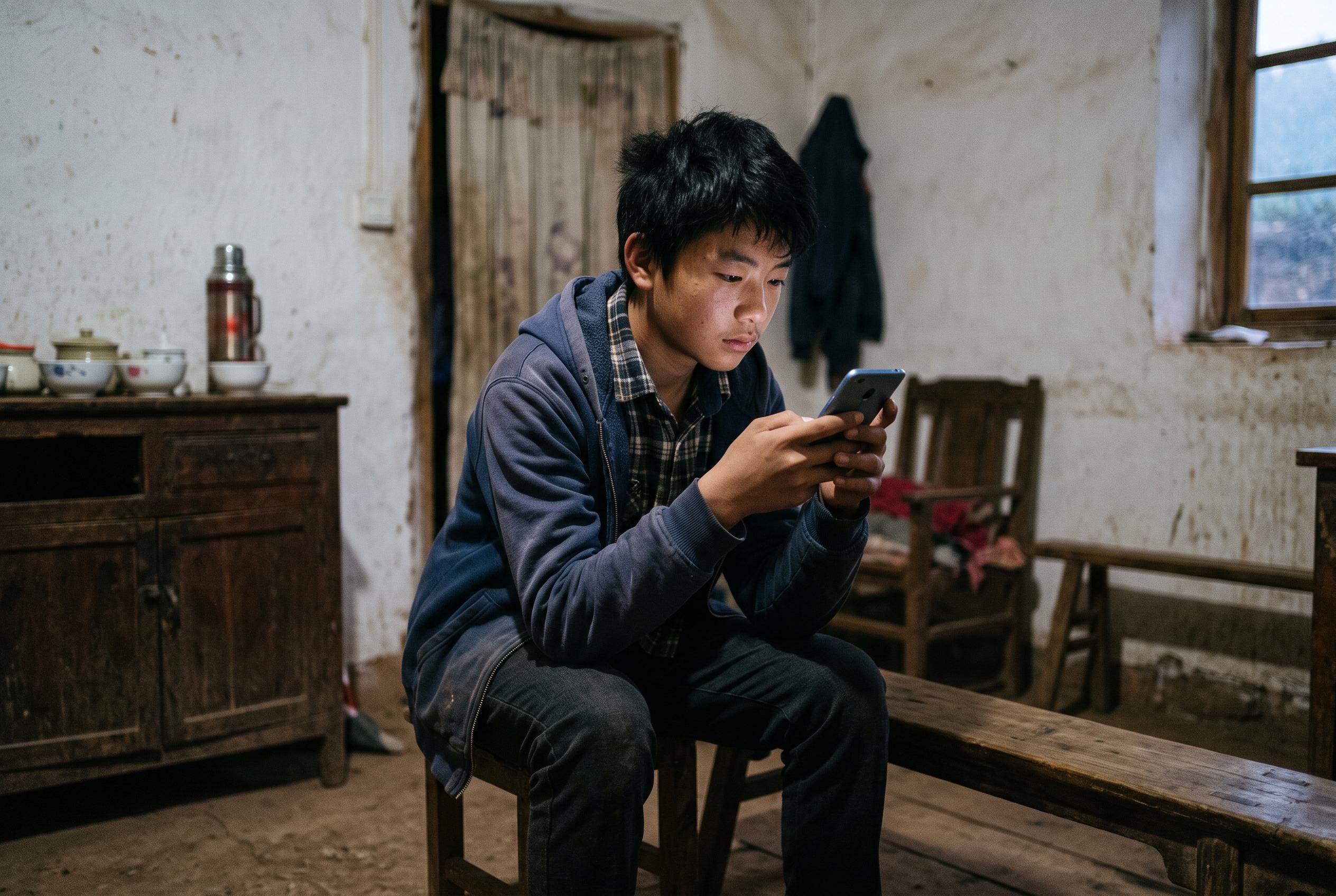

A study of 1,526 rural adolescents links parental emotional neglect to internet addiction, with avoidance of painful feelings emerging as the strongest pathway.
A study of rural children in western China suggests that emotional neglect from parents working away from home may be linked to greater internet addiction, with the strongest pathway running through a habit of escaping painful feelings rather than through deviant friendships.
Researchers surveyed 1,526 left-behind children aged roughly 11 to 17 in Sichuan, Guizhou and Gansu in September 2025, using questionnaires on emotional neglect, peer behaviour, coping style, mindset and internet use. The sample came from 12 schools and was drawn from classes in counties with large numbers of migrant workers. The paper, published in DovePress, defines left-behind children as minors whose at least one parent has been away for work for six months or more.
The study found that parental emotional neglect was positively associated with internet addiction even after other factors were taken into account. It also identified two separate pathways: one through deviant peer affiliation, where children gravitated towards friends who engaged in rule-breaking behaviour, and a much stronger one through experiential avoidance, a term psychologists use to describe attempts to escape or suppress painful thoughts and emotions.
That second pathway accounted for a far larger share of the relationship than peer influence did. In practical terms, the findings suggest that children who feel lonely, anxious or unsupported may turn to games, videos or social media as a quick way to dull distress. The researchers argue that this makes emotional regulation a more important target for prevention than peer pressure alone, although both matter.
The study also produced an unexpected result on growth mindset, the belief that abilities can improve with effort. Rather than buffering risk, a stronger growth mindset appeared to slightly strengthen the connection between emotional neglect and internet addiction in this group. The authors suggest this may happen when children face a structural problem they cannot change, such as long-term parental absence, and channel effort into the online world instead of into more constructive coping.
For parents and caregivers, the message is straightforward: material support is not enough on its own. Regular emotional contact, even from a distance, appears to matter greatly. The researchers also point to the value of school-based support, healthier peer networks and psychological approaches such as mindfulness or acceptance and commitment therapy, which help young people sit with difficult emotions instead of fleeing from them online.
Because the study was cross-sectional, it cannot prove cause and effect. Still, it adds to evidence that children left behind by labour migration may be especially vulnerable when emotional needs go unmet. The paper’s main warning is that internet overuse may not begin with technology itself, but with a child’s search for comfort, belonging and relief.
Disclaimer: This content is for informational purposes only and is not intended to be a substitute for professional medical judgment, advice, diagnosis, or treatment.



