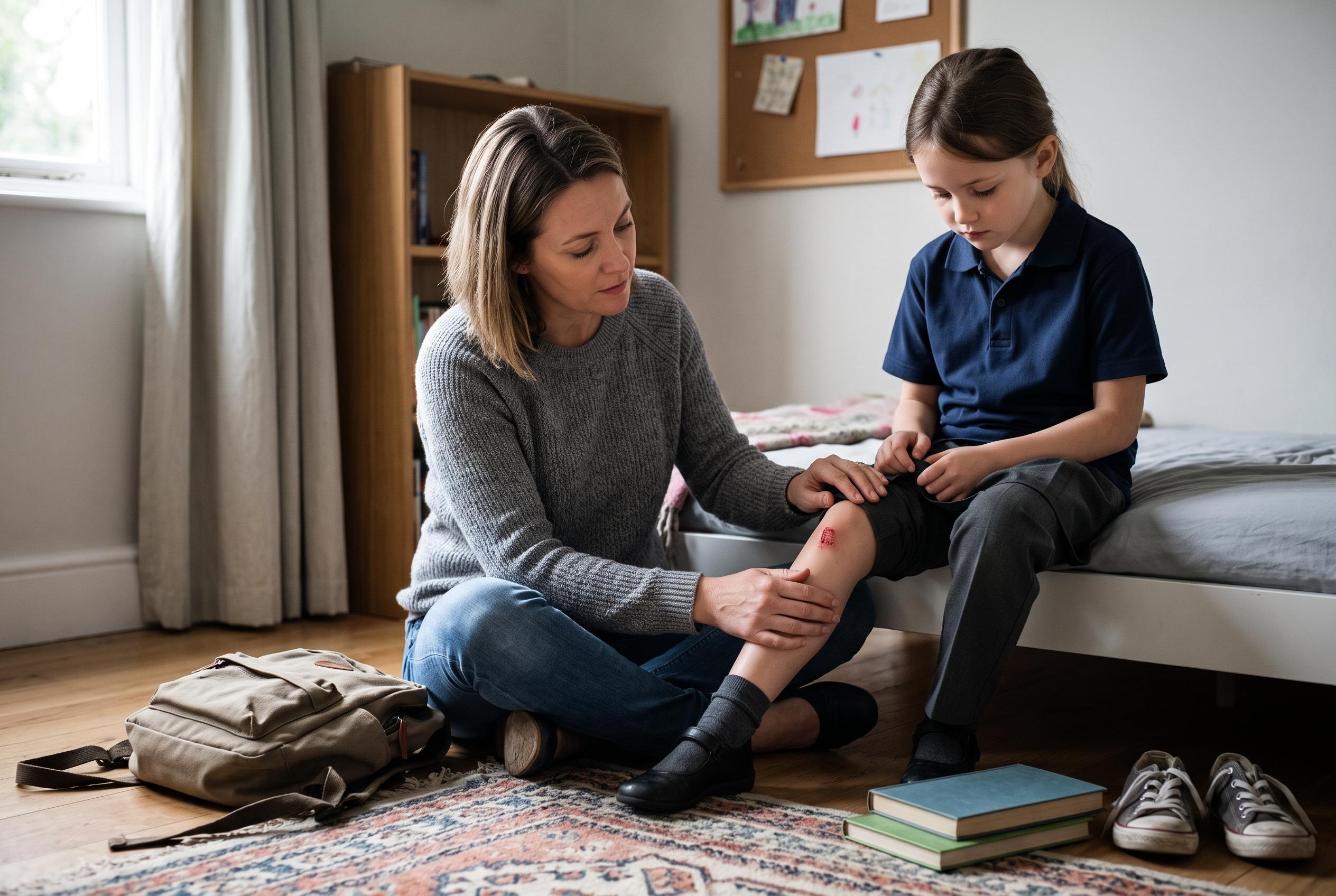

Parents and carers can spot early signs of bullying through physical injuries, behavioural changes, and emotional distress, enabling earlier intervention to minimise harm.
Bullying often leaves clues long before a child is willing to name what is happening. Parents and carers who notice a pattern, rather than a single incident, may be able to step in earlier and reduce the harm. The clearest signs are often physical, emotional and behavioural all at once: unexplained bruises, torn or missing belongings, and a growing reluctance to talk about school can all point to trouble. Government and child-safety guidance also notes that persistent headaches, stomach aches and changes in sleep or appetite are common warning signs.
One of the most visible indicators is injury that does not fit the explanation a child gives, or that they seem keen to hide. That can go hand in hand with damaged school items, missing lunch money or clothes that keep coming home broken. HealthyChildren.org says these kinds of repeated losses, especially when they affect the same belongings, can be a sign that a child is being targeted rather than simply being careless.
Physical complaints can also be a clue. A child who suddenly develops repeated headaches or stomach aches, particularly on school mornings, may be trying to avoid a person or place that feels unsafe. WebMD and StopBullying.gov both note that bullying can show up as trouble sleeping, nightmares, changes in eating and a growing wish to stay home. When these patterns cluster around school days and ease at weekends, they deserve closer attention.
School performance and social behaviour often change too. A sharp fall in grades, loss of interest in work a child once enjoyed, quitting clubs or avoiding the bus can all suggest stress that is spilling into everyday life. The Victorian government’s guidance says parents may also notice mood swings, withdrawal and reluctance to go to school, while child-welfare groups warn that many children never report bullying to an adult. That is why calm, repeated check-ins tend to work better than a single direct question.
Disclaimer: This content is for informational purposes only and is not intended to be a substitute for professional medical judgment, advice, diagnosis, or treatment.