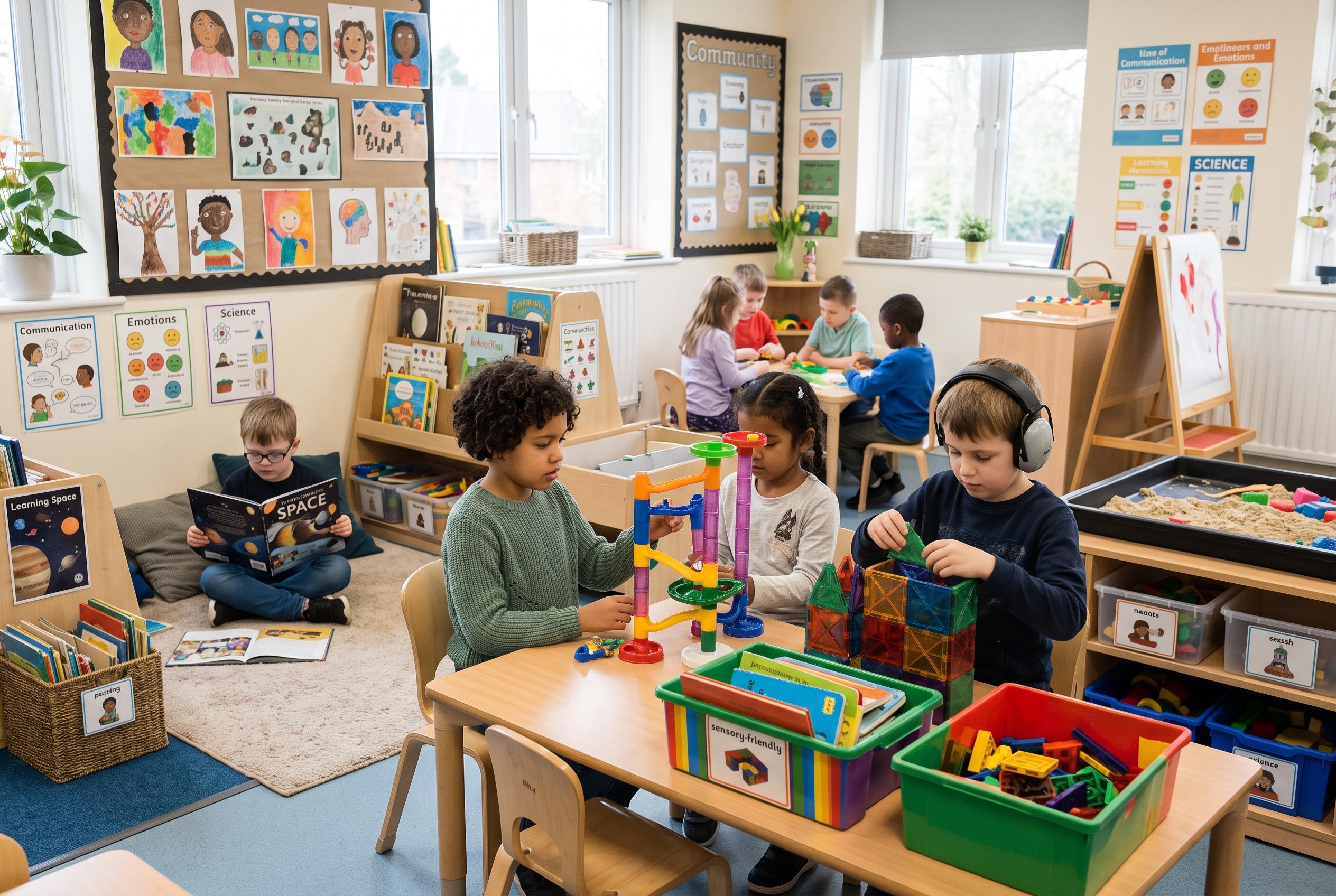

The Department for Education’s new evidence review highlights the complexities of behaviour interventions for autistic children in mainstream schools, raising concerns over masking and gender biases, and urging a focus on what truly benefits the child rather than ease of management.
The Department for Education’s quiet addition of a new evidence review on 30 July deserves more attention than it has had. The 93-page document examines behavioural and social communication interventions for autistic children and pupils with social, emotional and mental health needs in mainstream schools. Its central message is more cautious than school systems often are: interventions aimed at making children appear easier to manage can encourage masking, and masking can damage mental health. The review also warns that behaviour problems are often less about a missing skill than a mismatch between a child and the demands placed on them.
That matters because so much of the evidence base still leans on applied behaviour analysis and related approaches. The review stops short of endorsing them, noting that such methods remain controversial among educators and autistic people and that improvements can sometimes come at the cost of negative reinforcement and greater suppression of autistic traits. In that respect, the document sits uneasily but importantly within a long-running debate: some systematic reviews have found early intensive behaviour analysis may improve communication, social and life skills, but they also say the long-term evidence is limited and the cost-effectiveness picture remains uncertain. A separate review of school-based social communication interventions found gains in initiating and responding behaviours, but also pointed to a field with significant gaps.
The sharpest gap is gender. The DfE review offers only one sentence on girls, saying that most participants were male and evidence for female pupils is limited. That is a striking omission in a document about interventions that schools may use on autistic children, especially given the growing recognition that autistic girls are often missed because they mask more effectively and present differently from boys. The review acknowledges masking as a risk, but it does not grapple with the broader consequences for girls whose distress is often hidden rather than disruptive.
Its focus on mainstream classrooms also leaves out those who are no longer in school at all. That is not a flaw in the review’s design so much as a reminder of what the evidence system tends to miss: the pupils most damaged by repeated failure, exclusion or burnout are often the least visible in research. For parents and schools, the document offers one useful shift in tone. It asks whether an intervention helps the child, or merely makes the child easier for adults to manage. That distinction is overdue.
Disclaimer: This content is for informational purposes only and is not intended to be a substitute for professional medical judgment, advice, diagnosis, or treatment.