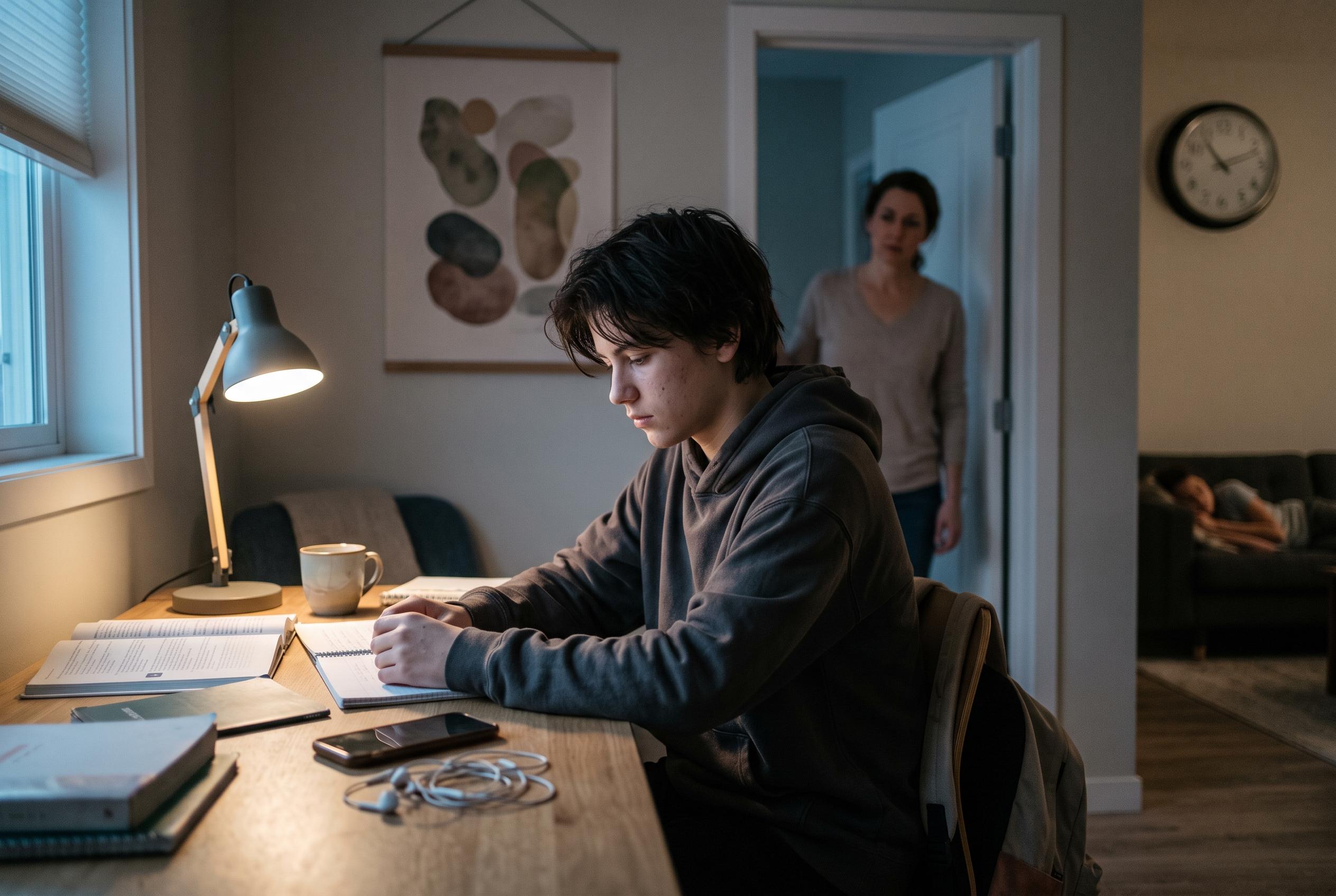

New research reveals that later sleep schedules and social jet lag in teenagers may influence brain regions involved in emotion and reward, highlighting a potential public health concern over circadian misalignment beyond sleep duration.
A new analysis of U.S. adolescents suggests that later sleep timing and greater social jet lag may be tied to heightened brain responses during reward processing, offering fresh evidence that circadian misalignment is more than a sleep complaint. Drawing on data from the Adolescent Brain Cognitive Development study, researchers found that teenagers who reported later midsleep on free days and greater mismatches between school-day and free-day sleep showed stronger activation in the left amygdala and right lateral orbitofrontal cortex when they received a reward. The pattern points to a possible link between delayed body clocks and the brain systems involved in emotion, judgement and reward sensitivity.
The study used the Monetary Incentive Delay task, a standard fMRI test that separates reward anticipation from reward receipt. In the adolescent sample, the clearest associations appeared during feedback, not during the expectation of a reward or loss. That distinction matters, because earlier work has suggested that adolescence is a period when reward circuitry shifts rapidly, with subcortical regions often maturing ahead of prefrontal control systems. The new findings fit that broader picture while adding a sleep-specific dimension: the neural differences were seen not just with sleep duration, but with timing.
Researchers also compared self-reported sleep patterns with wrist-worn Fitbit measurements. The subjective measure showed the stronger links to brain activation, while the short-window Fitbit data did not produce the same neural associations. That does not necessarily mean objective sleep data are uninformative; rather, it suggests that habitual, socially shaped sleep patterns may capture a different aspect of circadian alignment than a few weeks of device-based recording. The study’s authors also noted that the Fitbit subsample was smaller, which may have limited the ability to detect smaller effects.
The findings add to a growing body of evidence that sleep timing, not just sleep length, may help shape adolescent brain function. Previous research has linked later chronotype and circadian disruption to stronger reward-related responses in regions such as the striatum and prefrontal cortex, while developmental studies show that reward processing itself changes rapidly through adolescence. The new work is consistent with that literature, but it also suggests that the feedback phase of reward processing may be especially sensitive to sleep timing in early adolescence. Because the analysis was cross-sectional, it cannot show cause and effect, but it does reinforce the case for treating irregular sleep timing as a potential public health concern in teenagers.
Disclaimer: This content is for informational purposes only and is not intended to be a substitute for professional medical judgment, advice, diagnosis, or treatment.