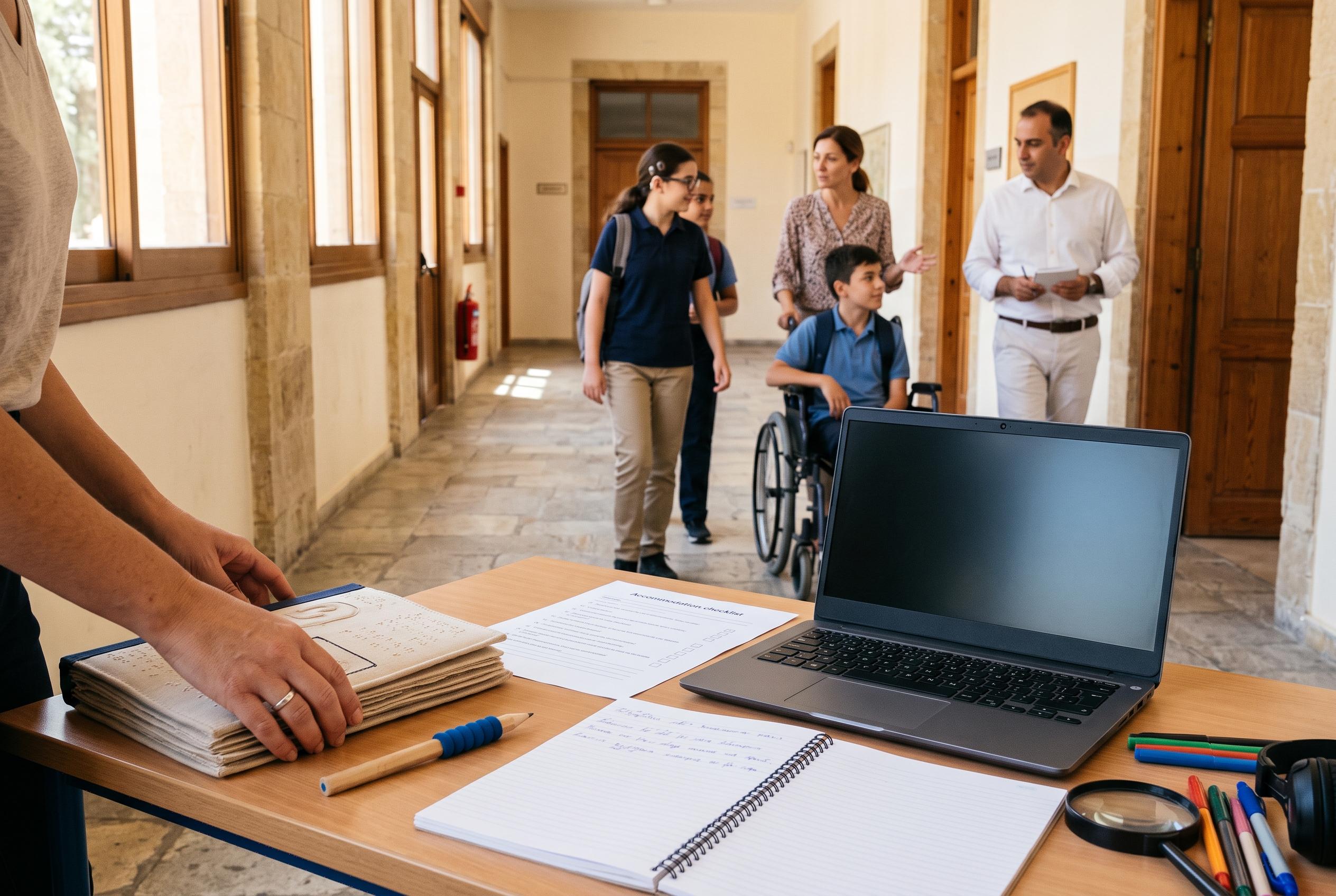

The Cypriot commissioner for human rights urges the education ministry to tighten enforcement of laws ensuring pupils with disabilities receive appropriate support, following reports of inaccessible teaching materials and exam accommodations.
Cyprus’s commissioner for administration and human rights has called for stricter enforcement of existing law to ensure that pupils with disabilities receive the adjustments they need in school and in exams, following complaints over inaccessible teaching material and test papers.
In a report examining two cases, Maria Lottides said the education ministry should step up training for teachers and support staff on inclusive education and consider making a set number of related seminars compulsory. She also urged the ministry to formalise cooperation between central officials, district services and individual schools so that support for pupils can be monitored and checked more effectively.
The first complaint concerned a secondary school pupil in Limassol with autism, who is non-verbal and uses Spelling to Communicate, or S2C, as part of an individual education plan. According to the commissioner’s report, the boy’s biology exam had been prepared without proper coordination between the class teacher and the support teacher, and both the support teacher and the transcriber later judged parts of it unsuitable for his learning profile. The request to remove those sections from marking was rejected, and the pupil received a low grade. The education ministry said it had instructed the school to provide a differentiated paper and later reiterated that such papers are prepared by teaching staff in line with policy and decisions of the relevant committee.
The second case involved a girl in Nicosia with autism, whose parents said she had been given inadequate support in physics and had been left with material and teaching methods that did not match her needs. The ministry said it held 51 pages of adapted material prepared by the teacher, along with a differentiated test paper and revision material for the family to use at home, and argued that this was enough given the number of lessons the pupil received each week. Lottides said the two accounts could not easily be reconciled and that she could not reach a firm conclusion on whether the support had been sufficient.
The commissioner said both cases pointed to the same wider problem: pupils struggling not only because of gaps in classroom support, but because teaching material and examinations were not always made accessible. Cyprus already has a legal framework for special and inclusive education, and the Ministry of Education says it provides support through mainstream classes, special units and special schools, with district committees assessing children’s needs and recommending curriculum changes, staffing support and technical assistance.
Lottides said the measures now being developed, including internal monitoring and staff training, were moving in the right direction and were essential if reasonable adjustments are to become a real part of inclusive education rather than an aspiration on paper.
Disclaimer: This content is for informational purposes only and is not intended to be a substitute for professional medical judgment, advice, diagnosis, or treatment.