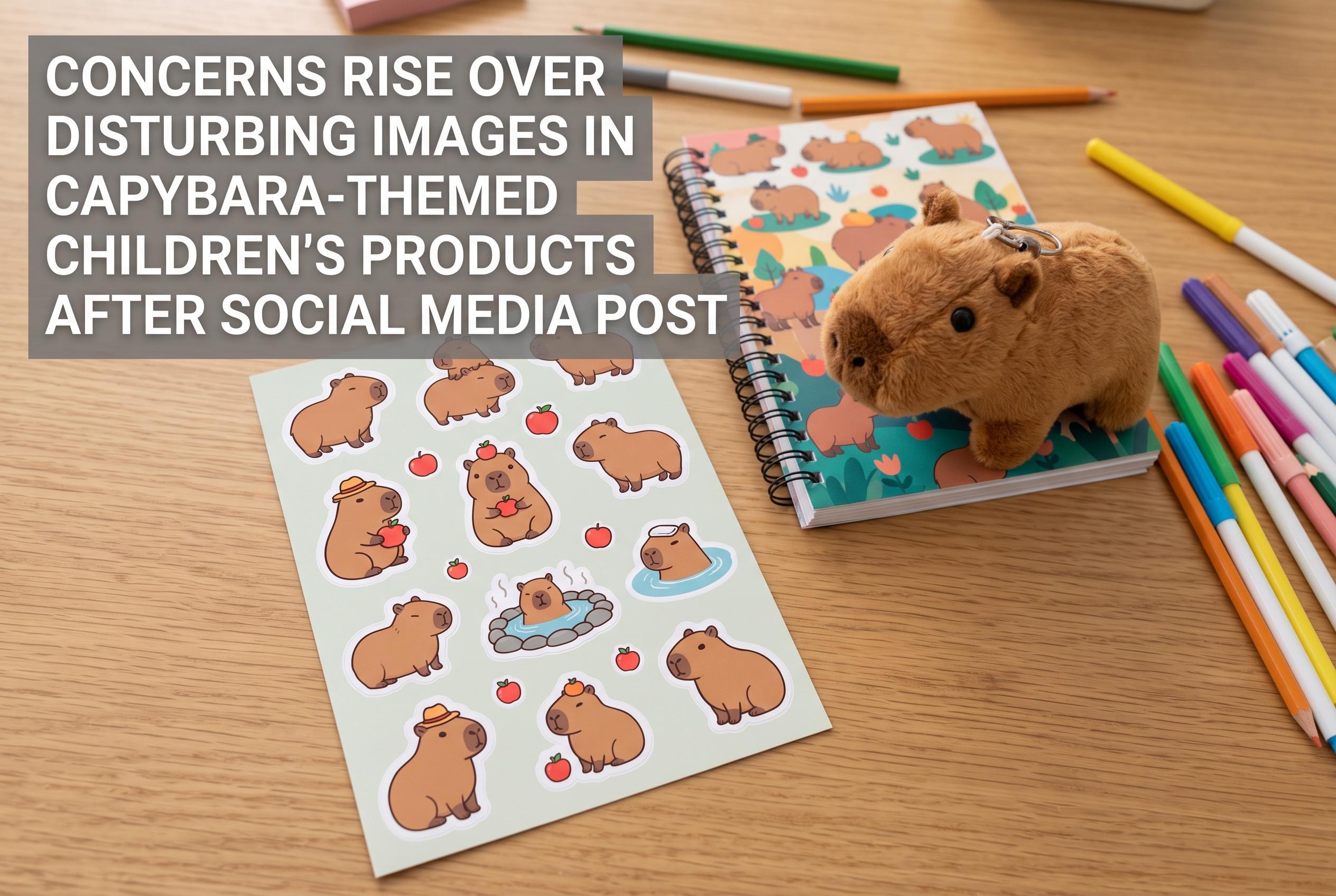

A video shared by actor Sam has sparked alarm among parents after revealing hidden disturbing images in capybara-themed stickers and school supplies, raising fears about normalising harmful behaviour in children.
A short video shared by actor Sam has prompted alarm among parents on social media after some capybara-themed sticker sets were found to include disturbing images linked to self-harm. According to Thanh Nien, the concern grew as parents began spotting similar material on notebook covers and other children’s school supplies that had already entered homes.
The appeal of capybara characters lies in their soft, friendly look, which makes the imagery all the more unsettling when it is paired with violent or otherwise inappropriate details. Some parents said they only realised what was printed on the products after watching Sam’s post or after their children brought the items back from school. Child psychologists quoted in the report warned that repeated exposure to such content could shape how young children view harmful behaviour.
Not everyone sees the issue in the same way. Some parents have dismissed the images as harmless jokes or internet humour, but specialists say that attitude is precisely what should worry adults, because it can normalise material that is unsuitable for children. That caution echoes other recent reports from Europe and Latin America about capybara-branded products carrying hidden risks or inappropriate imagery, underlining how children’s items can sometimes conceal content that parents would not expect.
The broader problem is that many children’s goods are now designed around viral online trends, often with little obvious scrutiny over what is actually printed on them. Thanh Nien says parents should look closely at illustrations and messages on stationery, toys and similar products before buying them, rather than choosing only by appearance or by whether a character is currently popular.
Disclaimer: This content is for informational purposes only and is not intended to be a substitute for professional medical judgment, advice, diagnosis, or treatment.