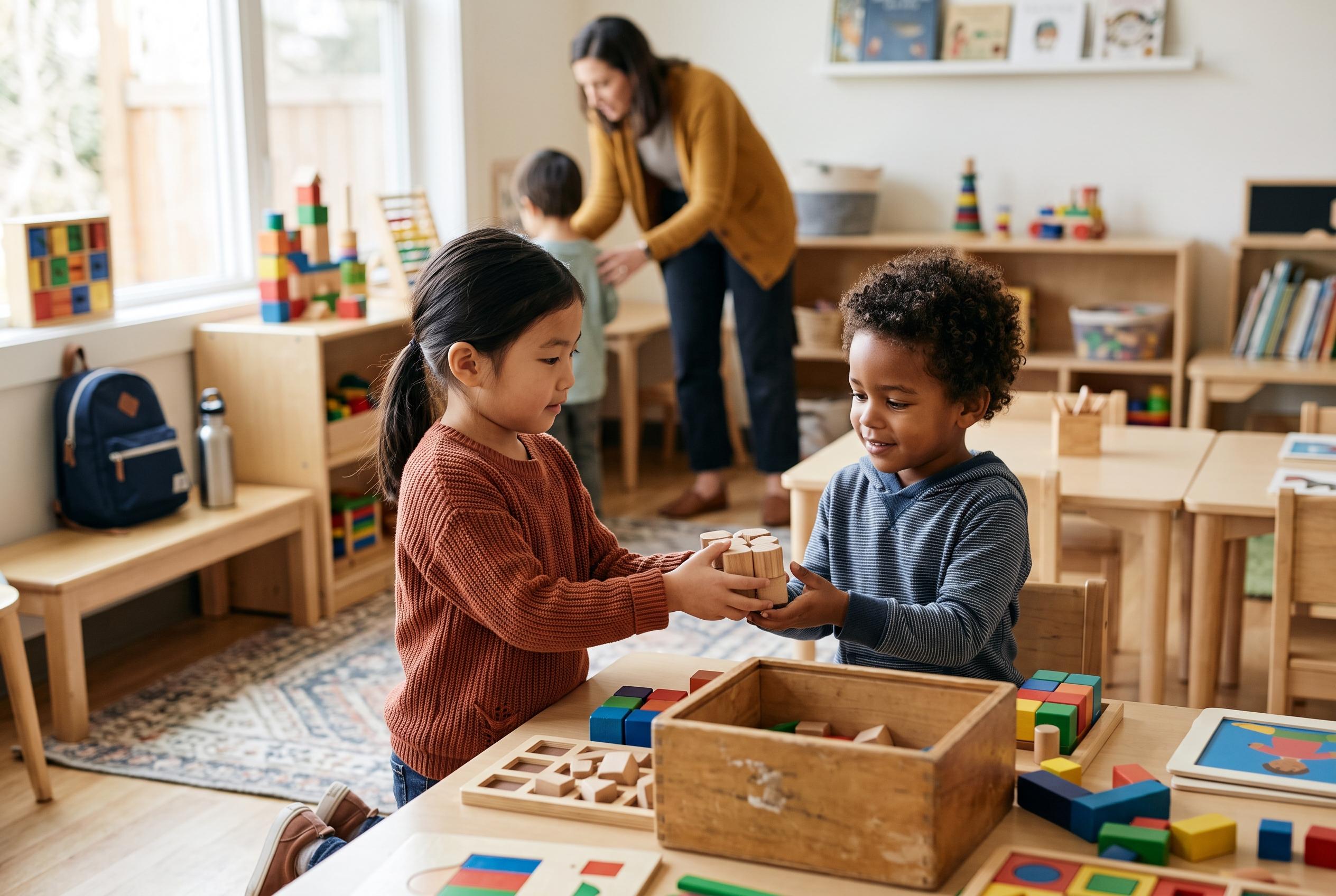

A new international study reveals that while children across cultures develop a natural capacity to help, the ways in which they assist peers are shaped by their social environment, with implications for understanding human cooperation from an early age.
A new study suggests that helping others is not just something children pick up from adults around them, but a behaviour that appears early and across cultures. Researchers observed 336 children aged four to nine in Germany, Argentina, Namibia, Kenya and Bolivia, and found that every group showed helping behaviour in a simple marble game designed to reveal how children respond when a peer runs into trouble.
The experiment looked at several kinds of assistance. Some children explained how to solve the problem, others stepped in and fixed it themselves, and some did both. According to the study in the Proceedings of the National Academy of Sciences, the children were watching peers who had already struggled with a task, such as opening a box or picking up marbles spilled on the floor. The results showed no meaningful difference between boys and girls, reinforcing the idea that willingness to help is widespread rather than tied to sex.
Age, however, mattered. Younger children were more likely to offer more help than was strictly necessary, while older children became more selective and seemed better at judging whether help was wanted. They were also more likely to explain a solution rather than simply complete the task for someone else. That pattern suggests a shift from enthusiastic intervention to a more measured form of assistance as children grow older.
The study also found clear cultural differences in how help was delivered. German children were most likely to combine explanation with hands-on help, while Kikuyu children in Kenya were more inclined to explain rather than act. The researchers say that points to a broader pattern: helping seems to be a human constant, but the style of helping is shaped by the social environment in which children are raised. Daniel Haun, one of the senior authors, said the findings show that children everywhere develop the capacity to help, but they learn to do so in ways that fit their own communities.
Disclaimer: This content is for informational purposes only and is not intended to be a substitute for professional medical judgment, advice, diagnosis, or treatment.