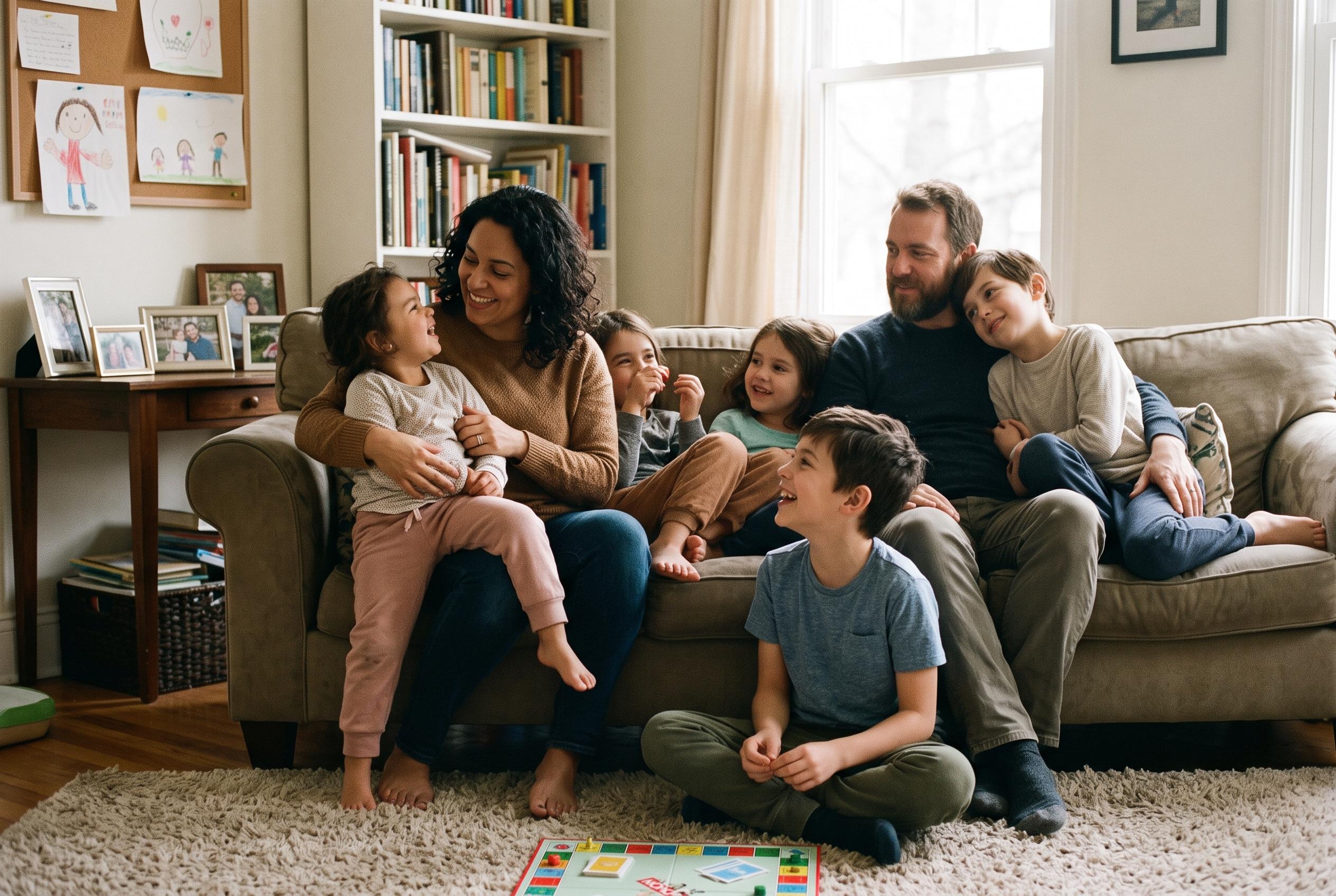

New insights suggest that the quality of emotional relationships within families has a greater impact on children’s well-being than simply whether parents stay together, prompting a re-evaluation of ‘staying for the kids’ as a default approach.
Some families remain under one roof and still feel deeply fractured. On the surface, the routines hold: school runs, activities, meals and the outward appearance of stability. But beneath that order, the emotional atmosphere may be strained, silent or openly hostile. In a piece for Psychology Today, Bahareh Sahebi argues that the real question is not whether parents stay married for the children, but what kind of emotional environment those children are being raised in.
That distinction matters because research has long suggested that children’s well-being is shaped less by family structure than by the quality of the relationships inside it. Studies cited by Sahebi, including work by Paul Amato and colleagues, show that two parents living in the same home does not in itself predict healthier outcomes for children. What tends to matter more is whether the household offers warmth, predictability and repair, or a steady diet of conflict, withdrawal and tension.
The psychological impact of that environment can be subtle but persistent. Research on emotional security theory, including studies available through PubMed and PMC, shows that children use their parents’ relationship as a signal of safety. When they are repeatedly exposed to conflict, they may become hyperalert to tone, facial expression and silence, adjusting their own behaviour to avoid triggering further tension. Over time, that vigilance can contribute to anxiety, sleep problems, trouble concentrating and broader difficulties with emotional regulation.
The damage is not limited to overt shouting. Studies published in PMC also suggest that emotional reactivity can mediate the link between interparental conflict and both internalising and externalising problems in children. In other words, even when parents believe they are hiding the conflict, children often register enough to be affected. Another research summary notes that insecure children tend to form a view of the family as unstable and unsafe, which can shape how they approach relationships later in life.
The UK government has similarly warned that frequent, intense and poorly resolved parental conflict can harm children’s mental health, social development and school performance, even when parents continue to be loving and involved individually. That point is central to Sahebi’s argument: what matters most is not whether a marriage survives at any cost, but whether the system around the child allows genuine security, connection and repair. For some couples, that may mean rethinking the assumption that staying together is automatically the least harmful option.
Disclaimer: This content is for informational purposes only and is not intended to be a substitute for professional medical judgment, advice, diagnosis, or treatment.