

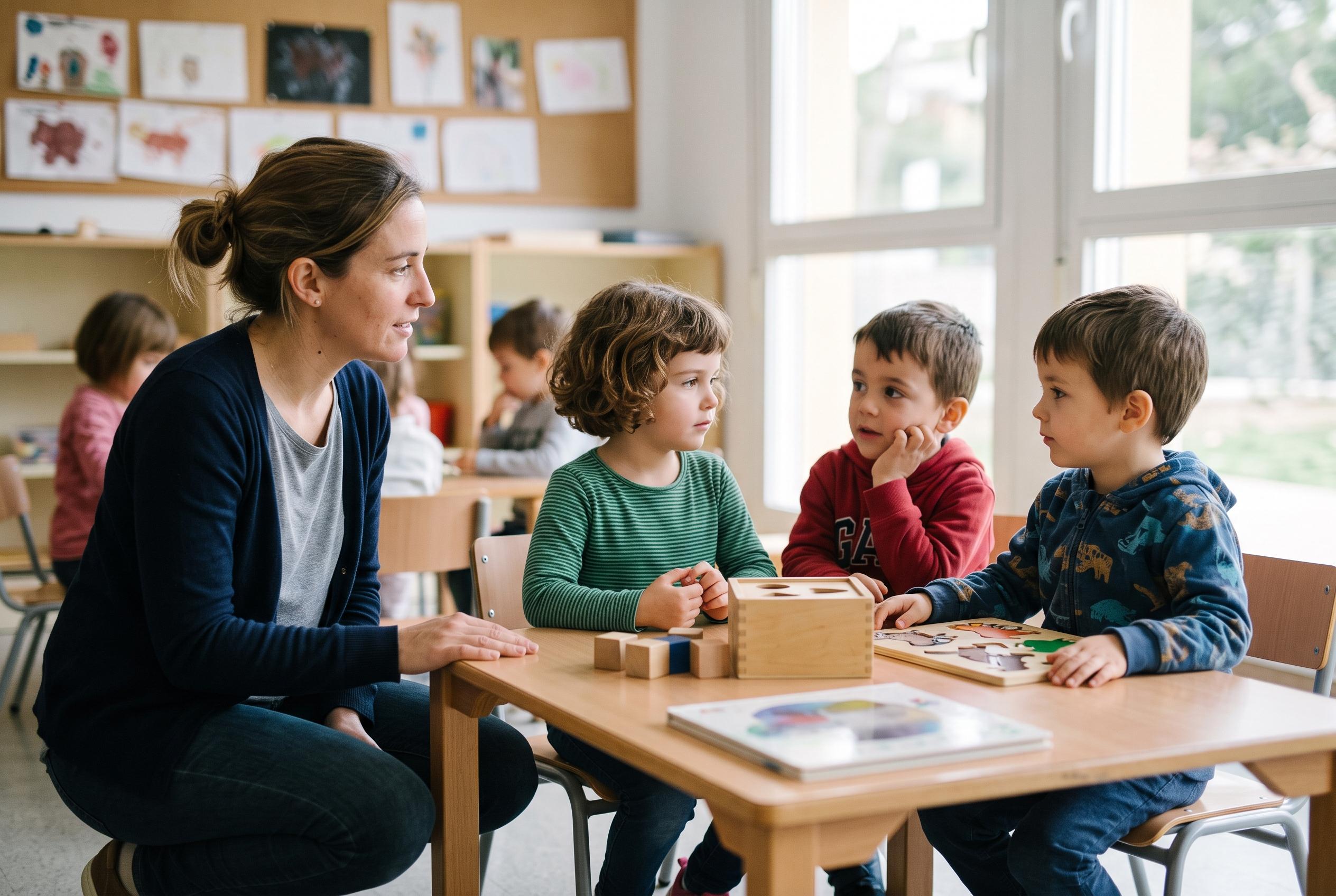

A Catalan school’s dialogue-driven model helps children as young as three identify and address non-physical harmful behaviours, fostering respect and prosocial conduct from an early age.
Teachers and families in a Catalan school say a conflict-resolution model built on dialogue is helping young children recognise violence earlier than many adults expect, including forms that do not involve physical harm. In a qualitative case study published in Frontiers in Education, researchers found that pupils as young as three were described as identifying exclusion, coercion, threats, blackmail and manipulative friendships, then speaking up for peers and setting boundaries in ways that adults said were unusual for that age.
The study focused on a public preschool and primary school in an urban area of Catalonia that had been using the Dialogic Model of Prevention and Resolution of Conflicts across the school community. Interviews with 11 teachers and six family members suggested that the approach was linked not only to better recognition of harmful behaviour but also to stronger prosocial conduct, including helping classmates, defending vulnerable children and refusing to normalise conduct that had once been treated as “just play”. Teachers said the model was not confined to occasional lessons, but woven through daily school life, with themes such as violence, friendship, gender equality and digital risks revisited year after year.
Families said the change was visible outside the classroom as well. Parents described children setting limits in parks, at home and with siblings, then later being able to restore friendships once disrespectful behaviour stopped. Teachers also pointed to the Zero Violence Brave Club, an activity within the broader model that highlights children who act with courage and solidarity. According to the study, that visibility matters because it shifts attention away from aggression and towards respectful behaviour, making kindness and intervention more socially valued among pupils.
The researchers argue that these accounts challenge the assumption that preschool children are too young to understand subtle aggression or to take an active role in preventing it. They also note a key obstacle: adults often normalise violence in early childhood, which can make covert harm harder to spot. The study’s limits are important, too. It relied on adult perceptions rather than children’s direct testimony, and it examined one school with a long-running commitment to the model, so the findings cannot be generalised widely. Even so, the authors say the evidence suggests that dialogic violence-prevention work may help children learn, from an early age, how to protect themselves and others.
Disclaimer: This content is for informational purposes only and is not intended to be a substitute for professional medical judgment, advice, diagnosis, or treatment.



