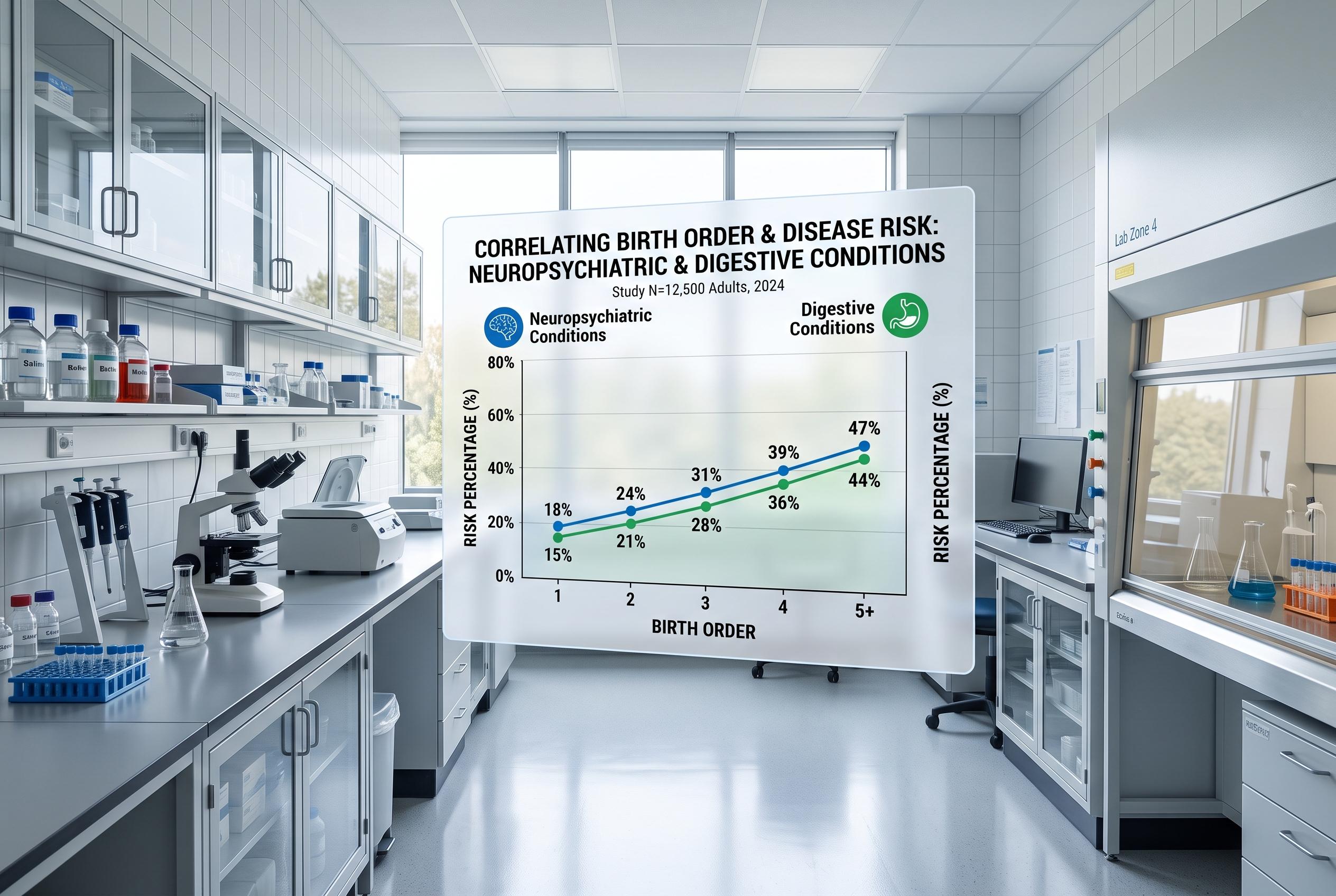

A groundbreaking analysis of over 10.3 million US children reveals that birth order may shape susceptibility to a range of diseases, from neuropsychiatric conditions to digestive problems, with potential implications for early intervention and family health strategies.
A study of more than 10.3 million US children suggests that birth order is linked to differences in disease risk, with first-born children more likely to be diagnosed with conditions such as autism, attention deficit hyperactivity disorder, allergies and Tourette’s syndrome, while second-born children showed higher rates of stomach problems, migraines, shingles and substance misuse, according to a preprint on medRxiv. The analysis covered 569 diseases and found 150 that varied statistically by whether a child was first or second in the family line.
Researchers said the pattern was not confined to a handful of well-known diagnoses but stretched across a broad range of clinical areas, with neuropsychiatric conditions more common among first-borns and digestive and musculoskeletal problems more common among second-borns. The study compared siblings within the same families as well as children from different families in an effort to reduce the influence of outside factors such as income or household environment.
The findings add to a body of research showing that early-life and family factors can shape later health, especially in neurodevelopmental disorders. Separate studies have linked prenatal and perinatal influences to later autism and ADHD diagnoses, while other research has found both conditions tend to cluster within families, suggesting shared risk factors.
The birth-order study also suggested that the size of the gap between siblings may matter. Larger gaps were associated with a higher likelihood of autism among first-born children, but with a lower likelihood of first-borns developing allergies their siblings did not have. The authors said the overall effect was modest but persistent and could reflect a combination of physiological, immunological and social mechanisms, although they said more research is needed to disentangle those influences from parental age and other confounding factors. Older work on ADHD has pointed in different directions, with one cohort study finding no meaningful birth-order effect and another reporting nearly double the risk among first-born children in a clinical sample.
Disclaimer: This content is for informational purposes only and is not intended to be a substitute for professional medical judgment, advice, diagnosis, or treatment.