

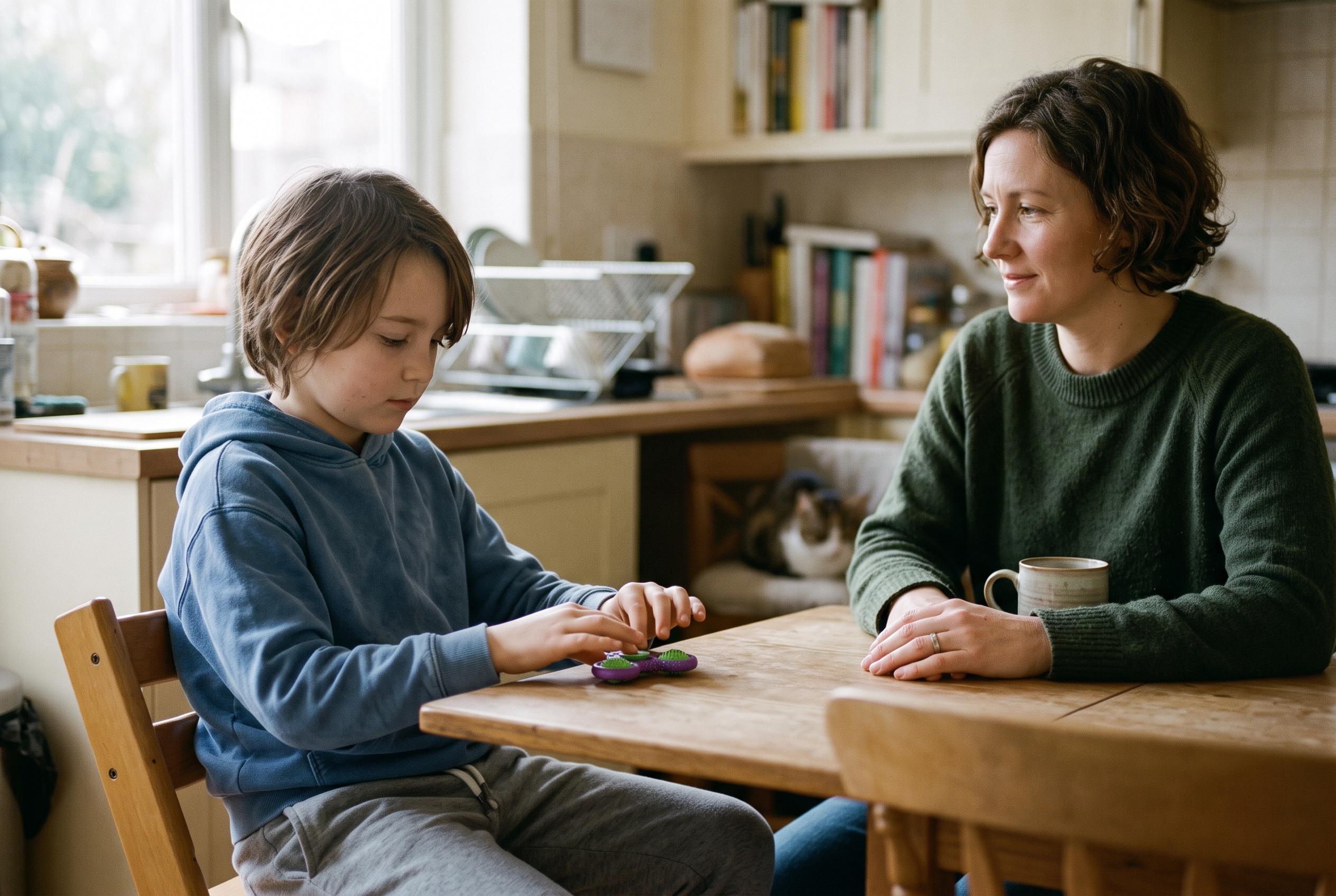

Interviews with autistic children and parents suggest anxiety is woven through daily life, with trusted adults and sensory-aware support key to helping families cope.
Autistic children with anxiety often experience it as a constant, shifting pressure rather than a single, isolated problem, according to new research from the University of Kent published in the journal Autism. The study, led by Tasha Cullingham and colleagues, suggests that anxiety can shape daily routines, family life and a child’s ability to cope with ordinary demands, with consequences that may affect education and long-term wellbeing.
Working with an expert reference group and co-researchers who had lived experience of autism and parenting an autistic child, the researchers interviewed nine autistic children with anxiety and 10 parents. Their analysis identified five recurring themes, including the sense of having to buffer anxiety all the time, the feeling of being on a cliff edge, and the frustration of navigating it largely alone. The team also found that children and families often felt safest when support came through a trusted adult who already knew the child well.
The findings echo wider guidance from the National Autistic Society, which says anxiety is common among autistic people and can be driven by sensory sensitivities, social demands and the strain of masking autistic traits. Its advice also notes that many autistic people experience high levels of anxiety regularly, and that recognising the signs early can help families seek support sooner.
Experts cited by the National Autistic Society have also pointed to the complexity of assessing anxiety in autistic people. Dr Jacqui Rodgers has written that difficulties identifying emotions, intolerance of uncertainty and sensory differences can all play a role, while also making standard assessment approaches less reliable. That matters because anxiety in autistic children may not always look the way adults expect; it can show up as withdrawal, distress, meltdowns or resistance to change.
Sensory factors appear to be especially important. Research highlighted by the National Autistic Society indicates that heightened reactivity to sounds and other stimuli is linked with stronger anxiety symptoms in autistic children. The Kent team’s interviews suggest that this interaction between sensory sensitivities and the environment may intensify stress, particularly in settings such as school, where noise, unpredictability and social pressure can be hard to escape. The researchers say families are often caught between helping a child cope in a neurotypical world and changing that world to fit the child’s needs more closely.
For schools and clinicians, the study points towards support that is relationship-based, practical and responsive to the child’s sensory profile. Rather than treating anxiety as a separate issue in isolation, the researchers argue for approaches that recognise the underlying autistic experience and involve adults the child already trusts. That, they suggest, may offer a more realistic route to intervention than relying on generic anxiety strategies alone.
Disclaimer: This content is for informational purposes only and is not intended to be a substitute for professional medical judgment, advice, diagnosis, or treatment.



