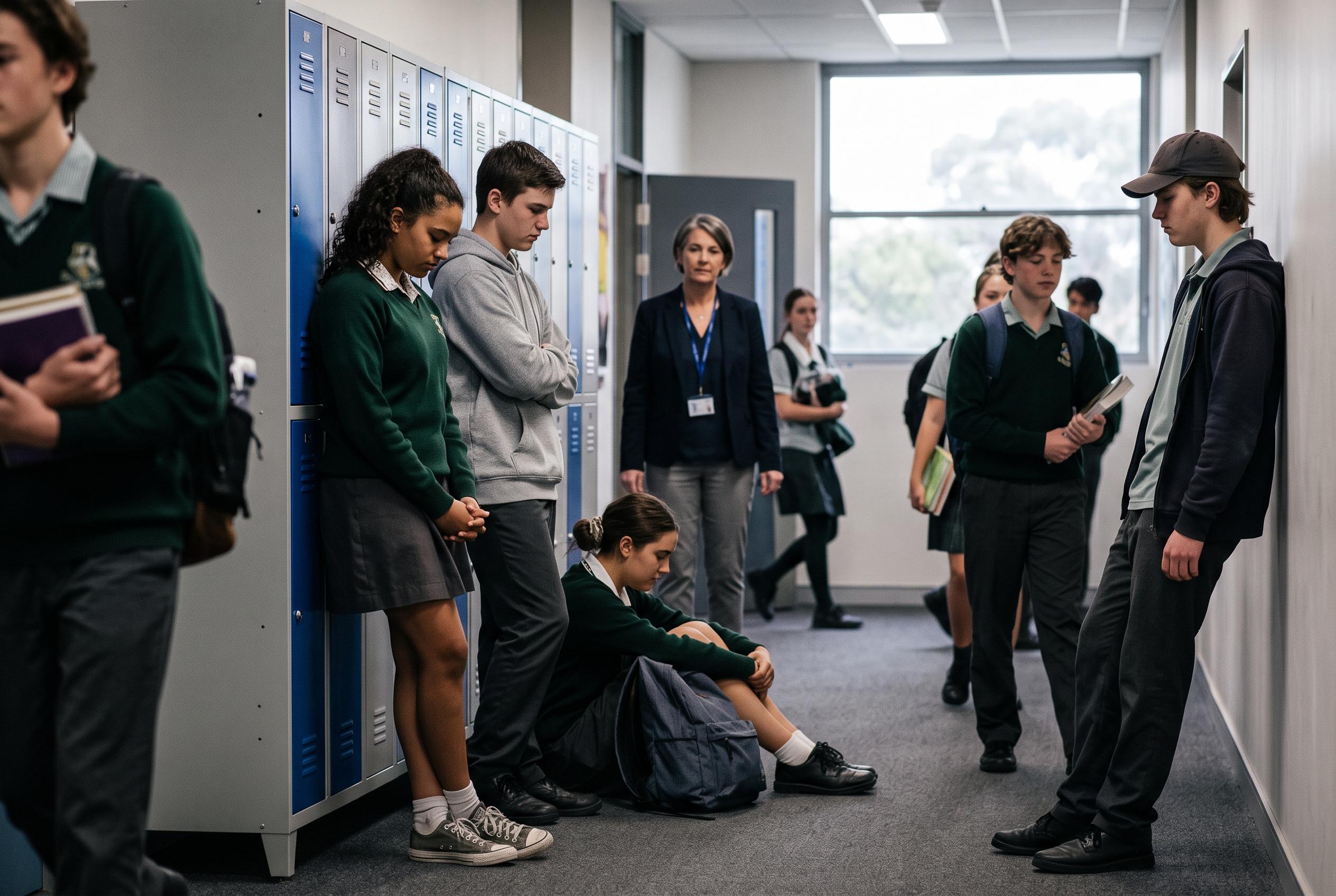

A widening gap between behavioural support and disciplinary measures in Australian secondary schools highlights urgent concerns over the system’s capacity to include vulnerable teenagers, with suspensions rising and specialist provisions shrinking amid rising mental health issues.
Australian schools are facing a growing mismatch between what some adolescents need and what the system is built to provide. In a recent essay for Pearls and Irritations, an education veteran argued that teenagers with severe behavioural needs are too often treated as a lost cause once they reach secondary school, even as suspensions rise and specialist support narrows.
That argument is reinforced by official figures cited in the essay. The department’s 2025 suspension data recorded 81,094 suspensions affecting 42,015 students, with secondary students suspended at more than four times the primary rate. The burden was especially heavy among Aboriginal secondary students and those receiving significant disability adjustments, while more than a third of suspensions were linked to serious threats or physical violence. Research from the Australian Institute of Criminology suggests suspensions are positively associated with later problem behaviour, raising doubts about how far exclusion actually solves the underlying issue.
The gap becomes clearer when suspension data are read alongside specialist provision. The essay says there were 1,159 specialist-support classes in primary and infants schools, compared with 883 in secondary schools, a difference of 276 classes. While that does not by itself prove bias, it does raise a blunt question: why does dedicated provision shrink just as behaviour becomes more complex and the risks to students and staff increase?
The wider picture is even less visible. The article says families and schools cannot easily find out how many children are waiting for higher-level placements, how many applications are turned down, or how long students remain on reduced attendance. That lack of transparency matters because transitions into Year 7 can be especially destabilising for pupils who previously relied on small, structured settings. National research also points to serious gaps in adolescent mental-health care: one study found mean waits of 94.1 days for treatment among teenagers seeking help for anxiety and depression, while another reported that 25.9% of adolescents with high psychological distress had wholly unmet needs.
The central warning is that exclusion is often being used as a substitute for support. Once a student is suspended, the school may regain short-term order, but the underlying need remains. The essay argues that proper inclusion requires more than a place in a classroom; it needs reasonable adjustments, specialist teaching, crisis-ready staff and therapeutic support. Without that, the system is not including vulnerable teenagers so much as moving them from one failure point to the next.
Disclaimer: This content is for informational purposes only and is not intended to be a substitute for professional medical judgment, advice, diagnosis, or treatment.