
Peru’s government launches an extensive, coordinated multisector campaign to combat child anaemia, integrating health, culture, women’s rights, and emergency response to accelerate progress and reach vulnerable communities.
Peru’s Ministry of Development and Social Inclusion is widening its campaign against child anaemia, bringing the culture and women’s portfolios into a push that had already drawn in the health, housing, production and agriculture ministries over the past fortnight. The latest meetings, held on 4 September, make the issue one of the first big coordination tests for the cabinet installed on 28 July under Prime Minister Luis Galarreta in President Keiko Fujimori’s new administration.
The wider strategy had begun to take shape earlier, on 22 August, when Maritza Canales, the social inclusion minister, met Health Minister Luis Dyer to discuss a national plan that the government says should cut anaemia by half by 2031, to 17.4 per cent from 34.9 per cent. The model under discussion goes beyond treatment alone, focusing on pregnant women and children under 36 months, with early identification, support through the first year of life, named follow-up through alert systems and pilot work in two priority regions, one of them Puno. Officials also tied that work to service adjustments for the expected effects of El Niño.
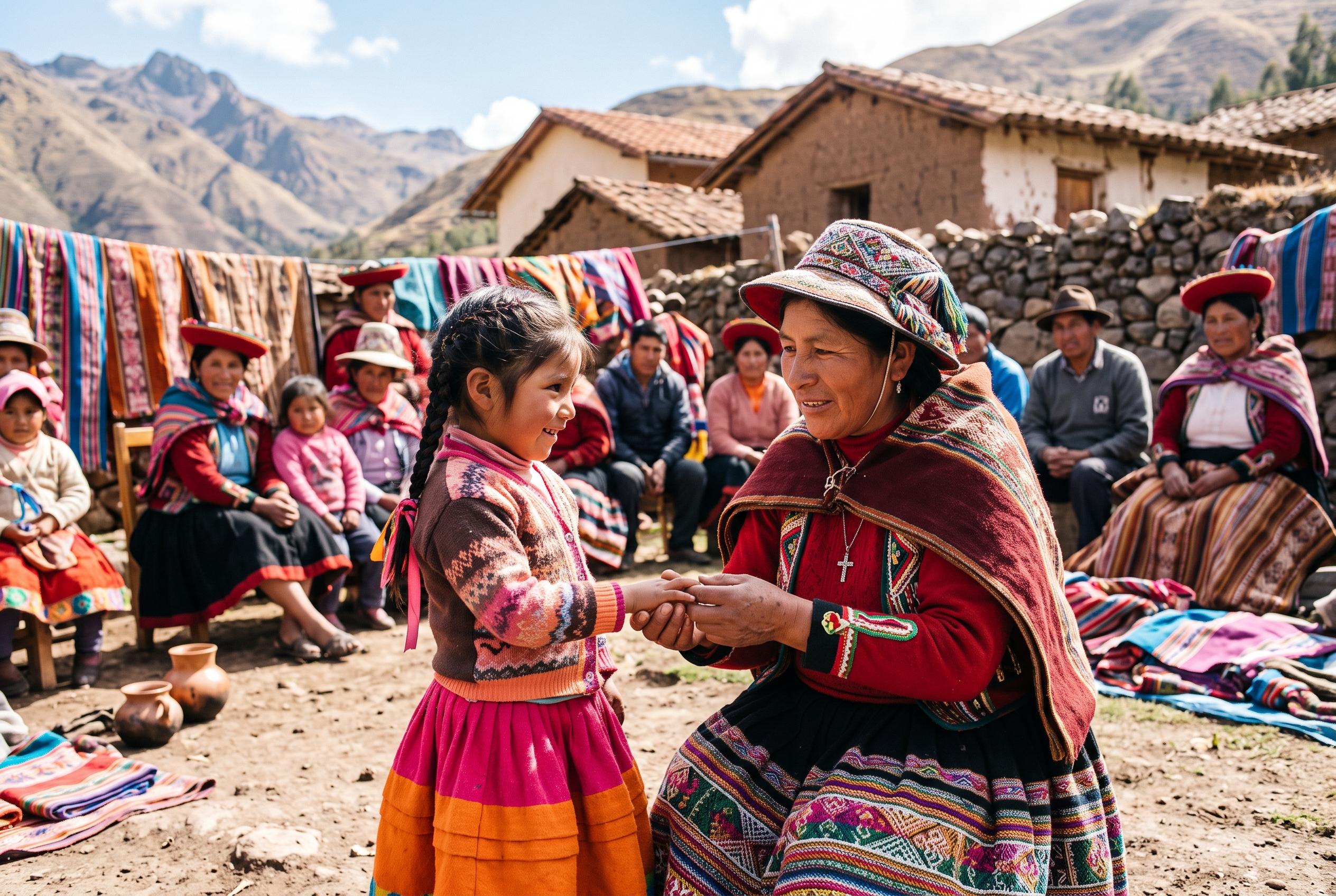
What the Culture Ministry adds is an attempt to make the campaign travel better across Peru’s very different territories. According to accounts issued after Canales’s meeting with Culture Minister Alberto Beingolea, the ministry is offering a targeting map of indigenous and Afro-Peruvian communities to help decide where joint technical support should go first. The talks also stressed an intercultural approach: rather than treating nutrition messages as generic, the idea is to build them around local food knowledge, including regionally familiar ingredients rich in iron. Beingolea also proposed involving the state broadcaster IRTP in cookery content aimed at preventing anaemia.
The agenda with the Ministry of Women and Vulnerable Populations appears broader still. Andina reported on 2 September that María Magdalena Seminario Marón and Canales agreed to create a mechanism for exchanging information so that both ministries can identify overlapping users and improve the timing and accuracy of state support. Midis also undertook to publicise the Línea ANNA 1810 helpline, Línea 100 and the women and family emergency centres among people reached by its social programmes, widening the discussion from nutrition to violence prevention. The two ministries also agreed to reinforce nutritional care for children and adolescents living in residential care centres through technical support and shared experience in preventing and treating anaemia.
That link-up also gives Midis a way to connect its anti-anaemia drive with emergency planning. The ministry has been promoting GeoSisfoh, a georeferenced tool intended to sharpen the targeting of social policy, and officials say it is already available to local authorities and rapid-response institutions seeking to keep services running in areas exposed to climate emergencies. In this framework, the women’s ministry is expected to contribute specialist records, including the national register of people with disabilities, so that support can be adapted more quickly if face-to-face services have to move to remote formats. The platform is described by officials as covering more than 10 million social-programme users.
The newest agreements follow a second cluster of talks held on 2 September with three more ministries whose work bears directly on anaemia’s underlying causes. With Housing, Midis prioritised safe water and sanitation, arguing that children are less likely to benefit fully from food if they are living without basic services. With the Production Ministry, the two sides agreed to expand joint work through the A Comer Pescado programme and to back innovations that can improve the supply of iron-rich food to poor households. With the Agriculture Ministry, discussions centred on stronger links to small farmers in different regions and technical support to boost the production of nutritious foods. Juan Carlos Requejo, the production minister, also said his ministry would present a portfolio of products and solutions developed through ProInnóvate and the Institute of Technological Production.
Midis has already started presenting this as both a nutrition policy and a social-protection exercise in the field. During a visit to Ayacucho on 1 September, Canales linked El Niño preparedness with early-childhood services, saying programmes such as Cuna Más and the school feeding scheme were checking stocks and mapping storage points in areas vulnerable to flooding and landslides. In the same visit, a new Cuna Más child centre in San Juan Bautista was opened to serve more than 20 vulnerable children, with iron-rich meals, micronutrient supplementation where needed and health follow-up intended to stop anaemia from taking hold in the earliest years.
Because the ministers now driving the initiative only took office on 28 July, the anti-anaemia campaign has quickly become an early measure of whether the new government can turn long-standing calls for a multisector response into something operational. The steps sketched so far are concrete enough to show the direction of travel: shared databases, technical leads in each ministry, pilot territories, indicators to measure progress and a stronger focus on mothers and infants before the condition becomes entrenched. The test now is whether those meetings can be turned into a working system on the ground.
Disclaimer: This content is for informational purposes only and is not intended to be a substitute for professional medical judgment, advice, diagnosis, or treatment.